





Atopic Dermatitis Care: What Really Helps Your Skin
For many people, atopic dermatitis means years of searching for the right cream. Maybe you have just been diagnosed and need something that does your skin good until your next doctor’s appointment. Maybe you have been working your way through tubes and pots for a long time. Or you are under medical treatment and looking for the right skincare to go with it. In all three cases: daily basic care is the foundation, in every phase of the condition. And it is not just about how often you moisturise, but above all what you use.
In brief: what helps with atopic dermatitis?
Atopic dermatitis (also called neurodermitis or atopic eczema) is a chronic inflammatory skin condition with a disrupted skin barrier. The basis of any treatment is daily, low-irritant care: moisturise at least twice a day, even in calm phases, with products free from fragrances and with as few ingredients as possible. Inflammation during a flare also needs medical treatment.
The key points at a glance:
- One condition, three names: neurodermitis, atopic eczema and atopic dermatitis all mean the same thing.
- Basic care is a must, not an extra: regular moisturising can delay flares and make them less frequent.
- The skincare paradox: if you moisturise often, you also often put potential irritants on your skin. That is why the rule is: no fragrances, a short ingredient list.
- Texture matters: a light cream for the face, rich care for dry areas, a water-free balm for cracked patches.
- Natural does not automatically mean well tolerated: essential oils, chamomile or propolis can trigger contact allergies.
Understanding atopic dermatitis: what happens in your skin
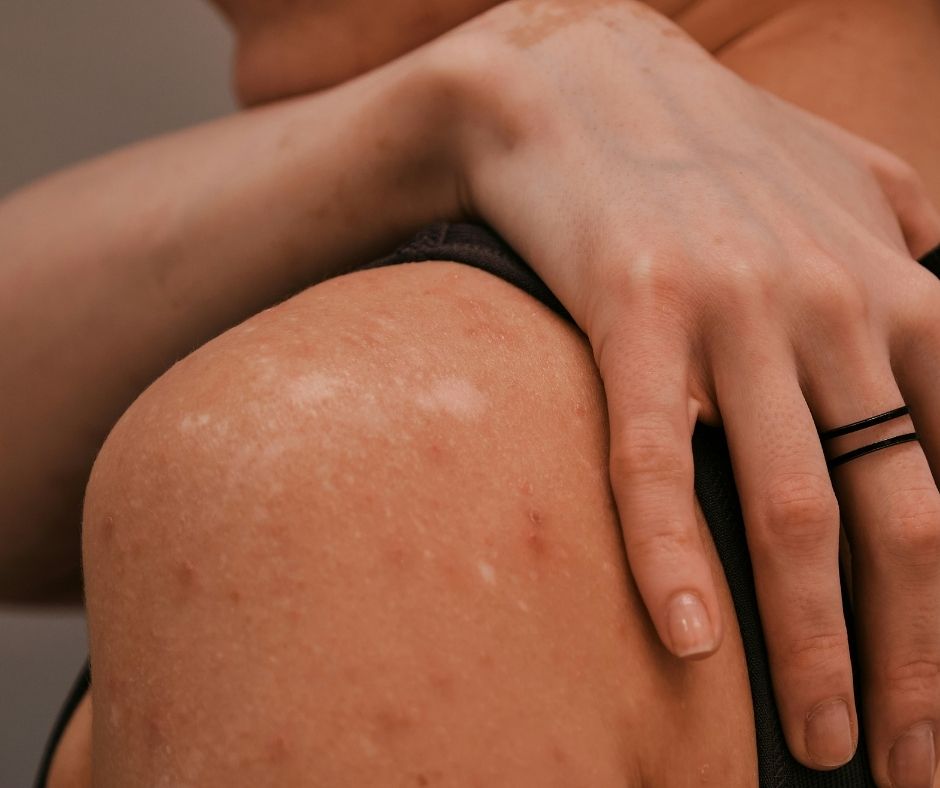
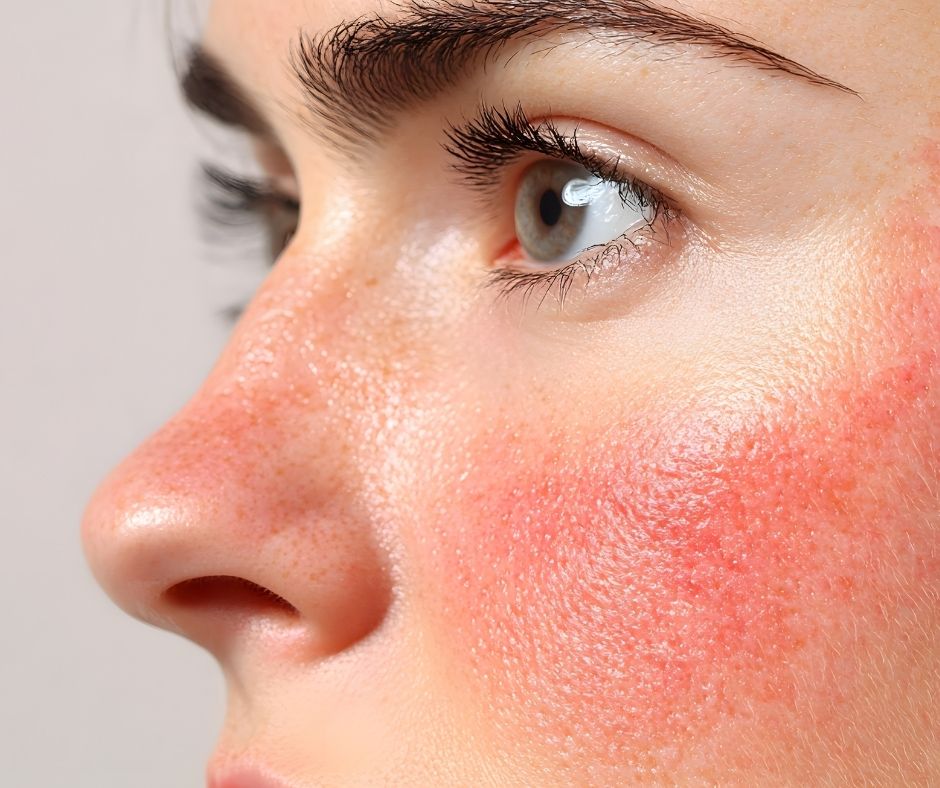
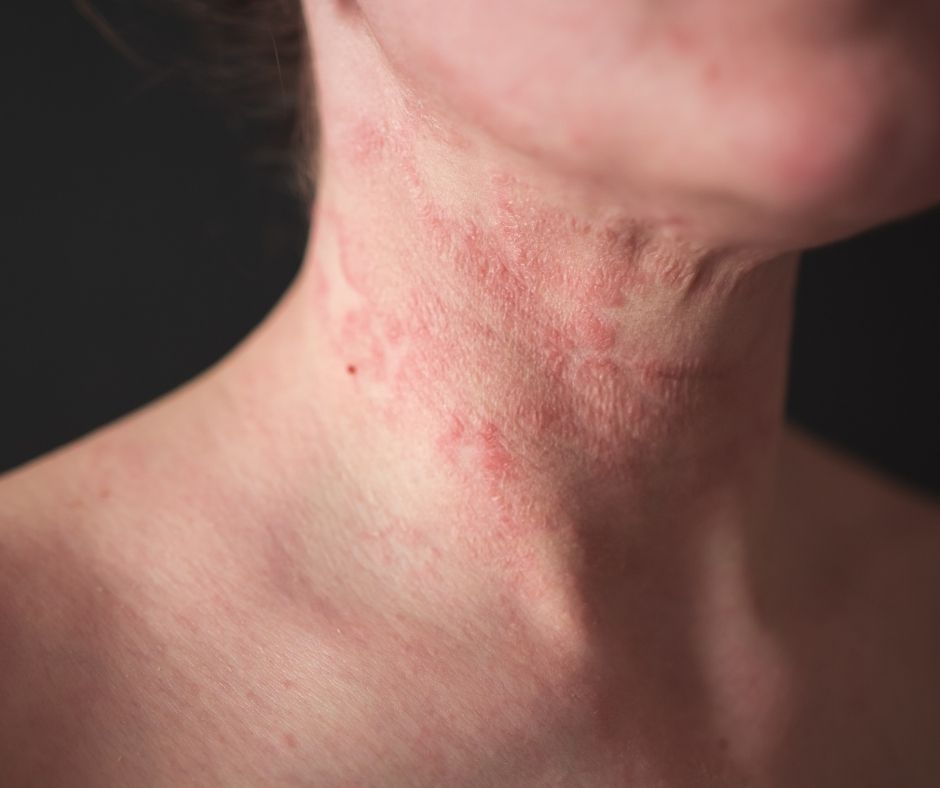
Neurodermitis, atopic eczema, atopic dermatitis: three names for the same condition. The term neurodermitis dates back to the 19th century, when people suspected an inflammation of the nerves was behind it. That idea was wrong, but the name stuck. In fact, it is a chronic inflammatory, immune-mediated skin condition that comes in flares and is not contagious. Typical signs are intensely itchy, red, dry and sometimes swollen patches, often in the creases of the elbows, the backs of the knees, on the nape of the neck, on the face and on the neck. Flares can be triggered by dry air, changes in temperature, soaps or psychological stress. We clear up more misconceptions in 3 myths about atopic dermatitis.
A protective layer with gaps
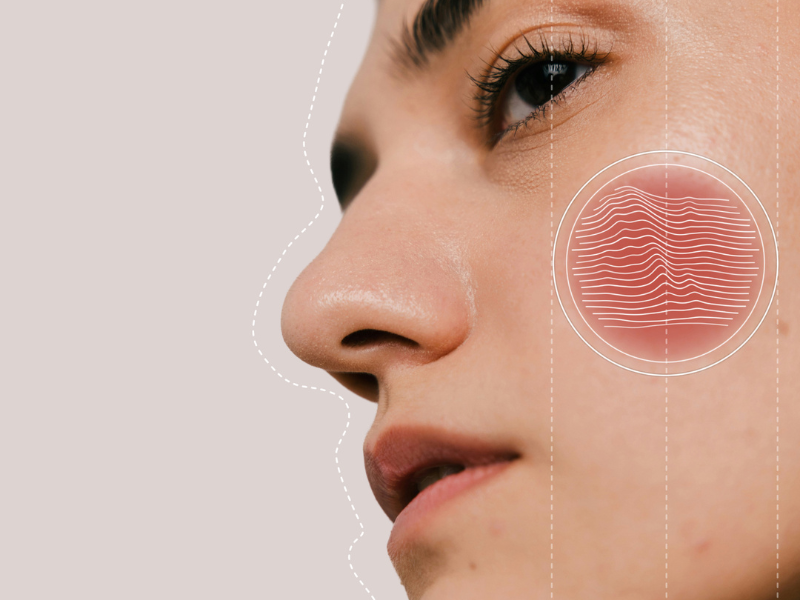
With atopic dermatitis, it is not simply a lack of fat. The horny layer works like a wall made of cells and lipid mortar, and in this case the mortar is loose. One reason for this can be an inherited change in the filaggrin gene. Filaggrin is a protein the skin needs for a dense horny layer and for its natural moisturising factors. Such gene changes are an important risk factor for atopic dermatitis (Palmer et al., 2006). The result works in both directions: water evaporates outwards (transepidermal water loss, TEWL for short), while irritants, allergens and germs get in more easily. Find out more in Understanding a disrupted skin barrier, and because the bacteria on your skin play a part too, it is worth taking a look at the skin microbiome.
The itch-scratch cycle
In atopic dermatitis, itching is caused mainly by inflammatory messengers that act on hypersensitive nerve endings in the skin, and less by histamine. That is why classic antihistamine tablets often do little against the itching. And scratching opens up the horny layer further, releases new messengers, and the itch comes back. This is exactly the loop that low-irritant care targets.
The skincare paradox: not just how often, but what with
Moisturising more is better. That is true, and at the same time not quite. Because with every application, everything in the tube ends up on your skin. This very contradiction is what makes caring for skin with atopic dermatitis so tricky.
Why frequent moisturising is necessary
The German S3 guideline on atopic dermatitis recommends consistent basic care in every phase of the condition, even when nothing is itching (Werfel et al., 2024). It pays off: a large Cochrane review of 77 studies concluded that regular moisturising can delay flares, reduce their number and lower the need for anti-inflammatory creams (van Zuuren et al., 2017). Morning and evening is therefore the minimum dose.
And why every cream is also a risk
The barrier is permeable, and that works in both directions: water gets out, fragrances and other irritants get in more easily. The longer the ingredient list, the more candidates there are that your skin may react to at some point. Analyses of skincare products marketed specifically for atopic dermatitis repeatedly found well-known contact allergens in them (Osinka et al., 2016). So “for sensitive skin” on the pack does not automatically mean low-irritant. How to tell that your routine is too much is explained in 5 signs of a disrupted skin barrier.
Four requirements for good atopic dermatitis care
| Requirement | What it means |
|---|---|
| 1. Seal | Lipids plus humectants such as glycerin or panthenol keep water in the skin. |
| 2. Nothing unnecessary | No fragrances, with the shortest possible ingredient list. |
| 3. Easy to stick with | Absorbs well, does not trap heat. Otherwise you won’t really moisturise every day, and warmth makes the itching worse. |
| 4. Ongoing | Keep moisturising in calm phases too, not only during a flare. |
Cream, ointment or balm: finding the right texture
The ingredients are only half the decision. The other half is the texture: how much water, how much fat. There is an old dermatological rule of thumb for this: greasy on dry, moist on moist. The drier the skin, the richer in lipids the care can be.
Lotion, cream, ointment and water-free balm compared
| Texture | Composition | Works well for |
|---|---|---|
| Lotion | a lot of water, little fat | large areas, summer |
| Cream (oil in water) | balanced, absorbs quickly | face, daytime |
| Rich cream (water in oil) | fat-dominant | very dry areas, winter |
| Ointment, water-free balm | no water | cracked patches, night |
Water-free products can often do without preservatives, because germs can hardly grow without water. We explain the difference between our textures in Cream, Cream forte or Skin Balm?
Face, body and cracked patches
On the face, a light cream is usually enough during the day, otherwise heat builds up. Dry areas of the body can take something richer, and cracked fingers or heels a balm in the evening. Weeping patches should be checked by a doctor rather than covered in a thick layer of grease.
Summer and winter
The colder and drier the air, the richer the texture. In summer, lighter care feels more pleasant. With atopic dermatitis, two or three products in parallel are not a luxury but everyday life, and ideally all of them without fragrances.
Moisturising properly with atopic dermatitis: routine and technique
The best cream is of little use if it stays in the cupboard. When you moisturise, timing, amount and the movement of your hand all make a difference.
At least twice a day
Morning and evening, all over your body, including areas that look fine right now. The easiest way to stick with it is to link it to something that happens anyway, such as brushing your teeth: tube next to the toothbrush, done. Using it sparingly is a false economy here. Be generous instead, until your skin has a slight sheen.
The 3-minute rule after showering
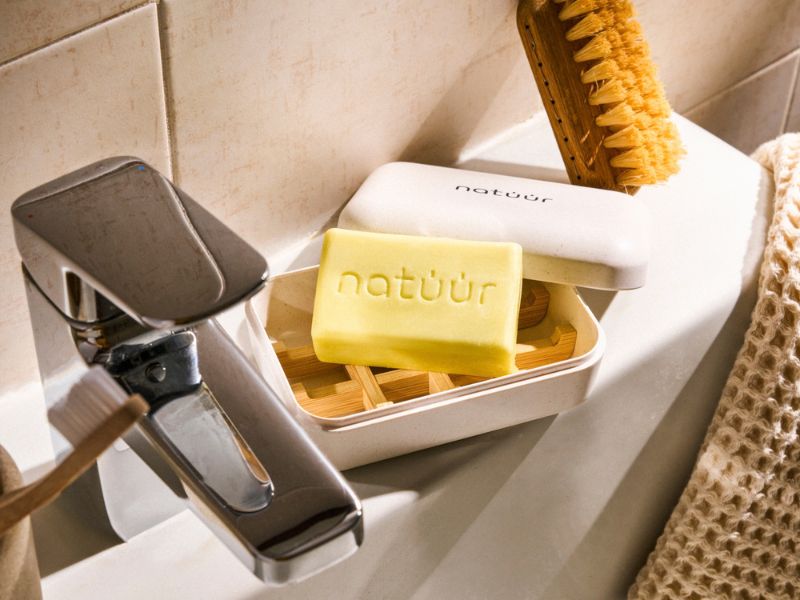
Shower briefly (5 to 10 minutes), lukewarm rather than hot, with a mild cleanser free from fragrances. Why classic soap is often difficult with atopic dermatitis is explained in Bar soap or liquid soap? Afterwards, don’t rub yourself dry, pat instead. And then timing counts: within about three minutes, while your skin is still slightly damp, apply your skincare. That way you lock in the water that would otherwise simply evaporate.
Apply gently instead of rubbing
Spread the cream with a flat hand and without pressure in the direction of hair growth. Rubbing irritates and can set the itch-scratch cycle going again straight away. Take the product out of the pot with clean hands or a spatula.
Care during a flare and in calm phases
Your skin has two states, and both need attention, just a different kind. So the question is not whether you care for your skin, but how.
During an acute flare
Acute inflammation belongs in medical hands. Basic care accompanies the treatment and relieves dryness and tightness, but it does not replace medically prescribed therapy. During a flare: as little irritation as possible.
- apply your skincare gently and spread it out, don’t massage it in
- cool instead of scratching, for example with a cream from the fridge
- keep your nails short and wear thin cotton gloves at night
- have weeping, crusted or suddenly very painful patches checked by a doctor
- consistently avoid fragrances and essential oils, as they are among the most common contact allergens
You can find a selection of low-irritant textures in our atopic dermatitis collection.
In calm phases: keep going
Your skin looks smooth, the itching has gone, the tube stays closed. Understandable, but the barrier remains permeable, even if you can’t see it. Moisturising every day keeps it stable and can help delay the next flare.
A small step with a big effect: for a few weeks, write down three lines every evening about the weather, stress and the state of your skin. A skin diary like this shows you patterns you would never keep track of in your head.
Natural skincare for atopic dermatitis: what suits and what doesn’t
Natural skincare has a good reputation when it comes to atopic dermatitis, and partly rightly so. Plant lipids can nourish the skin well. At the same time, plants contain some of the most common contact allergens of all. Both are true, and that is exactly why it is worth looking at the ingredient list instead of the leaf logo on the front.
Plant oils and butters
Unscented oils and plant butters are the workhorses of natural care for atopic dermatitis. Shea butter and jojoba oil form a protective film on the skin and slow down water loss. Evening primrose and borage oil contain gamma-linolenic acid and are popular for dry skin. The evidence for this is thin, however: this is skincare, not therapy. Which oils are suitable for what is covered in our overview of the 6 best plant oils for healthy skin.
Our own active ingredient NEEMAVERA® is an extract from neem leaves. In laboratory studies, it showed antioxidant and anti-inflammatory properties. You can read more about neem for irritated skin in NEEMAVERA®: what the neem extract does for your skin.
When nature can irritate
“Natural” does not mean “well tolerated”. When the barrier is permeable, plant allergens get into the skin more easily. With atopic dermatitis, you are better off avoiding these ingredients:
- essential oils and plant fragrances such as limonene, linalool or geraniol, which oxidise in the air and can then become particularly allergenic
- plants of the daisy family such as chamomile, calendula and arnica
- propolis and wool wax (lanolin), popular but known triggers of contact eczema
Which ingredients, on the other hand, can soothe irritated skin is explained in detail in Soothing ingredients for irritated skin and itching.
Label check: how to recognise good atopic dermatitis care
The back of the tube tells you more than the front. That is where you will find the ingredient list (INCI), sorted by quantity. Here is what to look out for:
- No perfume: no “Parfum” or “Aroma” and no individually listed fragrances such as linalool, limonene, citronellol or geraniol.
- No alcohol near the top: Alcohol denat. among the first positions dries the skin out even more.
- Short list: the fewer individual substances, the fewer candidates for an allergy.
- Urea with caution: binds moisture well, but often stings on scratched or inflamed skin. An option in calm phases, better put on hold during a flare.
- Mild cleansing: gentle sugar-based surfactants instead of sodium lauryl sulfate.
Test a new product on a small area in the crease of your elbow first and wait 24 to 48 hours before using it on larger areas. Find out more about how to recognise harmful ingredients and which 10 ingredients to avoid with sensitive skin in our guides.
Recognising and avoiding everyday triggers

Even the best skincare reaches its limits when new irritants are added every day. Wool, sweat, heated indoor air, detergent residue in your T-shirt: these are not special cases but everyday life. Not all of them apply to you, but it is worth looking at the typical triggers one by one.
| Trigger | What helps |
|---|---|
| Wool, rough fabrics | cotton or silk, cut out labels |
| Sweating, heat | airy clothing, a quick lukewarm shower after exercise and then moisturise |
| Heated air, cold | increase humidity, use richer care, protect hands and neck |
| Fragrances in detergent | fragrance-free detergent, skip fabric softener, extra rinse cycle |
| Stress | a fixed relaxation routine, enough sleep, cooling instead of scratching |
| Pollen, house dust, pet hair | reduce in a targeted way only if an allergy has been confirmed |
You should only cut out foods if an allergy has been diagnosed by a doctor. Avoiding foods across the board is more likely to leave gaps on your plate than to calm your skin. Read more in Vegan diet and skincare for atopic dermatitis and about other sources of irritation in our guide to sensitive skin.
Also for psoriasis and other types of eczema
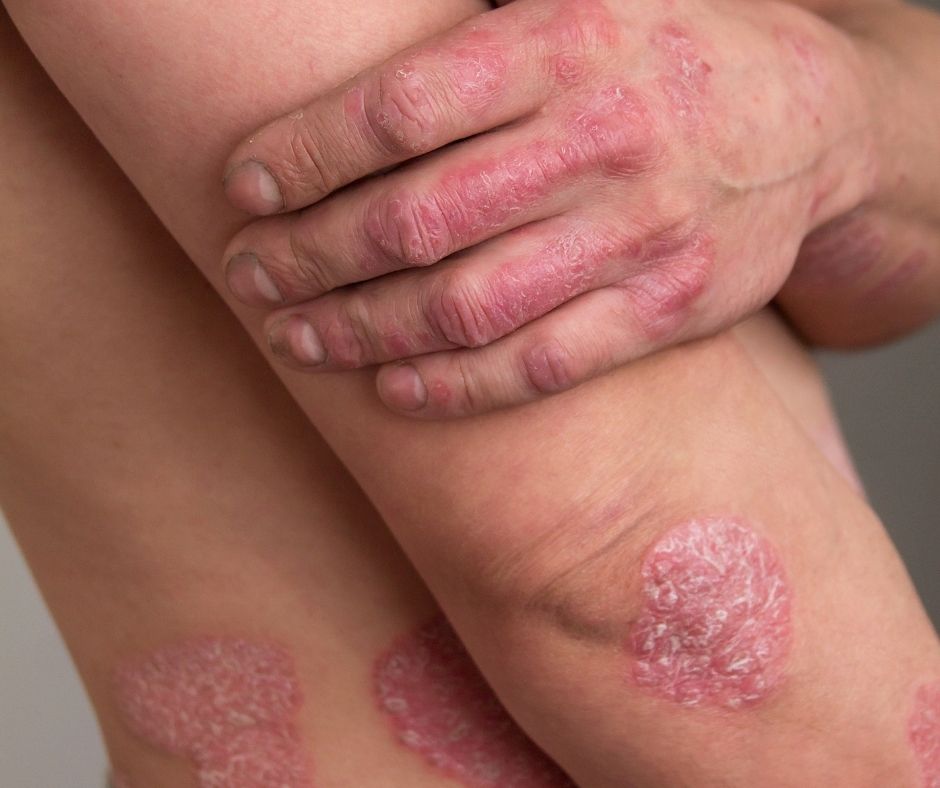
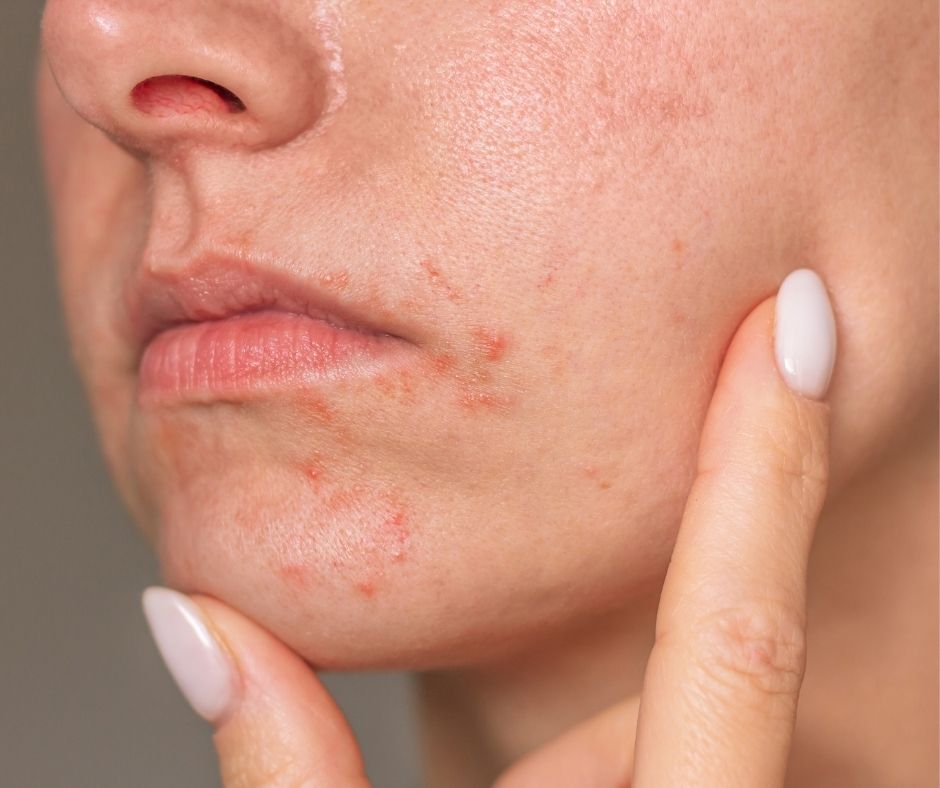
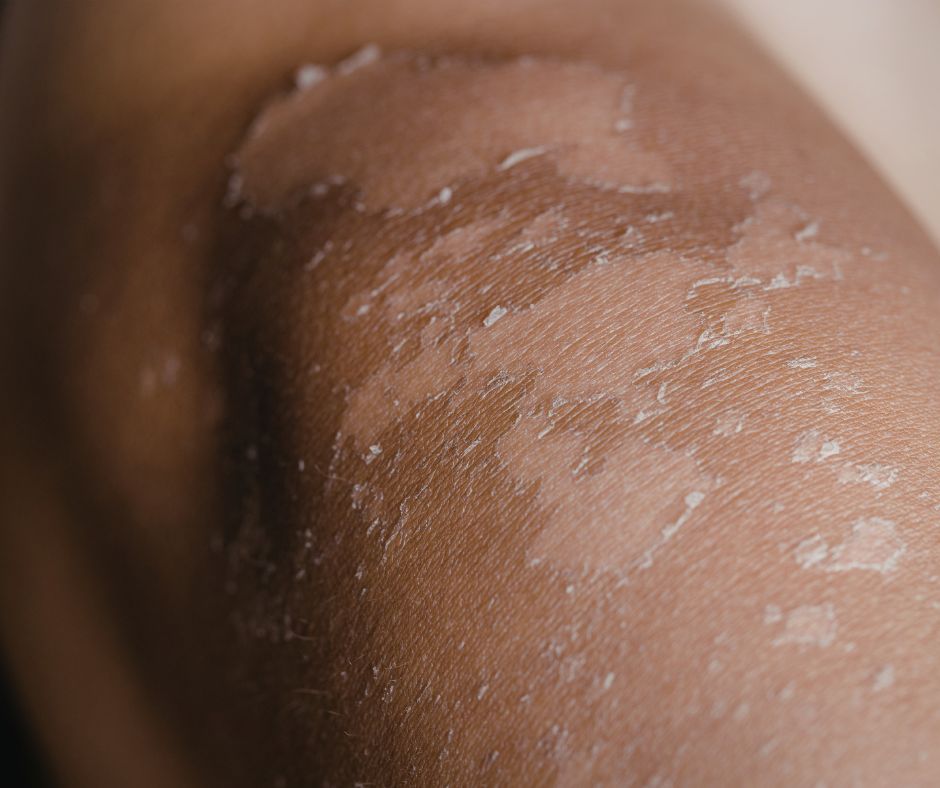
Many of the principles in this article apply not only to atopic dermatitis. Psoriasis shows up as red, sharply defined patches with silvery scales, often on the elbows, knees, back and scalp. Behind it is a greatly accelerated renewal of skin cells. Flares are often triggered by stress, infections or minor injuries. With contact eczema, redness, blisters and later crusts appear exactly where the skin came into contact with a trigger, such as nickel, latex or fragrances.
What they all have in common is a weakened skin barrier. That is why the same principle works: low-irritant, no fragrances, consistent. The inflammation itself belongs in medical hands, while the skincare continues alongside it. Find out more about psoriasis in our Psoriasis myths checked, more about eczema in Natural skincare for eczema and suitable care in our eczema collection.
A little calm for your skin every day
You can’t simply cream atopic dermatitis away, but you have more control than it often feels like. Consistent, low-irritant basic care is what you can do yourself every day: twice a day, with the right texture, without fragrances, in good phases too. It accompanies medical treatment and can help make flares less frequent. And if your skin still won’t settle, going to a dermatologist is not a failure but the right next step.
Easier with ready-made care: the Calm Skin Trio
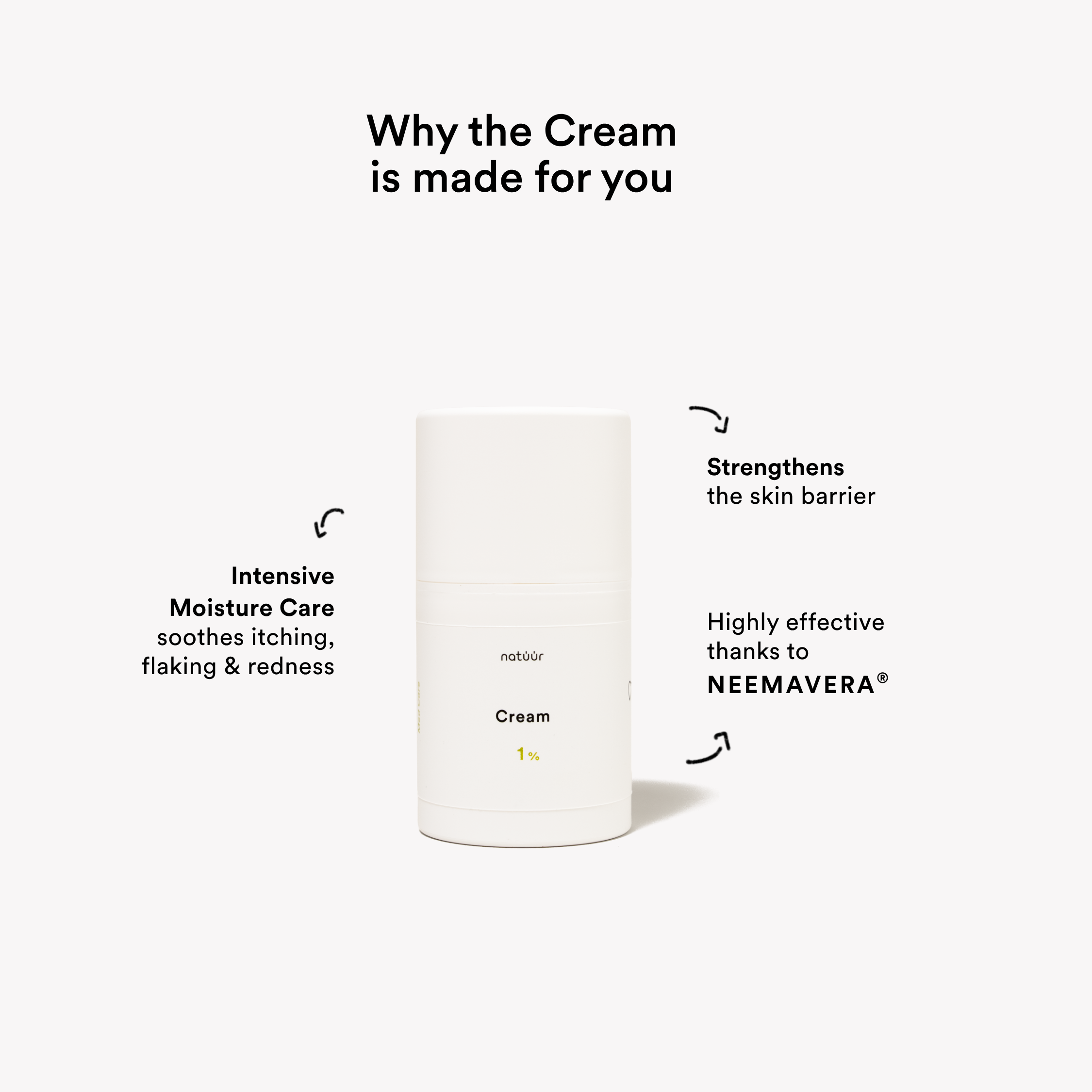
For skin prone to atopic dermatitis, we have matched three textures to one another, all free from fragrances, urea, parabens and silicones, vegan and made in Germany. At its heart is NEEMAVERA®, an extract from the leaves of our own neem plantation in Paraguay, antioxidant and anti-inflammatory according to laboratory studies.
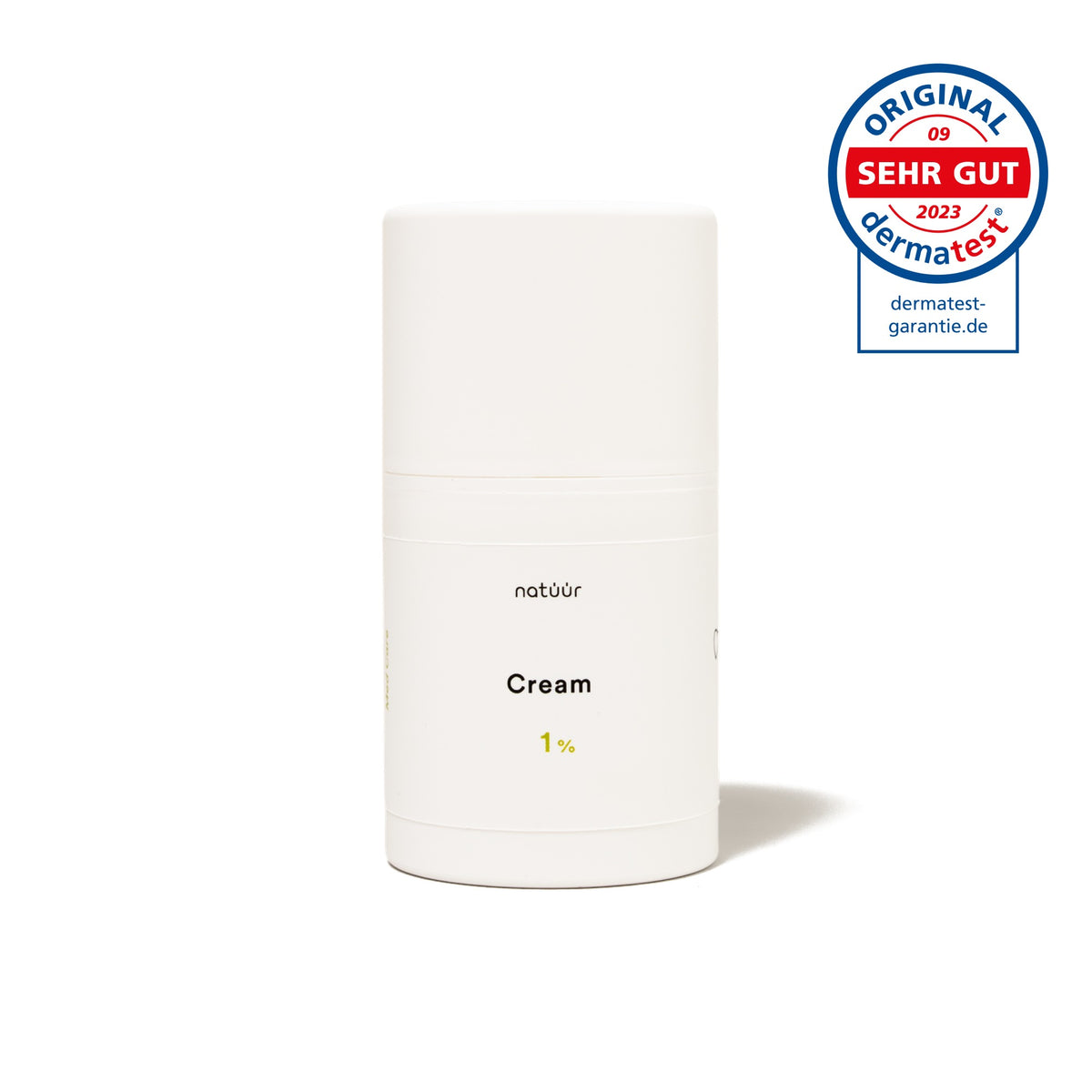
- Cream (1 % NEEMAVERA®): light, for the face and thin areas of skin
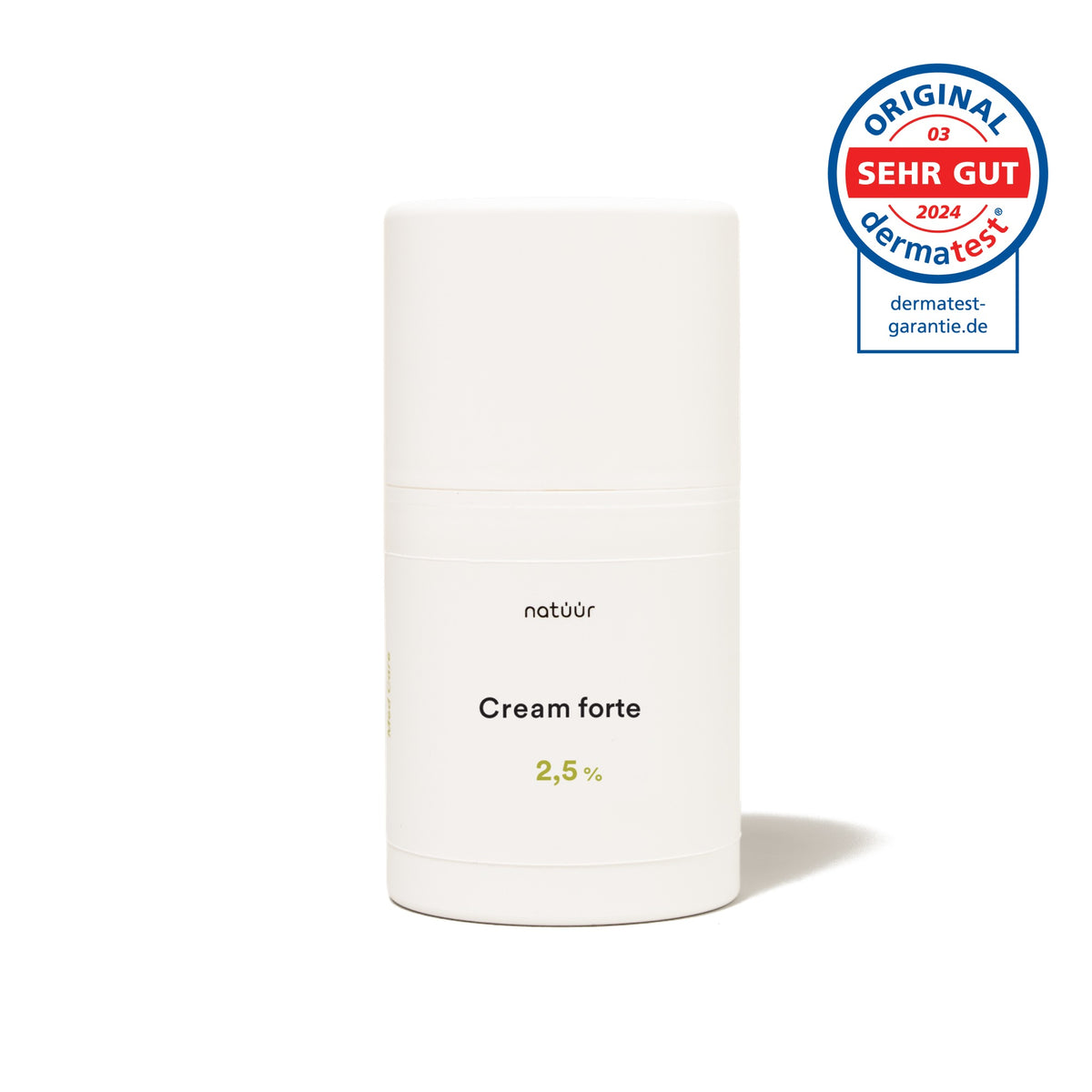
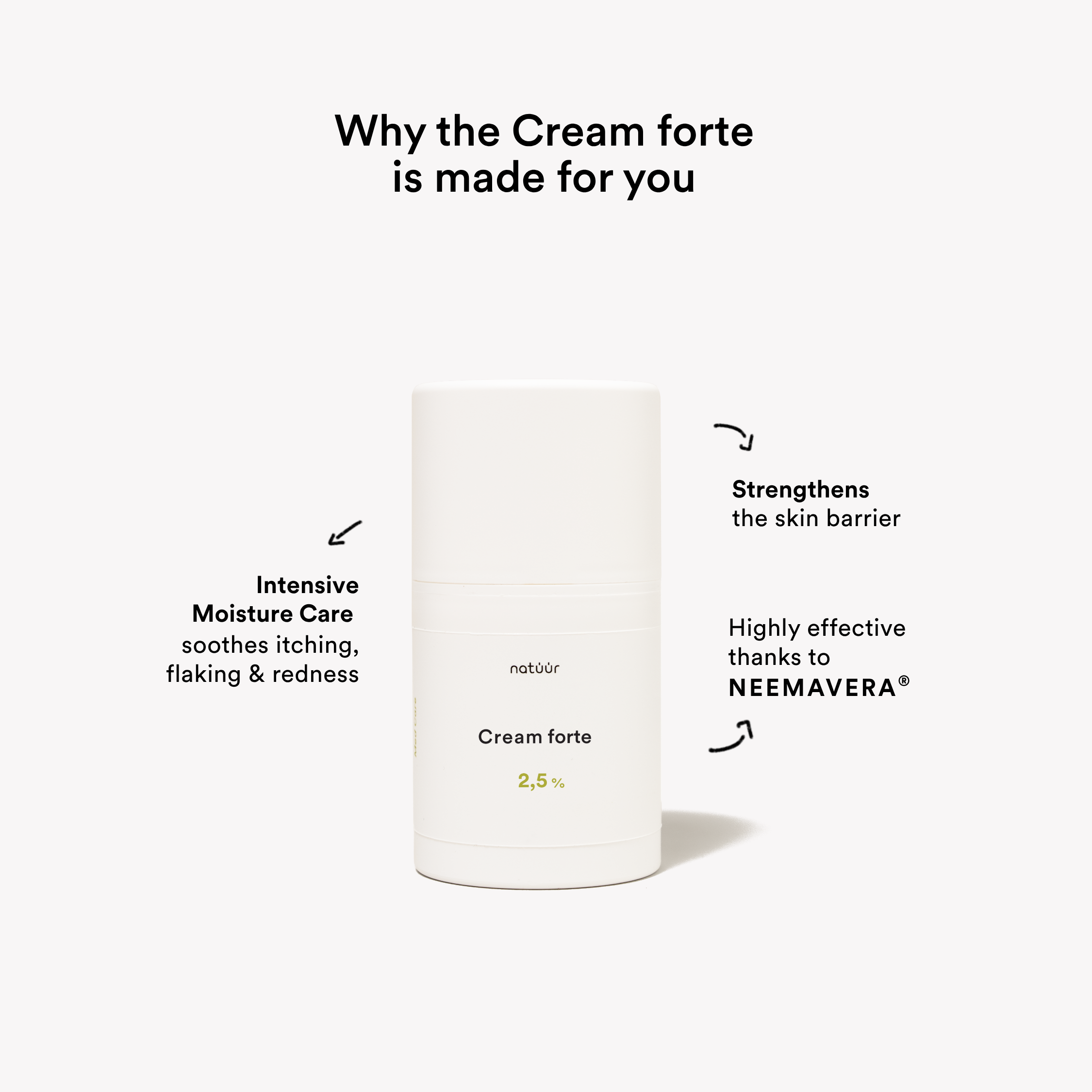
- Cream forte (2.5 % NEEMAVERA®): rich, for dry, irritated areas
- Skin Balm (2.5 % NEEMAVERA®): water-free, for cracked patches and the night
You can get all three together in the Calm Skin Trio. Our skincare does not replace medical treatment, but it can accompany it every day.
Frequently asked questions (FAQ)
How often should I moisturise with atopic dermatitis?
At least twice a day, all over your body, regardless of how your skin looks at the moment. The easiest way is to link it to fixed times, such as morning and evening after brushing your teeth.
Is atopic eczema the same as neurodermitis?
Yes. Neurodermitis, atopic eczema and atopic dermatitis all refer to the same chronic inflammatory skin condition. The name neurodermitis is a historical one; the condition has nothing to do with the nerves.
Which cream is right for atopic dermatitis?
The one that suits the area of skin and the season: light creams for the face, rich care for very dry areas, water-free balms for cracked skin. In any case, without fragrances and with the shortest possible ingredient list.
Is natural skincare better for atopic dermatitis?
Not automatically. Essential oils, plants of the daisy family such as chamomile or arnica, propolis and wool wax can trigger contact allergies. What matters is the formula, not the label.
Can I shower every day with atopic dermatitis?
Yes, briefly (5 to 10 minutes), lukewarm and with a mild cleanser free from fragrances. Then pat dry and moisturise within about three minutes.
Why should I moisturise even when my skin is calm?
Because the barrier disorder remains, even if you can’t see it. Regular basic care can delay flares and make them less frequent.
When should I see a dermatologist with atopic dermatitis?
During an acute flare, if you have weeping patches, yellowish crusts or blisters, if itching keeps you awake at night, and if nothing improves despite consistent care.
Sources
- Werfel T et al.: S3 Guideline Atopic dermatitis: Part 1 – General aspects, topical and non-drug therapies, special patient groups. Journal der Deutschen Dermatologischen Gesellschaft, 2024 (PubMed)
- AWMF: S3 guideline Atopic dermatitis (013-027)
- van Zuuren EJ et al.: Emollients and moisturisers for eczema. Cochrane Database of Systematic Reviews, 2017 (PubMed)
- Palmer CN et al.: Common loss-of-function variants of the epidermal barrier protein filaggrin are a major predisposing factor for atopic dermatitis. Nature Genetics, 2006 (PubMed)
- Osinka K et al.: Contact allergens in cosmetics used in atopic dermatitis: analysis of product composition. Contact Dermatitis, 2016 (PubMed)