





Natural Skincare for Eczema: What Really Helps Irritated Skin
Eczema itches, feels tight and likes to come back just when you are starting to breathe a sigh of relief. That is why many people turn to natural cosmetics, hoping to do something good for their irritated skin. That can work, but not automatically. Here you will find out what really matters when caring for eczema, which natural ingredients make sense, where natural cosmetics themselves become the problem and when you need medical advice.
In short: what helps with eczema?
Eczema-prone skin has a weakened protective barrier: it loses moisture and lets irritants in more easily. What helps most is daily, low-irritant care with lipids and moisture, without fragrances and with as few ingredients as possible. Natural cosmetics can be a good choice for this if they do without essential oils. Inflamed, weeping or infected areas belong in a doctor’s hands.
The key points at a glance:
- Barrier first: Eczema-prone skin needs lipids and moisture, every day, not just during a flare-up.
- Texture to match your skin’s condition: “Greasy on dry, moist on moist”. Weeping areas do not tolerate thick ointments.
- Natural is not automatically mild: Essential oils and plants from the daisy family such as chamomile can make eczema worse.
- Less is more: Two to three well-tolerated products are better than a full shelf.
- Know the limits: Skincare supports treatment, but does not replace it.
Understanding eczema: skin barrier, triggers and types
“Eczema” is an umbrella term. Different triggers lead to a similar picture: inflamed, itchy skin whose protective layer no longer holds tight.
Why the skin barrier gets out of balance with eczema
Imagine the outermost layer of your skin as a wall: the horny cells are the bricks, the skin lipids are the mortar. With eczema, this mortar crumbles. Water evaporates outwards, while irritants and germs get in more easily. That is why a single active ingredient rarely helps; what helps is the combination of lipids and moisture.
The most common types of eczema at a glance
| Type | Typical | Care focus |
|---|---|---|
| Atopic eczema | inner elbows, backs of the knees, face; often since childhood | lipids, moisture, low irritation |
| Contact eczema | where a trigger has touched the skin | find and avoid the trigger |
| Hand eczema | cracked fingers and backs of the hands, often from frequent contact with water | protection and replenishing lipids |
| Dyshidrotic eczema | itchy blisters on the palms and sides of the fingers | light, cooling care |
Atopic eczema is the same as atopic dermatitis. What helps with it in particular is explained in our guide to caring for atopic dermatitis.
Typical symptoms
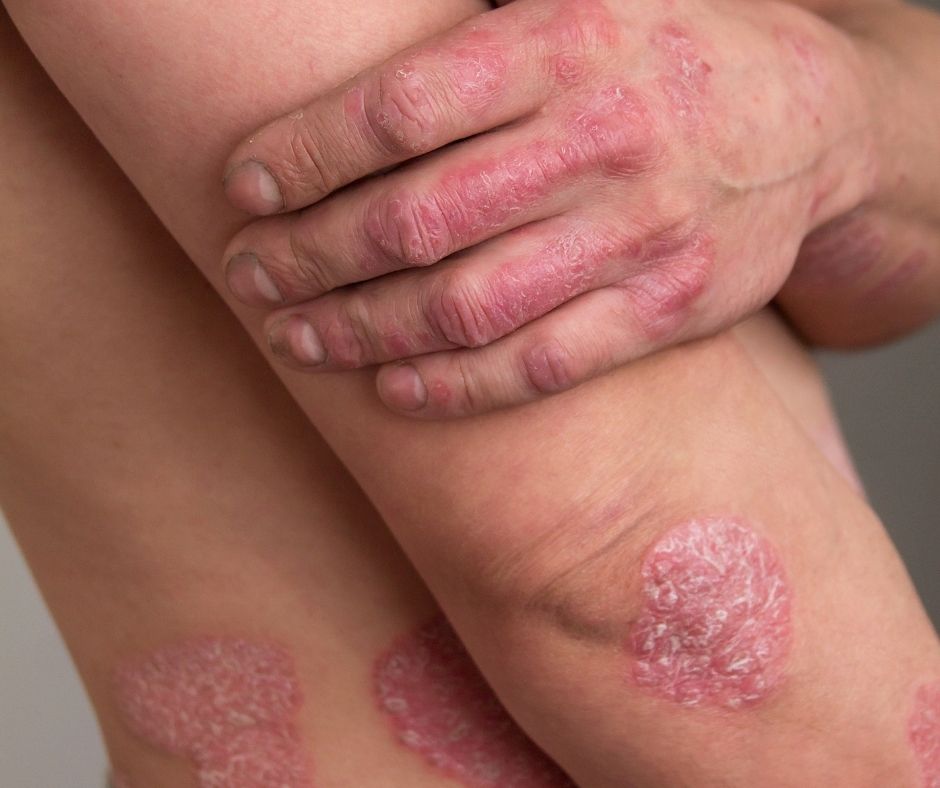
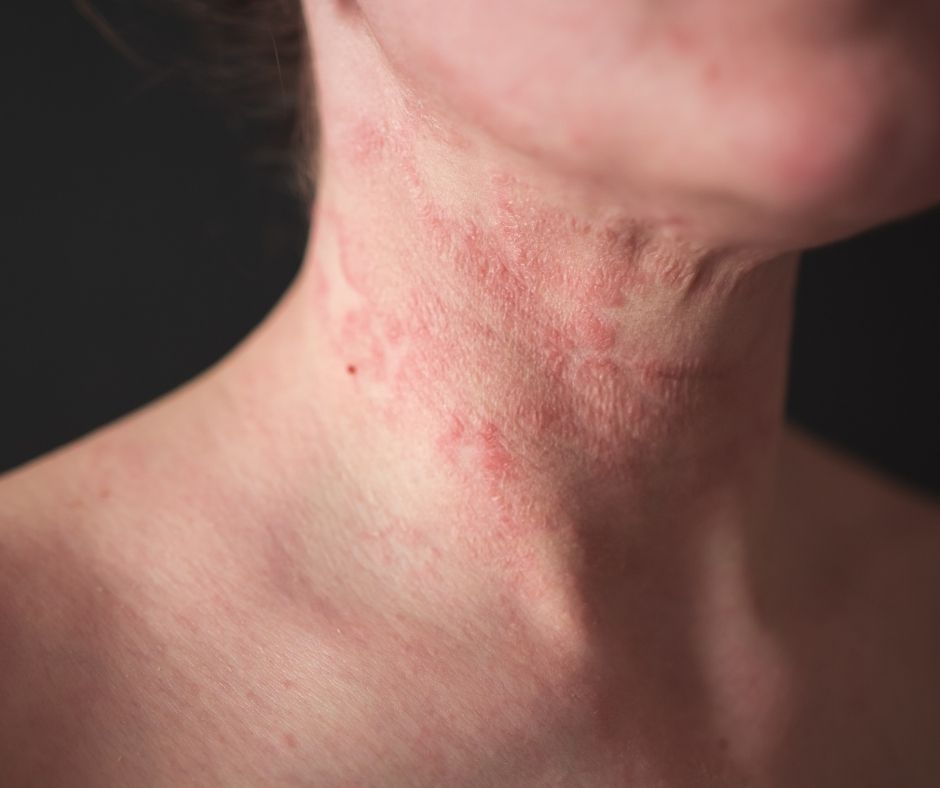
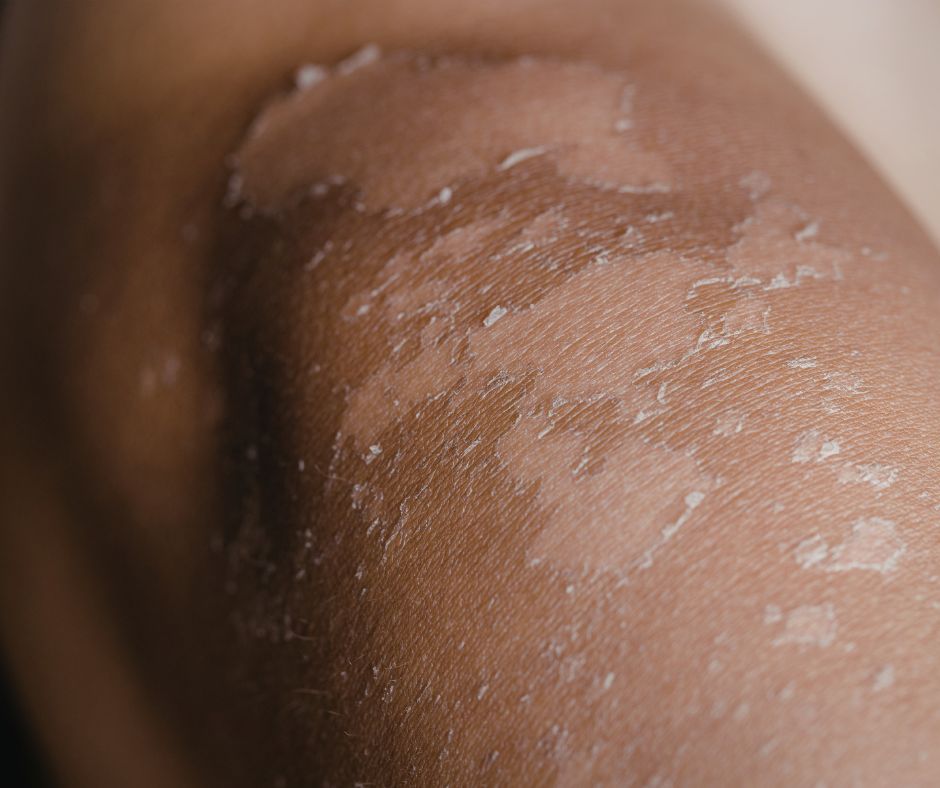
Eczema can be dry and scaly, cracked to the point of bleeding, weeping or dotted with blisters. This distinction matters, because it determines the right texture for your skincare.
What helps with eczema? Natural ingredients that can soothe
Eczema-prone skin is not only thirsty, it is also missing building blocks. Good skincare therefore provides both: lipids that fill the gaps and substances that bind moisture.
Which oil helps with eczema?
| Oil | Special feature | For eczema-prone skin |
|---|---|---|
| Sunflower oil | rich in linoleic acid | supported the skin barrier and improved hydration in one study |
| Jojoba oil | liquid wax, similar to skin sebum | sits lightly on the skin and slows water loss |
| Evening primrose oil | contains gamma-linolenic acid | used traditionally, the evidence is mixed |
| Shea butter | rich plant fat | protects very dry, cracked areas |
Not every plant oil is equally good for the barrier. In a study with adults, sunflower oil preserved the structure of the outermost skin layer and improved skin hydration. Which oil suits which skin is explained in our article on the 6 best plant oils.
Soothing plant substances: oat, aloe vera and panthenol
Colloidal oatmeal contains so-called avenanthramides. In laboratory studies, they dampened inflammatory messengers linked to itching. Aloe vera cools and provides moisture, while panthenol (provitamin B5) helps the skin bind water. And chamomile or calendula? They belong to the daisy family and can trigger contact allergies, especially on permeable skin. So with eczema, it is better to leave them out. You will find more on soothing active ingredients in the article Soothing ingredients.
Moisture without stinging: glycerin
Glycerin is one of the skin’s own moisturising factors and usually does not sting on irritated areas. Still, always test a new product on a small area first.
Finding the right eczema cream
Texture matters more than the brand name. A rich ointment on a weeping area makes things worse, not better.
Lipids, moisture or both? The right texture
In skincare, the rule of thumb is “greasy on dry, moist on moist”. Weeping eczema needs light, water-based care or wet wraps, while dry and cracked areas need rich creams and ointments.
| Skin condition | Suitable care |
|---|---|
| Weeping, inflamed | light lotion, wet wraps, have it checked by a doctor |
| Dry, cracked | rich cream or ointment |
| Calm phase | light to medium cream with glycerin |
And most importantly: keep at it. A Cochrane review shows that with regular skincare, flare-ups occur less often and later than without.
Check the ingredient list: short and low-irritant
The shorter the ingredient list, the fewer potential triggers you put on your skin. Good choices are skin-identical lipids such as ceramides or squalane, humectants such as glycerin and nourishing plant oils.
Which ingredients you should avoid
Fragrances are among the most common triggers of contact allergies, and that also applies to natural fragrances from essential oils. So for eczema-prone skin the rule is: no perfume and no essential oils. You should also avoid harsh surfactants and high amounts of alcohol. You will find a detailed list in the article 10 ingredients sensitive skin should avoid.
The natural cosmetics trap: why natural is not automatically low-irritant
Plant-based sounds gentle. But a single plant extract often brings hundreds of individual substances with it, and each of them can trigger a reaction on damaged skin.
Essential oils and allergens such as limonene or linalool
Oxidation is particularly tricky: when fresh, limonene and linalool from essential oils are only weak allergens. When they come into contact with air, substances form that trigger allergies much more often. So an opened tube can become more irritating over time. Since July 2026, more than 80 fragrance substances must be listed individually on new cosmetic products. What that means for you is explained in our article on the EU fragrance regulation 2026.
Fragrance-free, hypoallergenic, organic: what labels really say
| Claim | What it means | For eczema-prone skin |
|---|---|---|
| Unperfumed | no perfume added | can still contain essential oils |
| Hypoallergenic | allergy risk is meant to be low | no guarantee of tolerance |
| Organic seal | raw materials come from organic farming | says nothing about tolerance |
In practice: read the ingredient list, not just the front of the pack. Why organic cosmetics are not automatically better tolerated is explained in our comparison Organic skincare vs. conventional.
And neem for eczema?
Neem has been used for skin complaints in the Ayurvedic tradition for centuries. For skincare, the leaves are what is most interesting: our neem leaf extract NEEMAVERA® showed antioxidant and anti-inflammatory properties in an in vitro study by Dermatest and proved to be particularly skin-friendly. However, laboratory results cannot be transferred directly to the skin. You can read more about this in the article NEEMAVERA®: What the neem extract does for your skin.
Pure neem oil, on the other hand, calls for caution. It is very concentrated, smells intense and should never be applied to the skin undiluted. On irritated eczema-prone skin, and especially on weeping areas, we advise against home-made neem oil blends, particularly as many recipes also contain essential oils such as lavender. How neem oil and leaf extract differ is explained in our article Neem oil vs. neem leaf extract.
Coconut oil for eczema: helpful or risky?
Coconut oil is often recommended as a home remedy. It can do irritated skin good, but it does not suit every situation.
What coconut oil can do
Virgin coconut oil consists mainly of saturated fatty acids, above all lauric acid. In the laboratory, lauric acid works against certain bacteria, including Staphylococcus aureus, which frequently colonises eczema-prone skin. Coconut oil also forms a film on the skin and so slows water loss. However, it contains hardly any linoleic acid, which the skin needs for its own protective lipids.
When coconut oil can be problematic
On acutely inflamed or weeping areas, heat can build up under the dense film, and the itching tends to get worse. On skin prone to blemishes, coconut oil can also clog pores. Used pure, it is therefore suitable at most for dry, intact areas. In ready-made skincare products, on the other hand, coconut oil is usually one building block among many, combined with oils that provide more linoleic acid.
Home remedies for eczema: what you can safely try

Home remedies can support eczema-prone skin in everyday life when it itches, feels tight or stings. They do not replace treatment, but they often take the edge off the itching and support your daily skincare. What matters is choosing the right remedy for the current state of your skin and not trying several new things at once.
What helps quickly with eczema? First aid during a flare-up
When the itching is acute, a fixed sequence helps so you do not scratch out of desperation:
- Cool instead of scratching: Moisten a clean cotton cloth with cool tap water, wring it out lightly and apply it for 10 to 15 minutes. Moisten it again in between if needed.
- Dry gently: Pat the skin dry, do not rub.
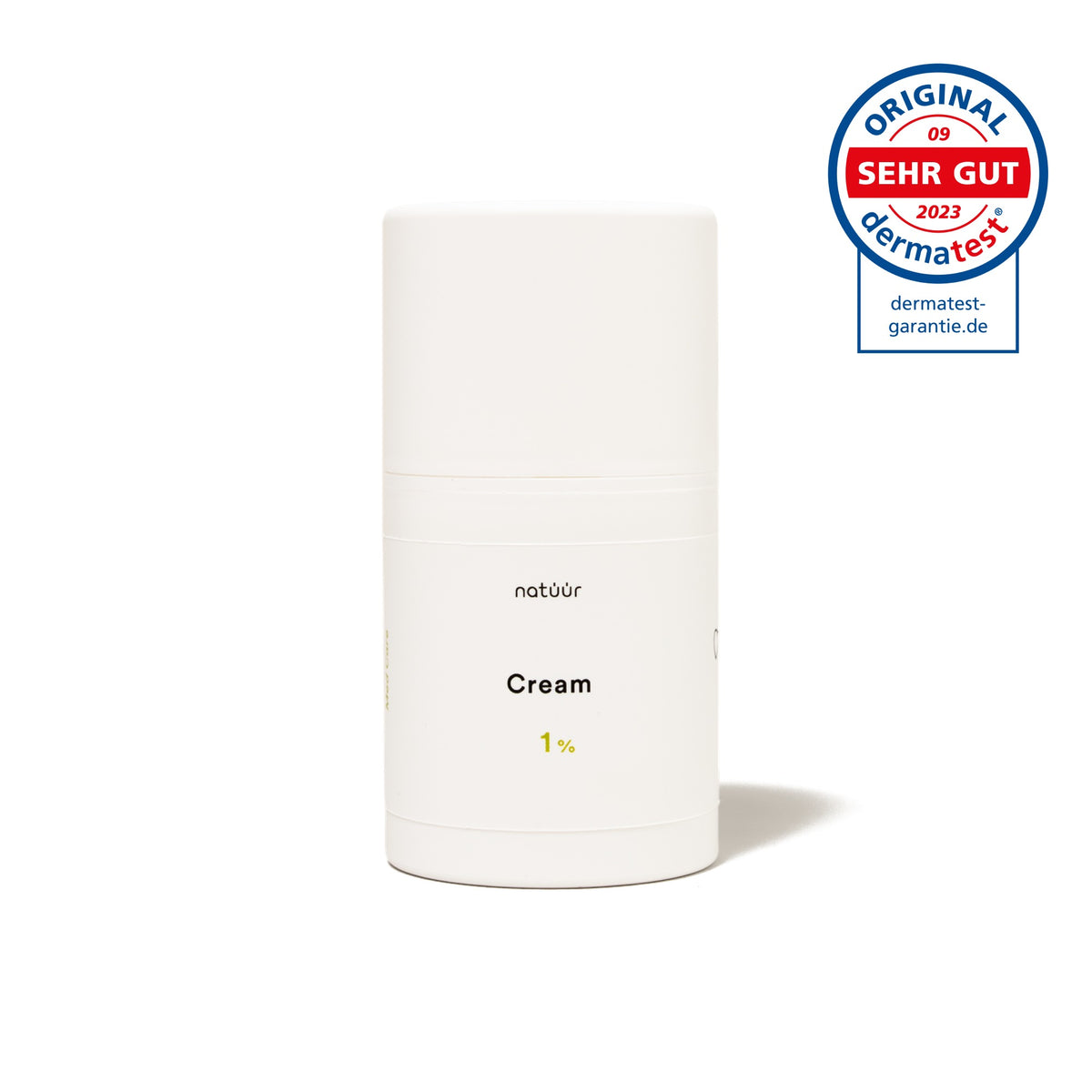
- Moisturise straight away: Apply your usual fragrance-free skincare to the still slightly damp skin, for example our light Cream or, on very dry areas, the richer Cream forte. Weeping areas only get light care or further moist compresses.
- Prevent scratch damage: Keep your nails short, wear soft cotton clothing and put on thin cotton gloves at night if needed.
- Do not test anything new: During a flare-up, stick to what your skin knows.
Proven home remedies at a glance
| Home remedy | How it works | Suits | Better not with |
|---|---|---|---|
| Oat bath | 2 to 3 tablespoons of colloidal oatmeal in lukewarm water, bathe for 10 to 15 minutes, pat dry, moisturise | widespread itching, dry skin | open areas, known oat allergy |
| Black tea compress | steep 2 bags of black tea for 10 minutes, let it cool completely, soak a cloth and apply for 10 minutes | weeping areas, blisters, face | very dry, cracked skin |
| Cool water compress | cotton cloth with cool tap water, 10 to 15 minutes | acute itching, feeling of heat | (hardly any restrictions) |
| Sunflower oil | a few drops of cold-pressed oil on slightly damp skin | dry, intact areas | weeping or inflamed areas |
| Pure aloe vera gel | apply thinly, only gel without alcohol and fragrance, test first | mild redness, feeling of tightness | open areas; rarely allergies |
After the oat bath, moisturise larger areas while the skin is still slightly damp, for example with Cream forte. Lukewarm rather than hot applies to everything, because heat intensifies itching. And: home remedies only go on intact skin or, like the compresses, on weeping areas without signs of infection.
Home remedies for eczema on the face
Facial skin is thin and reacts faster. Of all things, black tea compresses are well studied here: in a small study at the University of Lübeck with 22 participants, atopic or contact eczema on the face improved markedly within the first three days with black tea compresses and a moisturising cream, without side effects (Witte et al., 2019). The study had no comparison group, but the tannins in tea have a plausible astringent and soothing effect.
- Put the cooled tea on a thin cotton cloth and apply it for 10 minutes, leaving out the eyes.
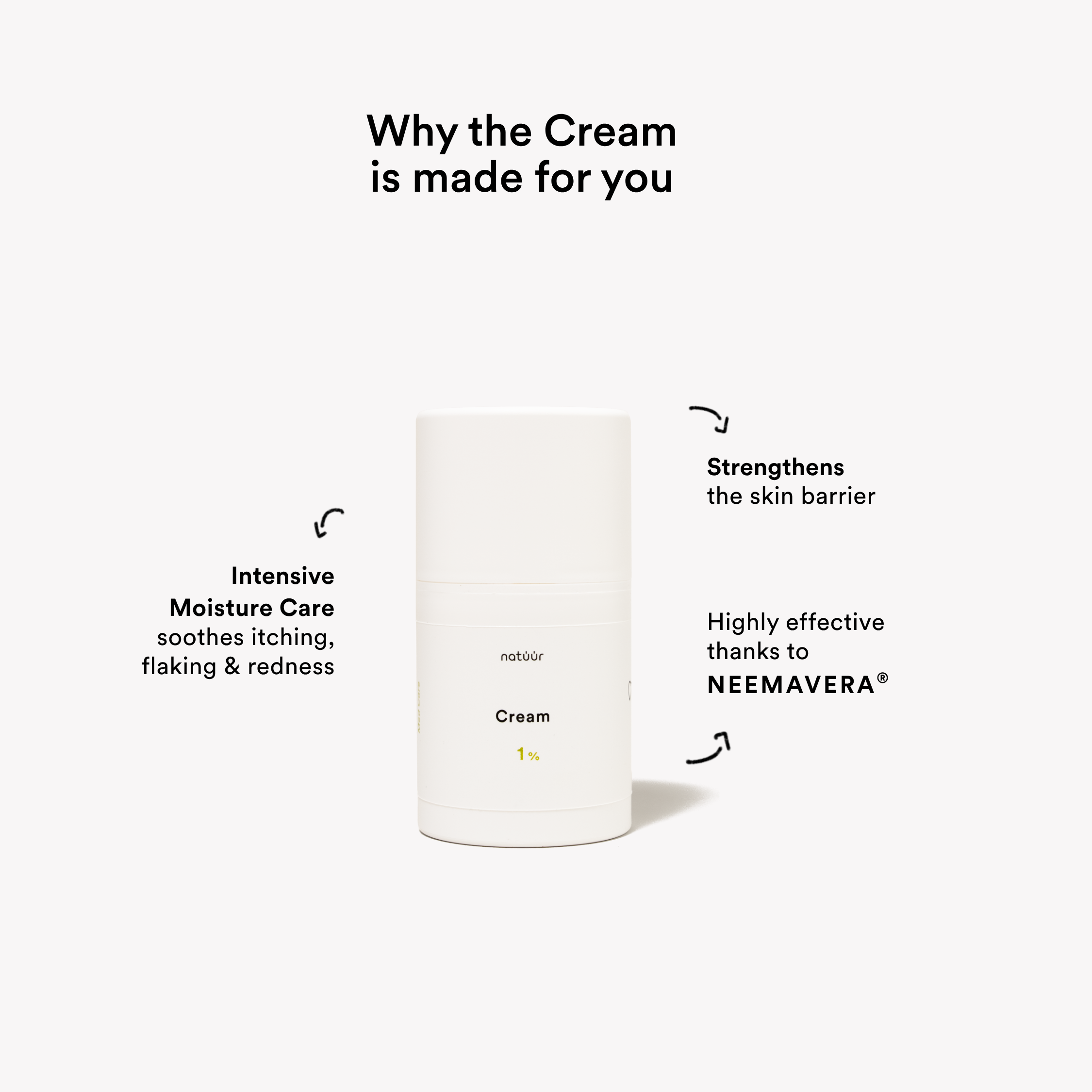
- Then apply a light, fragrance-free cream. Our Cream with 1 % NEEMAVERA® absorbs quickly and is also suitable for the face.
- On the face, avoid pure oils, acids, scrubs and essential oils.
- Eczema on the eyelids or around the eyes needs to be seen by a dermatologist.
Home remedies for hand eczema
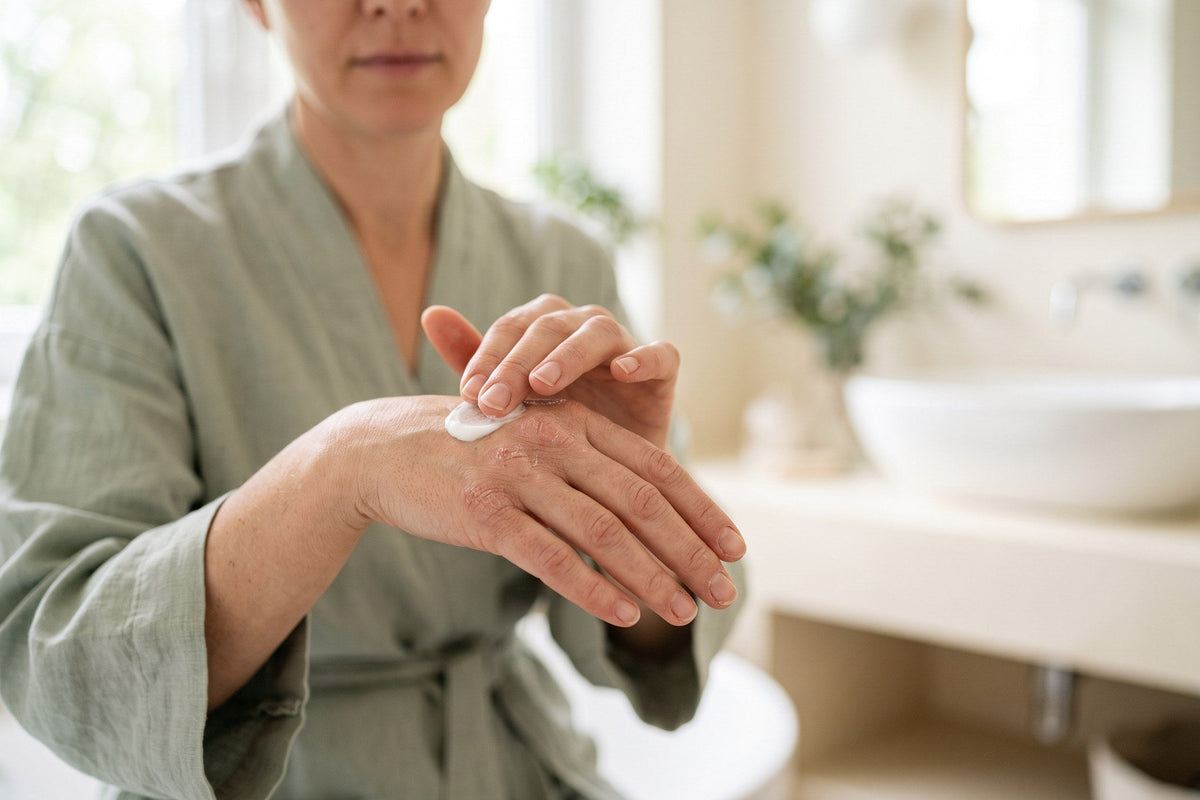
Hands above all need protection and regular replenishing of lipids. An oat hand bath is a proven home remedy: one tablespoon of colloidal oatmeal in a bowl of lukewarm water, soak your hands in it for five minutes, pat dry and moisturise straight away. In the evening, apply a rich ointment generously to your hands and put thin cotton gloves on over it for the night. Our water-free Skin Balm, which intensively replenishes very dry, cracked areas, is well suited for this. How to protect your hands from water and cleaning products in everyday life is explained further down in the section on hand eczema.
Home remedies for dyshidrotic eczema
With dyshidrotic eczema, small, very itchy blisters form on the palms, the sides of the fingers or the soles of the feet. Here, everything depends on the phase:
- Blister phase: cool and gently dry out. Hand or foot baths in cooled black tea (10 minutes) and cool compresses help, whereas thick greasy ointments trap heat. Do not pierce the blisters, otherwise germs can get in.
- Scaling phase: When the blisters dry up and the skin scales or cracks, switch to rich, lipid-replenishing care such as Cream forte or, on cracked areas, Skin Balm.
Is zinc ointment good for eczema?
Zinc ointment is more of a pharmacy classic than a home remedy. Zinc oxide has a mild drying and astringent effect. On small, weeping areas this can feel pleasant. On typical dry eczema skin, however, zinc ointment dries the skin out even further and is therefore not suitable as everyday care. Ask at the pharmacy or your dermatologist before using it on larger areas.
Better not: home remedies that often make eczema worse
| Home remedy | Why it tends to do harm |
|---|---|
| Apple cider vinegar | In a study with diluted apple cider vinegar soaks (0.5 %) over 14 days, the skin barrier did not improve, but almost three in four participants developed mild skin irritation. |
| Tea tree oil and other essential oils | Are among the known triggers of contact allergies; in large test series, tea tree oil is considered a relevant allergen. |
| Lemon juice | Acid stings on damaged skin and can irritate it further. |
| Bicarbonate of soda or baking powder | Is alkaline and can disrupt the skin's acid mantle. |
| Chamomile and calendula | Plants of the daisy family can trigger contact allergies, especially on permeable skin. |
| Hot baths | Heat intensifies itching and strips out skin lipids. |
You can find the study on apple cider vinegar at Luu et al., 2019, and the analysis of essential oils at Warshaw et al., 2017. Why the skin's pH value matters so much is explained in our article on the pH value of the skin.
A new home remedy? Test it first
Only ever try one new remedy at a time and test it beforehand: apply a small amount to the inside of your elbow twice a day, then wait 48 to 72 hours. If the skin stays calm, you can use it on the affected areas. Exactly how this works is explained in our article on the patch test. Yellowish crusts, pus-filled blisters, throbbing pain or fever are not a case for home remedies, but for a dermatologist.
Easier with ready-made skincare
If you would rather not mix things yourself: our Calm Skin Trio is specially developed for skin prone to eczema, atopic dermatitis or psoriasis, without fragrances, vegan and dermatologically tested with the rating “very good” (Dermatest).
- Cream (1 % NEEMAVERA®): light, absorbs quickly, also for the face
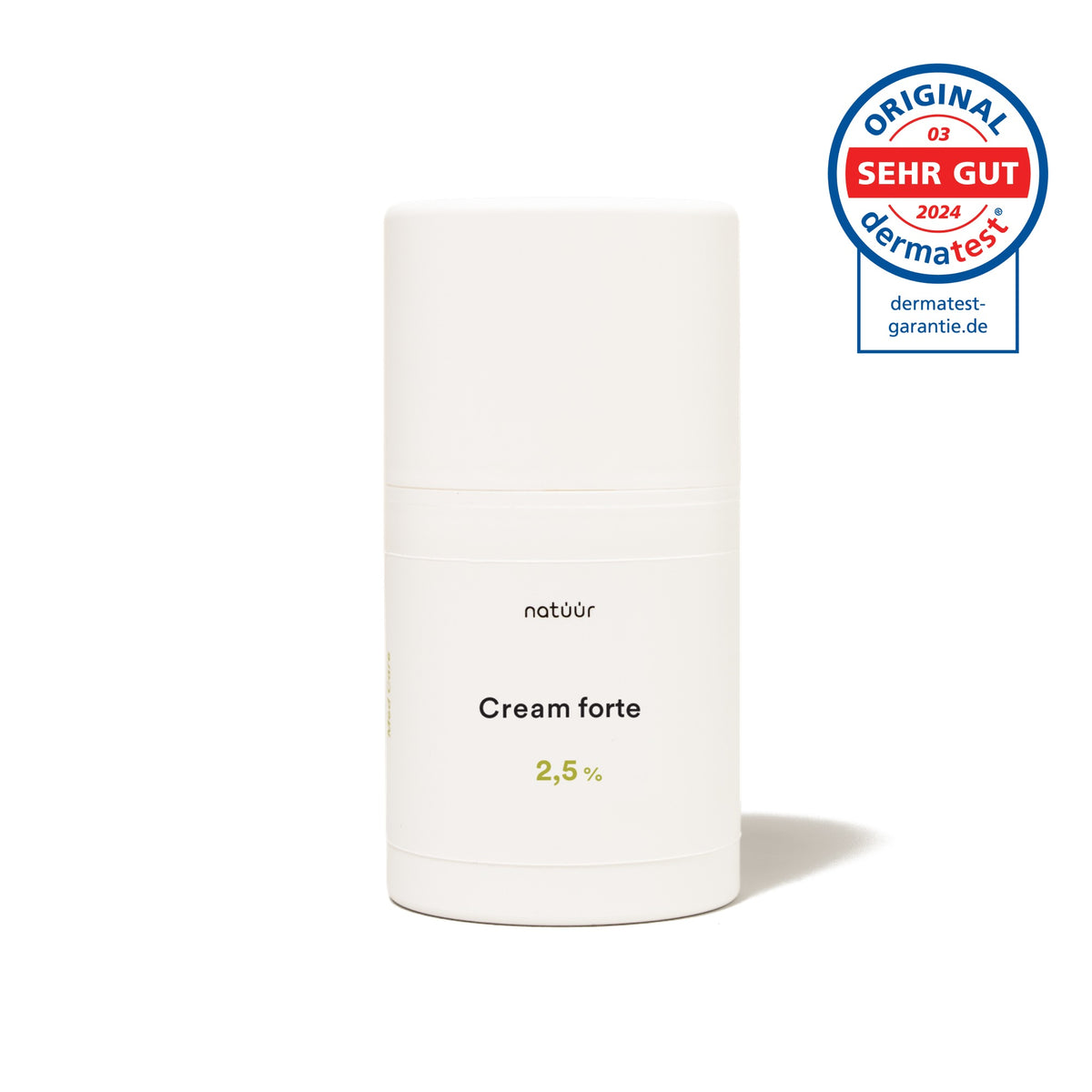
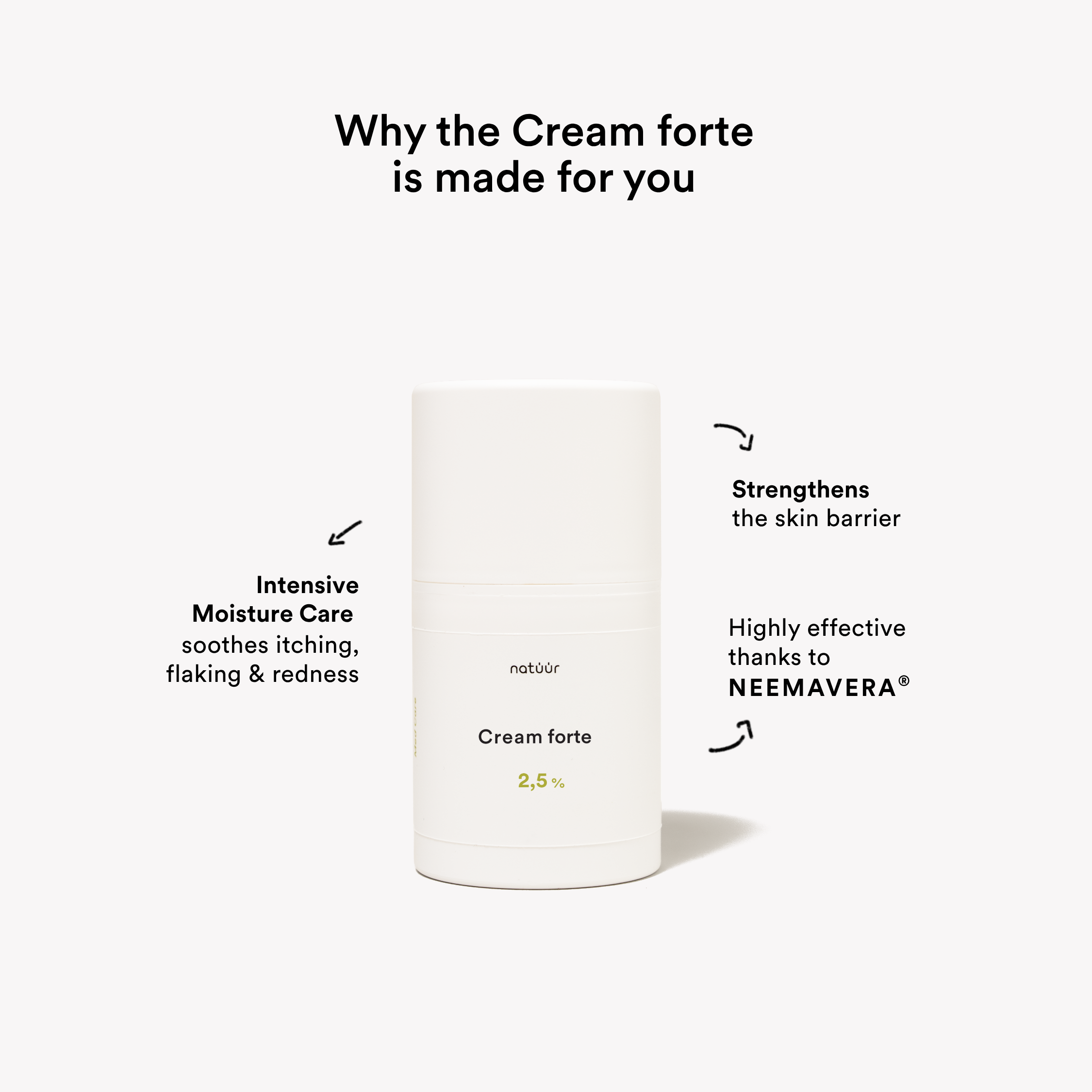
- Cream forte (2.5 % NEEMAVERA®): rich, for stressed areas of skin
- Skin Balm (2.5 % NEEMAVERA®): water-free care ointment for very dry, cracked areas
For atopic dermatitis, i.e. atopic eczema, there is also the Neuro Kit with Cream (15 ml) for small, sensitive areas and Cream forte (150 ml) for large-area care.
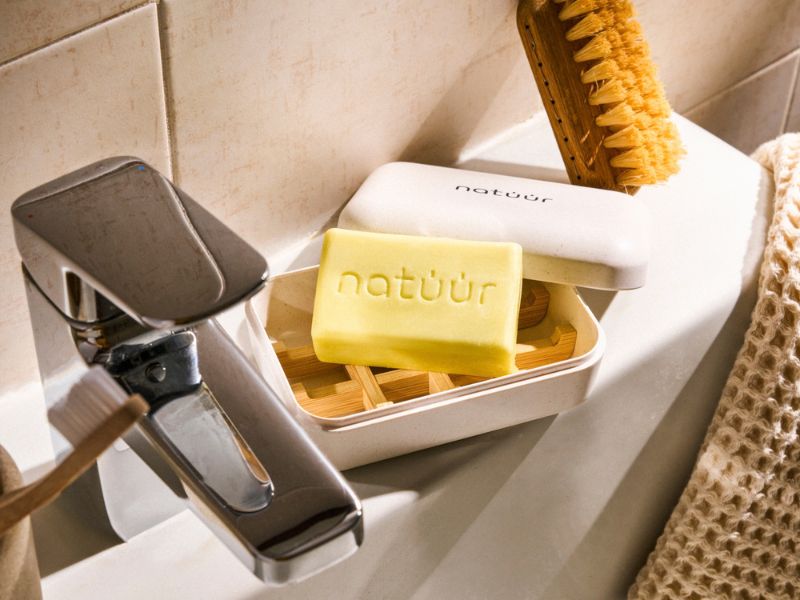
For gentle cleansing there is the fragrance-free Solid Soap. Our skincare supports medical treatment, but does not replace it.
Hand eczema: care and protection in everyday life
Hands get washed, disinfected and dipped in washing-up water. Frequent contact with water is considered one of the main causes of hand eczema: water makes the outermost skin layer swell, and cleaning products strip out the skin lipids. The rule here: protection comes before care.
Cleanse gently, replenish lipids, protect
- Wash with lukewarm rather than hot water and gently pat the skin dry, including between the fingers.
- Use mild, fragrance-free cleansing instead of harsh soaps.
- Apply a thin layer of skincare after every wash, not just in the evening.
- Wear protective gloves when cleaning and washing up, with thin cotton gloves underneath to prevent sweating.
You can read more about how cleansing and the skin barrier are connected in the article Bar soap or liquid soap?.
Intensive overnight care
At night, your hands rest. That is the best time for a rich ointment: apply generously, put thin cotton gloves on top and leave it to work overnight.
Your simple routine for eczema-prone skin
More products do not mean more help. Every additional product brings new ingredients and therefore new potential triggers. If you cut down to two or three well-tolerated products, you will notice more quickly what does your skin good and what does not.
| When | What you do | Texture |
|---|---|---|
| Morning | rinse with lukewarm water, moisturise the slightly damp skin | light cream |
| Evening | cleanse gently, replenish lipids, give your hands extra care | rich cream or balm |
| During a flare-up | just care for your skin, do not try anything new | your usual, well-tolerated skincare |
| Outdoors | protect your skin from the sun | mineral sunscreen, SPF 30 or higher |
It is best to moisturise straight after showering, while your skin is still slightly damp. That way the skincare locks the moisture in. How to test new products safely is explained in our article on the patch test.
When skincare is not enough: medical advice for eczema
Skincare replenishes the barrier, keeps moisture in the skin and avoids irritants. But it cannot switch off an ongoing inflammation. Daily skincare is the foundation and works especially well in calm phases. During an acute flare-up, it supports medical treatment.
If contact eczema is suspected, a patch test at a dermatologist’s practice can help. Typical allergens are stuck onto your back and the reaction is read after two to three days. This is how you find out which substance is your trigger.
Warning signs: when you should see a doctor
- yellowish crusts, pus-filled blisters or increasing redness, as they can indicate an infection
- pain instead of itching, fever or generally feeling unwell
- spreading to new areas of skin
- hand eczema that does not improve over several weeks
- flare-ups that return at ever shorter intervals
Tip for your appointment: take photos of the affected areas and note down when it started and which products you use.
Frequently asked questions
Which oil helps with eczema?
Oils rich in linoleic acid such as sunflower oil support the skin barrier, while jojoba oil sits lightly on the skin and slows water loss. A test on a small area shows which oil does you good. Oils do not belong on weeping areas.
Are all natural cosmetics suitable for eczema?
No. Essential oils and their fragrance substances such as linalool or limonene are among the common triggers of contact allergies. Natural cosmetics are suitable for eczema if they do without fragrances and have a short ingredient list.
Does coconut oil help with eczema?
Sometimes. Coconut oil slows water loss and lauric acid works against certain bacteria in the laboratory. On inflamed or weeping areas, however, it can trap heat. Used pure, it is suitable at most for dry, intact areas.
Which home remedies help with eczema?
Well tolerated options are a lukewarm oat bath, cooled black tea compresses, cool water compresses and, on dry, intact areas, a few drops of sunflower oil. Apple cider vinegar, tea tree oil, lemon juice and bicarbonate of soda, on the other hand, tend to irritate. On open or infected areas, you should not try home remedies, but seek medical advice instead.
What helps quickly with eczema?
Cool instead of scratching: apply a moist, cool cotton cloth for 10 to 15 minutes, then pat the skin dry and apply your usual fragrance-free skincare straight away. Short nails, cotton clothing and thin gloves at night prevent scratch damage.
Is zinc ointment good for eczema?
Zinc ointment has a mild drying and astringent effect and can feel pleasant on small, weeping areas. On dry eczema skin it dries the skin out even further and is therefore not suitable as everyday care. Ask at the pharmacy or your dermatologist before using it on larger areas.
What helps with eczema on the face?
In a small study, cooled black tea compresses proved effective and well tolerated for facial eczema. Afterwards, apply a light, fragrance-free cream. On the face, avoid pure oils, acids, scrubs and essential oils. Eczema around the eyes needs medical attention.
Which home remedies help with hand eczema?
A short oat hand bath in lukewarm water soothes, then moisturise straight away. Overnight, a rich ointment under thin cotton gloves helps. In everyday life, gloves protect against water and cleaning products when cleaning and washing up.
What does a simple skincare routine for eczema-prone skin look like?
In the morning, cleanse gently and apply a light moisturiser; in the evening, use richer care. During a flare-up, only use your usual, well-tolerated skincare and do not try anything new.
How do I test a new product on eczema-prone skin?
Apply a small amount to the inside of your elbow twice a day and watch the area for 48 to 72 hours. Delayed reactions often only appear on the second or third day. If the skin stays calm, you can use the product on larger areas.
Sources
- van Zuuren EJ et al.: Emollients and moisturisers for eczema. Cochrane Database of Systematic Reviews, 2017 (PubMed)
- Danby SG et al.: Effect of olive and sunflower seed oil on the adult skin barrier: implications for neonatal skin care. Pediatric Dermatology, 2013 (PubMed)
- Reynertson KA et al.: Anti-inflammatory activities of colloidal oatmeal (Avena sativa) contribute to the effectiveness of oats in treatment of itch associated with dry, irritated skin. Journal of Drugs in Dermatology, 2015 (PubMed)
- Schubert S et al.: Patch testing hydroperoxides of limonene and linalool in consecutive patients. Results of the IVDK 2018–2020. Contact Dermatitis, 2023 (PubMed)
- Witte M et al.: Black tea dressings: a rapidly effective treatment for facial dermatitis. Journal of Dermatological Treatment, 2019 (PubMed)
- Luu LA et al.: Apple cider vinegar soaks [0.5%] as a treatment for atopic dermatitis do not improve skin barrier integrity. Pediatric Dermatology, 2019 (PubMed)
- Warshaw EM et al.: Positive patch-test reactions to essential oils in consecutive patients from North America and Central Europe. Dermatitis, 2017 (PubMed)