





Psoriasis in Winter: Why It Gets Worse and What Helps
As soon as it gets cold outside and the heating is turned up indoors, many people find their plaques coming back: the skin feels tight, flakes more and itches. You are not alone in this. For many people with psoriasis, it gets worse in autumn and winter. Here you can find out why and how to get your skin through the cold season in good shape.
In short: dry heated air, cold, little sunlight and more frequent infections take their toll on the skin in winter. What helps: replenish your skin's lipids consistently, shower briefly in lukewarm water, keep an eye on humidity, care for your scalp, hands and nails too – and if flare-ups get stronger, talk to your dermatologist in good time.
Does psoriasis get worse in winter?
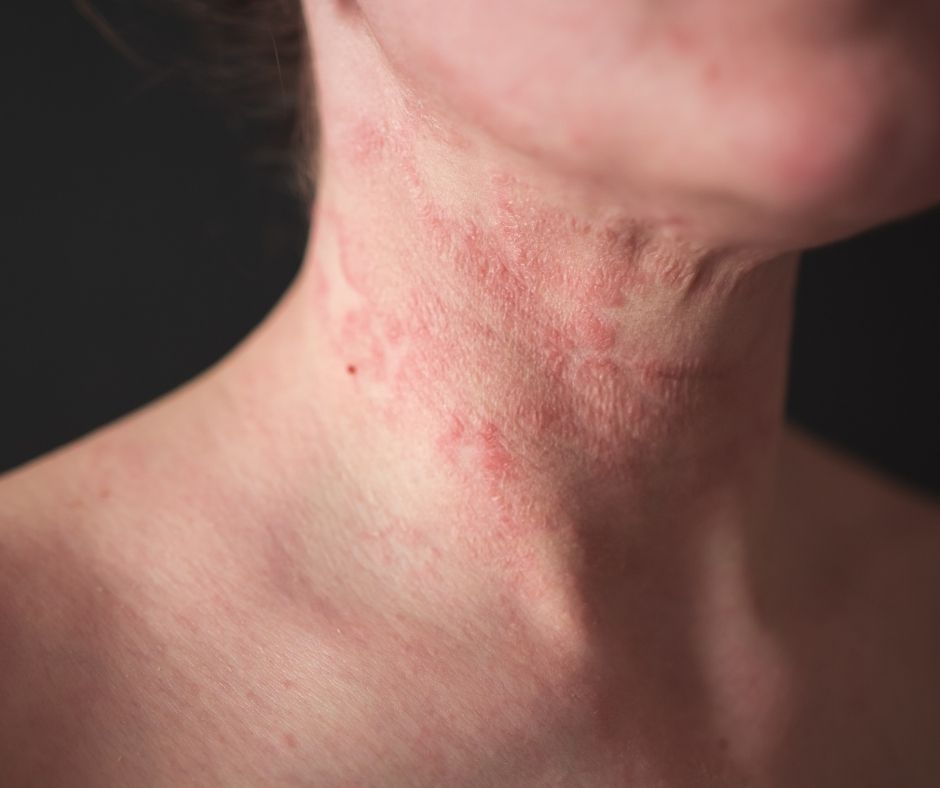
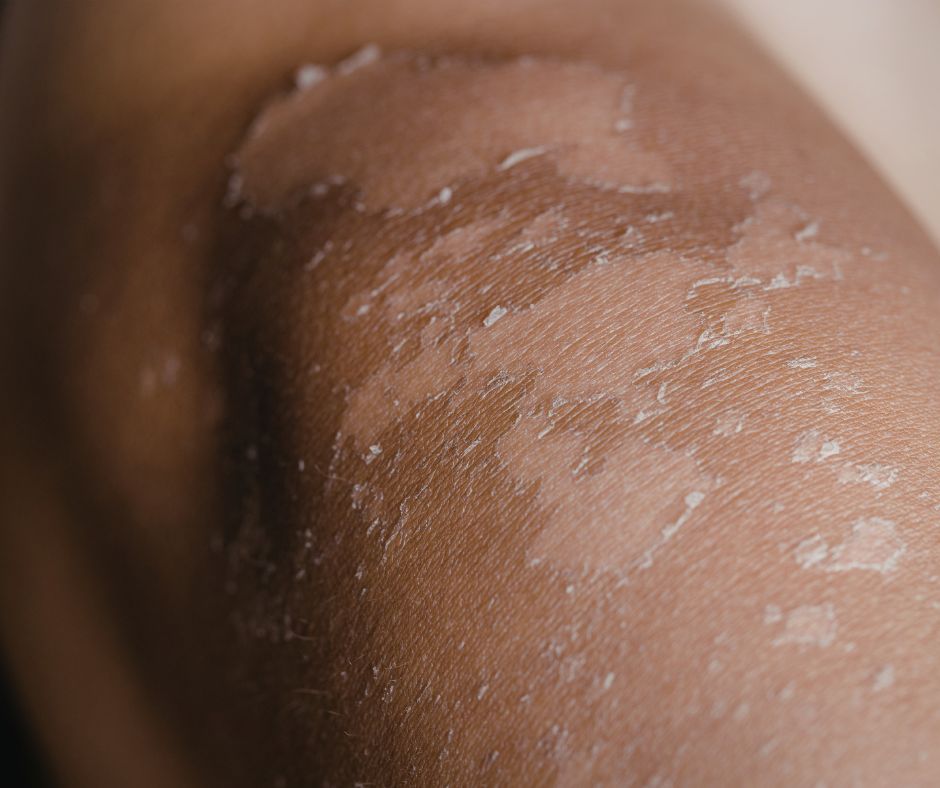
For many people, yes. A large proportion of those affected experience more flare-ups and stronger symptoms in the cold season, whereas in summer things often improve. There are several reasons for this, and they reinforce each other:
| Trigger | What it does to your skin |
|---|---|
| Heated air | Indoor humidity drops sharply, sometimes below 30 %. The skin loses more water, dries out and feels tight. |
| Cold and wind | The blood vessels under the skin contract. The skin receives less blood flow and therefore fewer nutrients, and the skin barrier becomes more vulnerable. |
| Little sunlight | Sunlight influences the hormone balance and vitamin D production and slows down inflammation in the skin – which is why UV light is used specifically in light therapy. In winter, this effect is largely missing. |
| Infections | Colds, flu-like infections and above all sore throats put a strain on the immune system and can trigger flare-ups. |
| Hot showers | Hot water feels good, but it strips lipids from the skin and dries it out even more. |
| Stress and the holidays | End-of-year stress, less exercise and more alcohol can encourage flare-ups in some people. |
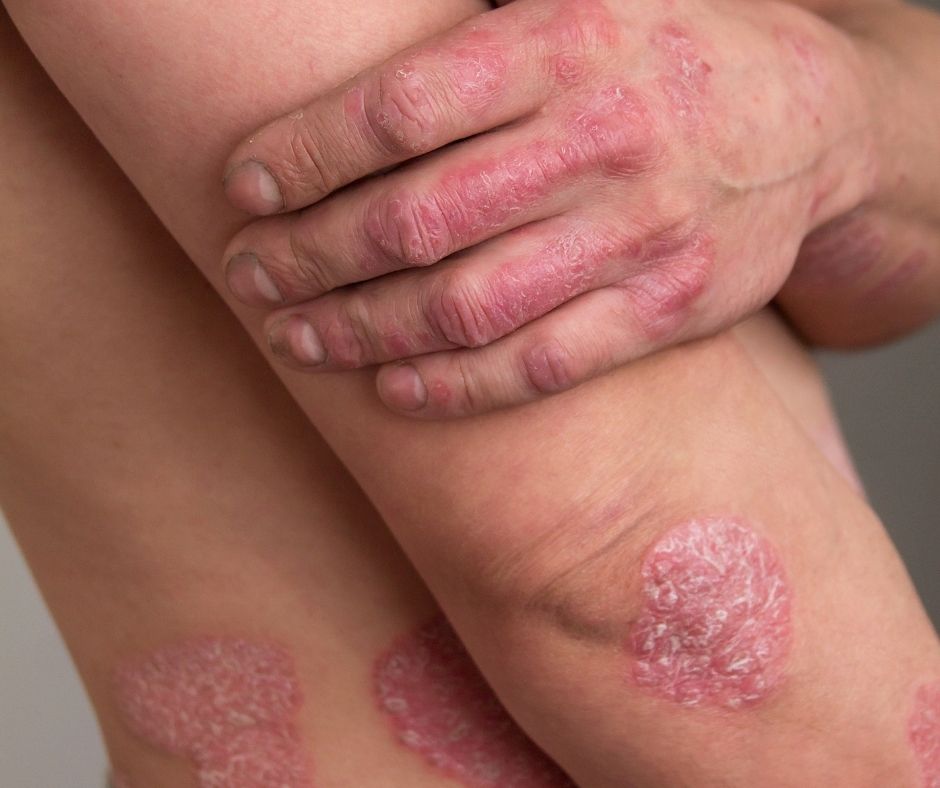
With psoriasis, the skin is under constant stress anyway: the immune system drives inflammation, the skin cells renew themselves far too quickly and the skin barrier is weakened. If it then also lacks moisture and lipids in winter – such as the ceramides in the stratum corneum – it can put up even less resistance to irritants. This lipid layer of ceramides, cholesterol and fatty acids keeps the skin supple and normally also protects against germs penetrating deeper layers of the skin. If it is weakened or the skin is even cracked, this protection works less well.
Psoriasis only in winter – is that normal?
Yes, it happens. Some people have visible patches almost only in the cold season and hardly any symptoms in summer. The predisposition to psoriasis is still there all year round – winter with its triggers simply brings it to the surface. That is exactly why it is worth starting a good skincare routine in autumn and not waiting until your skin cracks open again.
8 tips for your skin in winter
1. Replenish lipids every day – ideally straight after washing
The most important thing in winter: give your skin back the lipids and moisture it lacks. It is best to apply cream straight after showering, while your skin is still slightly damp. Look for moisturising ingredients such as glycerin, soothing ones such as sweet almond oil and nourishing ones such as aloe vera and panthenol – and avoid fragrances. Rich creams supply the skin with the lipids its barrier lacks in winter.
For your face, you can also apply a moisturising mask once or twice a week. This helps when heated air makes your skin brittle and cracked.
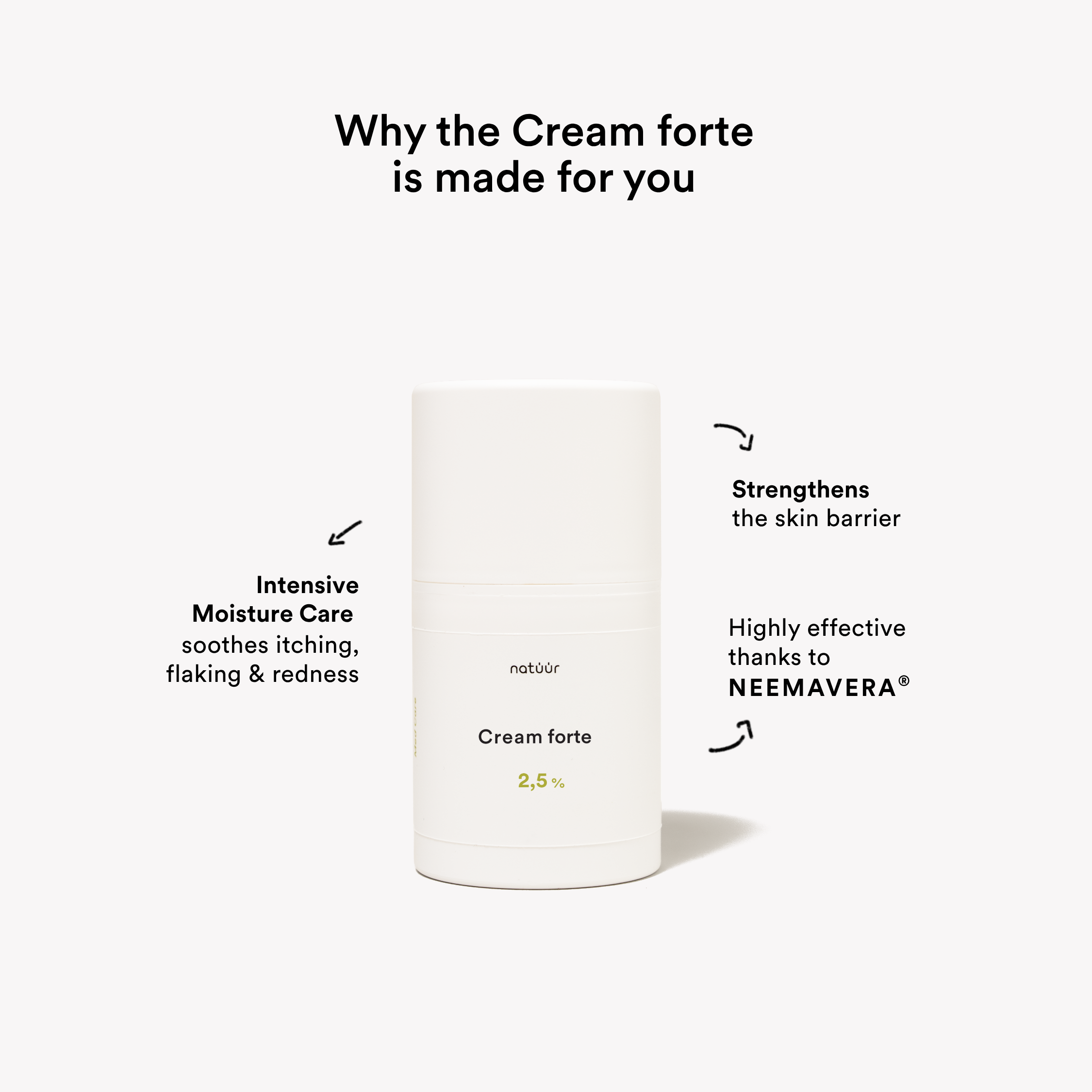
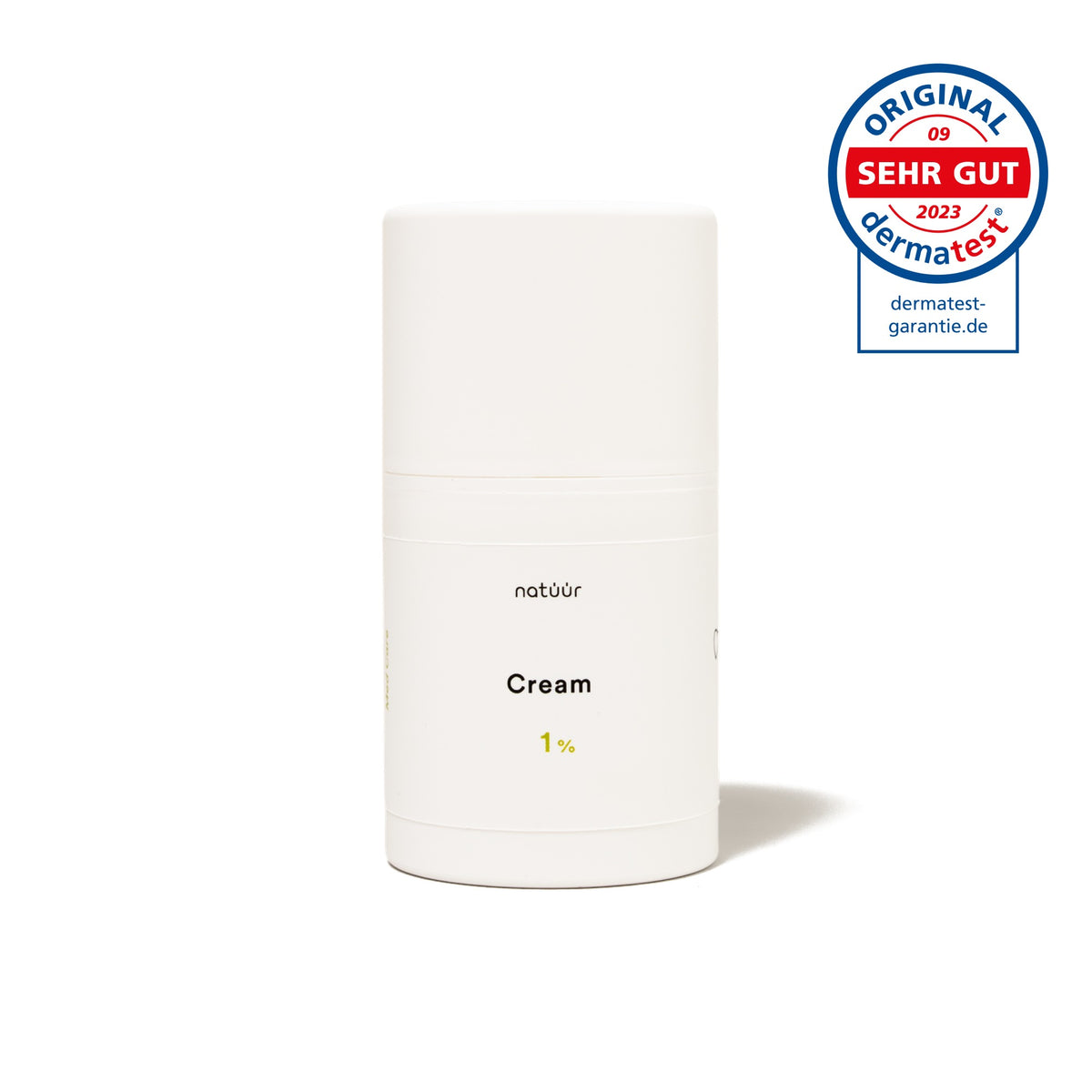
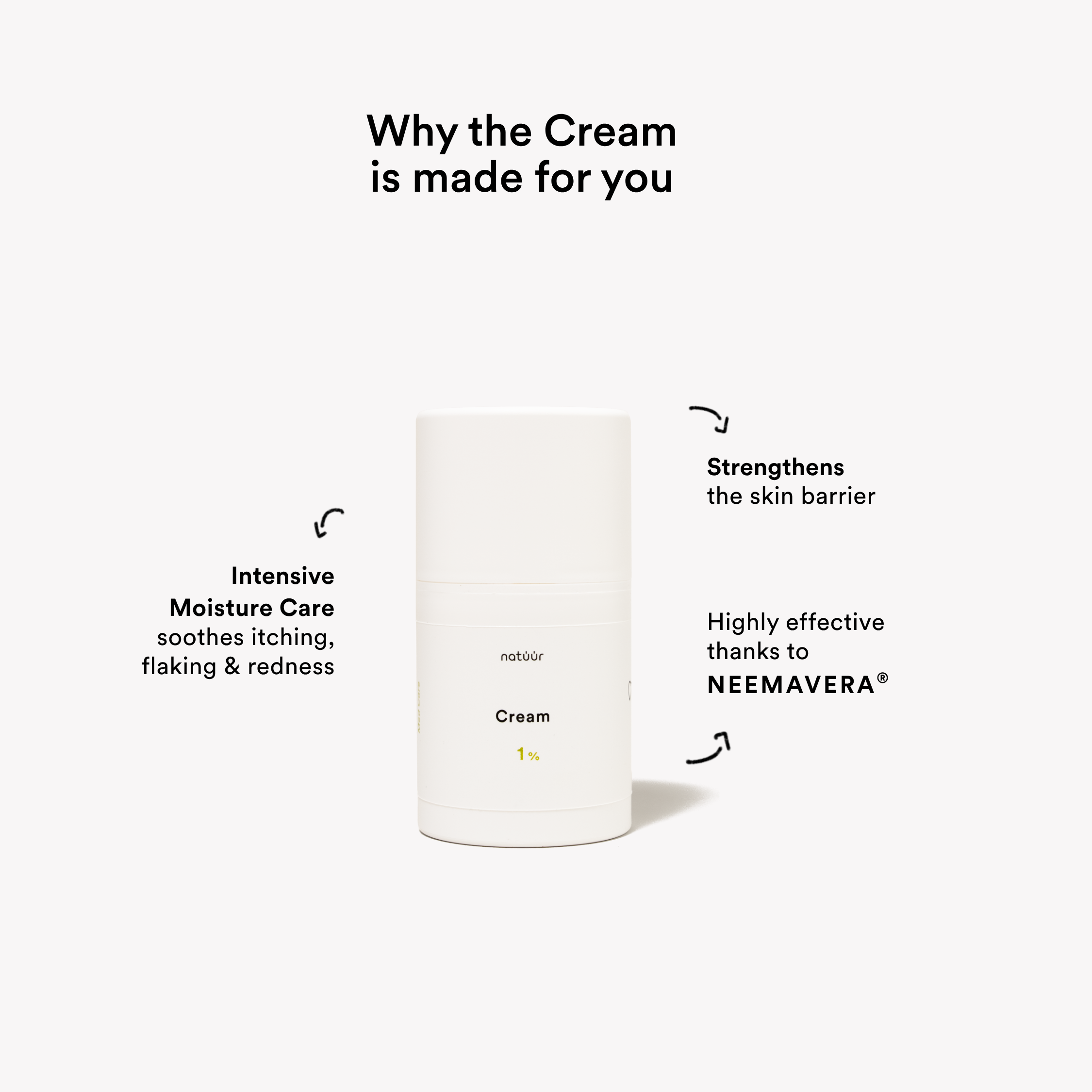
At natüür, we have three textures for this: the light Cream for larger areas, the richer Cream forte for particularly dry, scaly patches and the water-free Skin Balm for rough, cracked skin overnight. Our Cream contains exactly the ingredients mentioned: glycerin, sweet almond oil, aloe vera and panthenol. All three also contain our neem leaf extract NEEMAVERA®, which we make ourselves. Among other things, it contains nimbolide and flavonoids; its antioxidant and anti-inflammatory properties have been confirmed in the laboratory by Dermatest. You can read which of the three suits you in our comparison of Cream, Cream forte and Skin Balm.
2. Shower briefly in lukewarm water

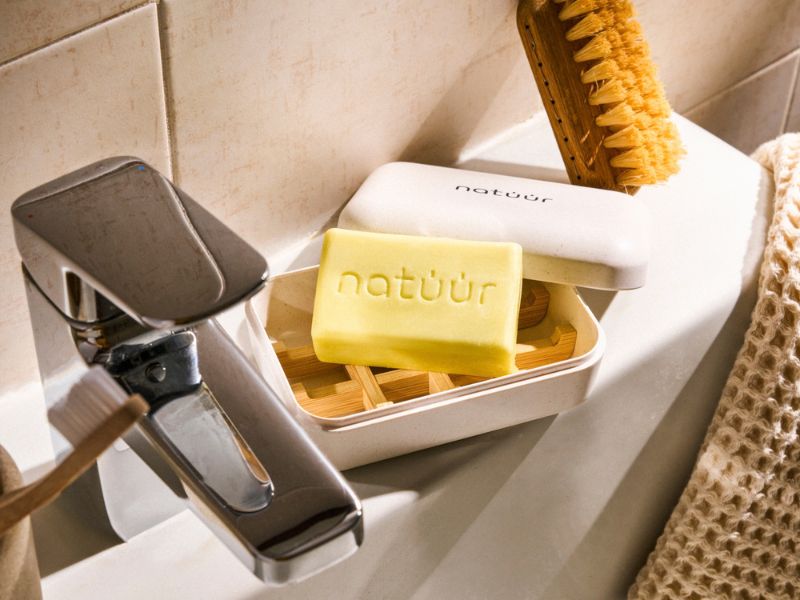
As tempting as a hot bath is after a cold day: hot water strips the lipids from your skin. It is better to shower briefly in lukewarm water, for around five to ten minutes. Use a mild, skin-neutral pH cleanser without sulphates and ideally without fragrances, and then gently pat your skin dry instead of rubbing. If you like taking baths: keep the water lukewarm and use a nourishing, lipid-replenishing bath additive, for example an oil bath.
3. Keep an eye on humidity
In heated rooms, humidity in winter often drops well below 40 %, sometimes even below 30 %. Around 40 to 60 % is more comfortable for the skin. An inexpensive hygrometer shows you where you stand. Regularly airing the room with the windows wide open for a short time, a humidifier or bowls of water on the radiator help keep the air a little more humid. And: don't heat the bedroom too much.
4. Don't forget your scalp
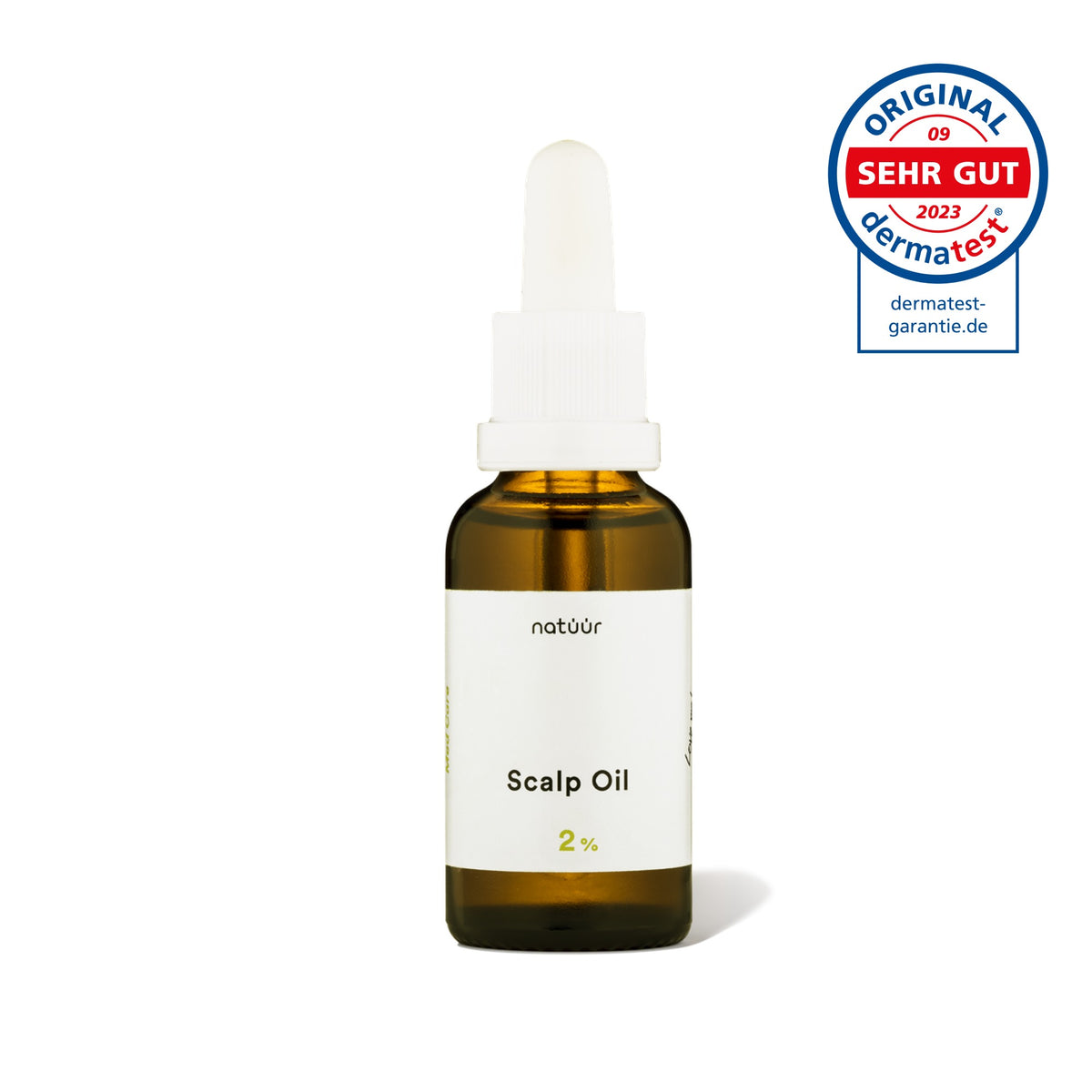
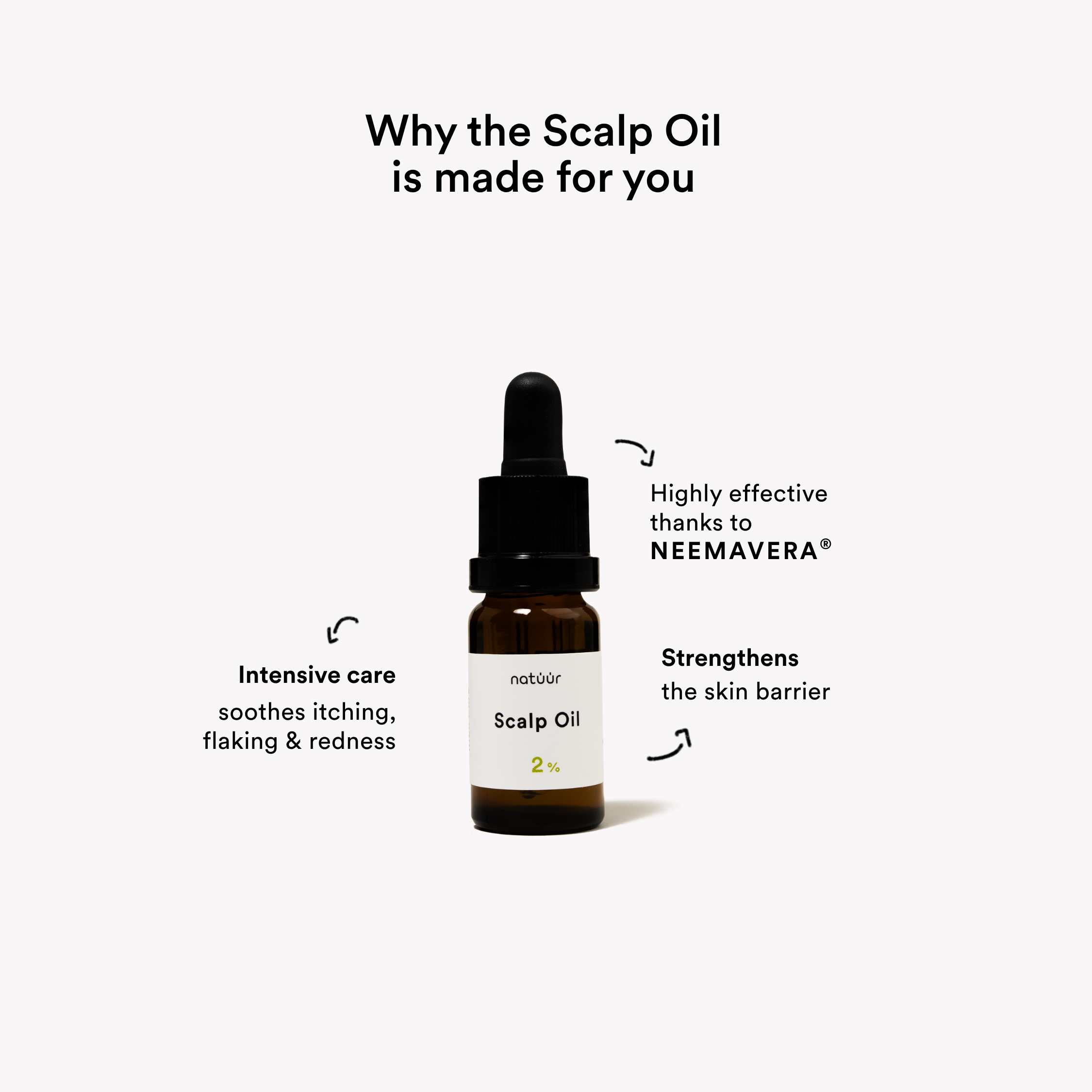
Hats, dry air and hot blow-drying also take their toll on the scalp. Wash your hair with a mild, moisturising shampoo and not too hot: massage it gently into the scalp, rinse thoroughly and use a mild conditioner if needed. Avoid aggressive, perfumed products. If your scalp is flaky and itchy, you can massage in a nourishing oil in the evening and leave it on overnight – our Scalp Oil with olive, avocado, jojoba and almond oil, vitamin E and 2 % NEEMAVERA® is designed exactly for this.
5. Protect your hands and nails

In winter, your hands are exposed to cold, wind and frequent washing. Wear gloves outdoors – if wool scratches, a thin cotton glove underneath helps. Apply cream to your hands after every wash. Your nails and cuticles also need extra care in the cold so that they don't dry out and tear. If psoriasis also affects your nails, a water-free Nail Balm with jojoba, sunflower, macadamia and castor oil plus vitamin E provides intensive care for nails and cuticles, overnight too if you like. How to recognise psoriasis of the nails and what helps medically is explained in our dedicated guide.
6. Soft clothing directly on your skin
Rough wool and synthetic fabrics can further irritate already irritated skin. It is better to wear soft, breathable fabrics such as cotton directly on your skin and put the warm jumper on over them. Several thin layers are better than one thick one in which you quickly start to sweat.
7. Get some daylight

Make use of sunny winter days for a walk. Daylight and exercise are good for your skin and your mood. The only important thing is that you don't get sunburnt – on snow and in the mountains, UV radiation is stronger than you might think, and injured skin can trigger new patches. So protect all areas of skin not covered by clothing with a high-SPF sunscreen. Good to know: a small proportion of people with psoriasis actually get worse in the sun. If that applies to you, consistent sun protection is particularly important.
8. Reduce stress and stay active
Stress is one of the best-known triggers for flare-ups. Especially in the dark season, consciously plan breaks for yourself and get enough sleep. Exercise in the fresh air also stimulates your circulation and blood flow to the skin: even half an hour of brisk walking or cycling a day does you good. You can read more about how mental health and psoriasis are connected in our article on the subject.
Diet in winter: omega-3 and vitamin D

A balanced diet with plenty of vegetables, fruit and wholegrains supplies your body with vitamins and minerals. With psoriasis, two nutrients are worth a closer look:
- Omega-3 fatty acids: they have an anti-inflammatory effect in the body. Oily sea fish such as salmon, herring or mackerel provide the omega-3 fatty acids EPA and DHA. Plant sources such as linseed oil, walnuts and chia seeds provide alpha-linolenic acid (ALA), which the body only partly converts. Omega-3 fatty acids are also building blocks of the skin's lipid layer and so support its barrier.
- Vitamin D: it is produced in the skin mainly with the help of sunlight. At our latitudes, the sun is usually not strong enough for this in winter. Whether you should take vitamin D supplements and how much is best clarified with your doctor – a simple blood test shows how well supplied you are.
We explain the role the gut plays for the skin in detail in our article The gut and psoriasis.
Light therapy in winter: what really helps?
Because sunlight is good for many people with psoriasis, light therapy is a recognised treatment. The important thing is the difference:
- Medical UV light therapy (for example UVB 311 nm) is carried out at a dermatology practice or with devices prescribed by a doctor. It can specifically slow down inflammation in the skin.
- Daylight lamps available in shops filter out UV light. They can help with the winter blues, but they do not treat psoriasis itself.
If you are thinking about light therapy, talk to your dermatologist. One alternative is a holiday somewhere warm: we have summarised what sun, sea and climate therapy can do in Holidays with psoriasis.
Psoriatic arthritis and the cold
Many people with psoriatic arthritis report that their joints hurt more or are stiffer in cold, damp weather. Keep affected joints warm, stay active with gentle exercise such as swimming in warm water or cycling, and talk to your rheumatologist if your symptoms increase. You can find more on signs and treatment in our article on psoriatic arthritis.
When you should see a dermatologist
Skincare can noticeably support your skin in winter, but it is no substitute for treatment. Get medical advice if
- the patches spread or are severely inflamed despite good care,
- the skin cracks, weeps or bleeds,
- the itching keeps you awake at night,
- your joints hurt or swell,
- lots of small, drop-shaped patches suddenly appear after an infection.
It is best to coordinate your skincare with your treatment. You can find an overview of natural approaches you can use alongside it in 7 natural remedies for psoriasis.
Frequently asked questions
Why does psoriasis get worse in winter?
Dry heated air and cold dry out the skin and weaken its barrier. At the same time, there is a lack of the UV light that slows down inflammation for many people, and infections occur more frequently. Together, this leads to more flare-ups for many of those affected.
Why do I only have psoriasis in winter?
The predisposition is there all year round. In summer, sun and more humid air keep the symptoms almost completely in check for some people. In winter, these helpers disappear and the triggers increase, which is why the patches then become visible.
Which cream helps with psoriasis in winter?
In winter, the skin usually needs richer care than in summer. Lipid-replenishing creams and balms without fragrances, with ingredients such as glycerin, panthenol and plant oils, are a good choice. For very dry, scaly patches, Cream forte is suitable, for example, and for cracked patches overnight, Skin Balm.
Does the sun help with psoriasis?
For many people, yes. UV light can slow down inflammation in the skin, which is why medical light therapy exists. It is important to avoid sunburn, because injured skin can trigger new patches.
Conclusion
Winter is a real challenge for skin with psoriasis, but there is a lot you can do: replenish your skin's lipids every day, shower briefly in lukewarm water, make sure the air indoors is more humid and remember your scalp, hands and nails. Make use of daylight, stay active and get medical support if a flare-up gets stronger. It is best to start in autumn – then your skin will get through the cold season much more comfortably.