









Plant Oils for Skin: A Guide for Dry and Sensitive Skin
In brief: Dry skin usually has a lipid problem rather than a water problem – plant oils fill this gap and support the skin barrier. Which oil suits you is decided not by your skin type but by the fatty acid profile and spreading value: light oils such as jojoba and squalane for sensitive, reactive skin, richer ones such as almond, avocado, argan and coconut oil for dry, cracked areas. Oils work best on slightly damp skin. With rosacea and atopic eczema, stay especially gentle. natüür combines several of these oils with the neem leaf extract NEEMAVERA®.
Why plant oils are so valuable for the skin
An oil does not supply water. This one insight decides whether your skincare works or whether your skin feels just as tight after three weeks as it did before. Plant oils for the skin provide lipids: fatty acids, wax esters, sterols. And that is exactly where their value lies, because dry skin usually does not have a water problem, it has a roof problem.
Two conditions that are constantly confused. Lack of oil means: the sebaceous glands produce too little sebum, and the skin is low in lipids. Lack of moisture means: the stratum corneum, the outermost horny layer, is short of water. Oils do not supply any water themselves, but through occlusion they prevent the water that is there from evaporating (Journal of the European Academy of Dermatology and Venereology, 2020).
The difference is not academic, it determines your product:
- Lack of oil: rough, flaky, dull skin that feels tight straight after washing. This is where a skin oil for dry skin with a rich profile helps.
- Lack of moisture: feels oily and thirsty at the same time, fine crinkly lines, sallow. Here you need water first, then oil.
- Both together: the norm in winter, when heated indoor air and hot showers come together.
Take the wrong turn here and you will spend months moisturising past the problem. You can find the distinction in detail in the article on dry and dehydrated skin.
Now for the mechanics. The skin barrier is a brick wall: corneocytes are the bricks, the lipid layers the mortar. Essential fatty acids such as linoleic acid and alpha-linolenic acid from plant oils serve as direct building blocks for ceramides and actively integrate into this intercellular substance (International Journal of Molecular Sciences, 2018). Mineral oil cannot do that. It sits on top and waits.
This becomes measurable through transepidermal water loss, or TEWL for short. In a 60-day study, argan oil reduced TEWL by an average of 18.3 per cent and increased skin elasticity (Clinical Interventions in Aging, 2015). And the fatty acid ratio counts: oils with a linoleic-to-oleic acid ratio above 2:1 repair a damaged barrier up to 40 per cent faster than oils strongly dominated by oleic acid (International Journal of Molecular Sciences, 2018).
What this means for you: look at the fatty acid profile, not at the label. How to recognise a damaged skin barrier in the first place is explained in its own article.
Plant oils for the skin instead of mineral oil: the key differences
Not all oils are the same. Sometimes the label says Paraffinum Liquidum, sometimes Isopropyl Myristate, sometimes Simmondsia Chinensis. Three classes of substance, three completely different things happening on your horny layer. And that is exactly where it is decided whether your barrier gets material for repair or just a film.
Mineral oil consists of saturated, long-chain hydrocarbons. No triglyceride structure, no fatty acids that the skin could make use of. It lies on top as an occlusive film and remains biologically inactive. Well tolerated, yes. But a biochemical dead end all the same: it protects physically but supplies nothing.
Plant oils bring triglycerides, phospholipids and free fatty acids that are chemically very similar to the lipids of your hydrolipid film. This bioaffinity is the whole difference. Synthetic ester oils sit in between: stable, light skin feel, but without polyphenols, tocopherols and phytosterols.
An overview of what is in what:
| Type | Structure | Effect on the skin | Accompanying substances |
|---|---|---|---|
| Plant oil, virgin | Triglycerides, phospholipids | integrates into the barrier | Tocopherols, phytosterols, polyphenols |
| Mineral oil | Hydrocarbons | purely occlusive film | none |
| Synthetic ester oil | Esters, lab-pure | Spreading, texture | none |
There are special cases too: jojoba oil is not a triglyceride at all, but a liquid wax made of wax esters that is very close to human sebum. Squalane is the hydrogenated, oxidation-stable form of the body's own squalene. You can read more about processing further down in the buying guide.
Linoleic acid (omega-6) is a building block of ceramide 1, which gives your barrier its structure. If it is missing from sebum, the skin becomes excessively keratinised and blemishes increase. Oleic acid (omega-9) does the opposite: it temporarily liquefies the intercellular lipid bilayer and acts as a penetration enhancer. Ideal for cracked, extremely dry skin. Risky for blemish-prone skin.
It is not the oil itself that clogs pores, but the ratio of oleic acid to linoleic acid. On top of that come the unsaponifiable components: phytosterols mimic the skin's own cholesterol, and tocopherols protect the fatty acids from oxidation. It is precisely this fraction that disappears with heavy refining. Why that matters for formulations as a whole is shown in the comparison of organic skincare versus conventional products.
A concrete step: turn your cream over and look for Paraffinum Liquidum in the first five positions.
The best plant oils for the skin in profile
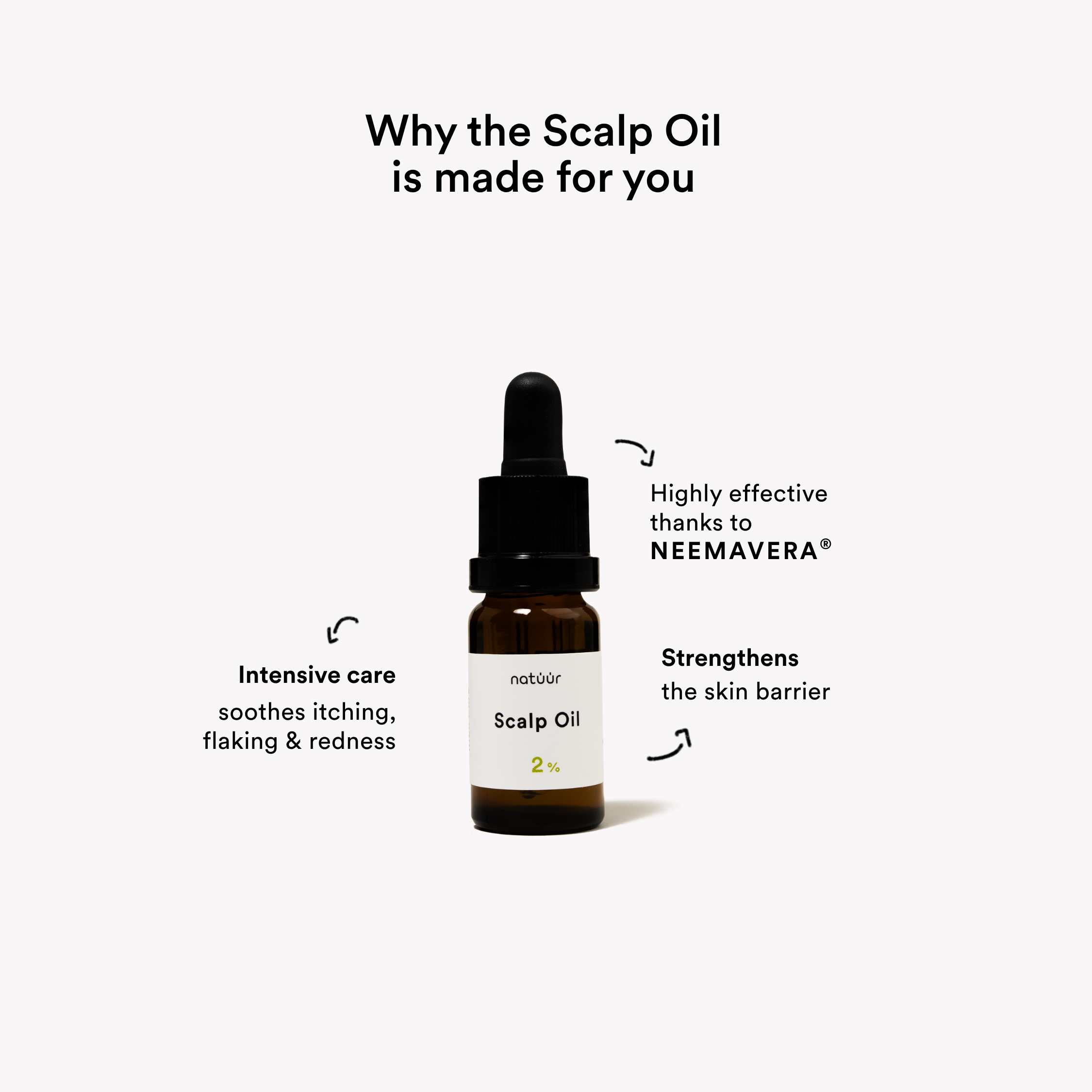
Six oils cover almost everything that dry and sensitive skin needs. The difference lies not in the price but in the fatty acid structure and in how quickly an oil moves into the horny layer. natüür combines several of these oils with its own neem leaf extract NEEMAVERA®, so that replenishing care and soothing active ingredients come together.
Jojoba oil: a light skin oil for dry skin and sensitive skin barriers
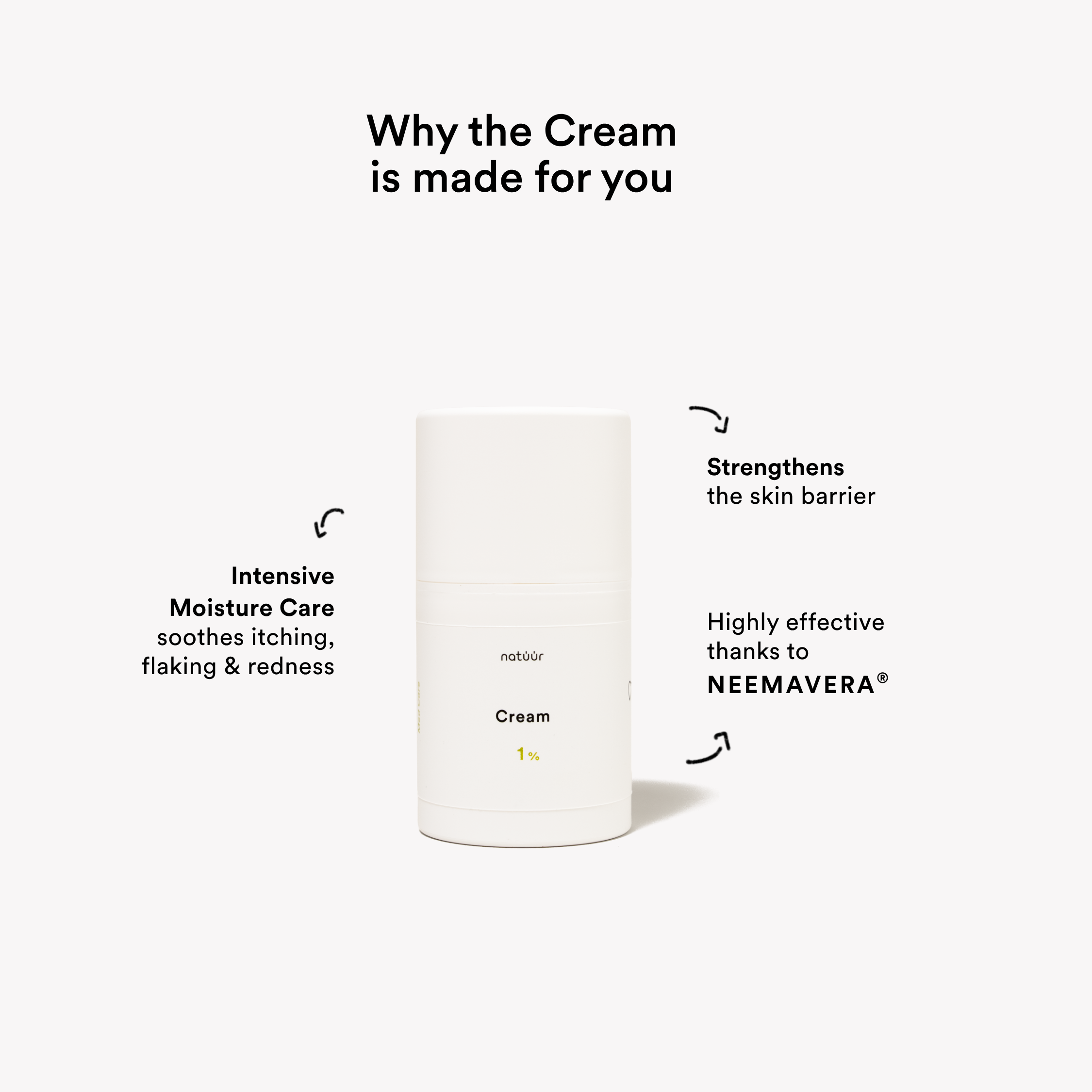
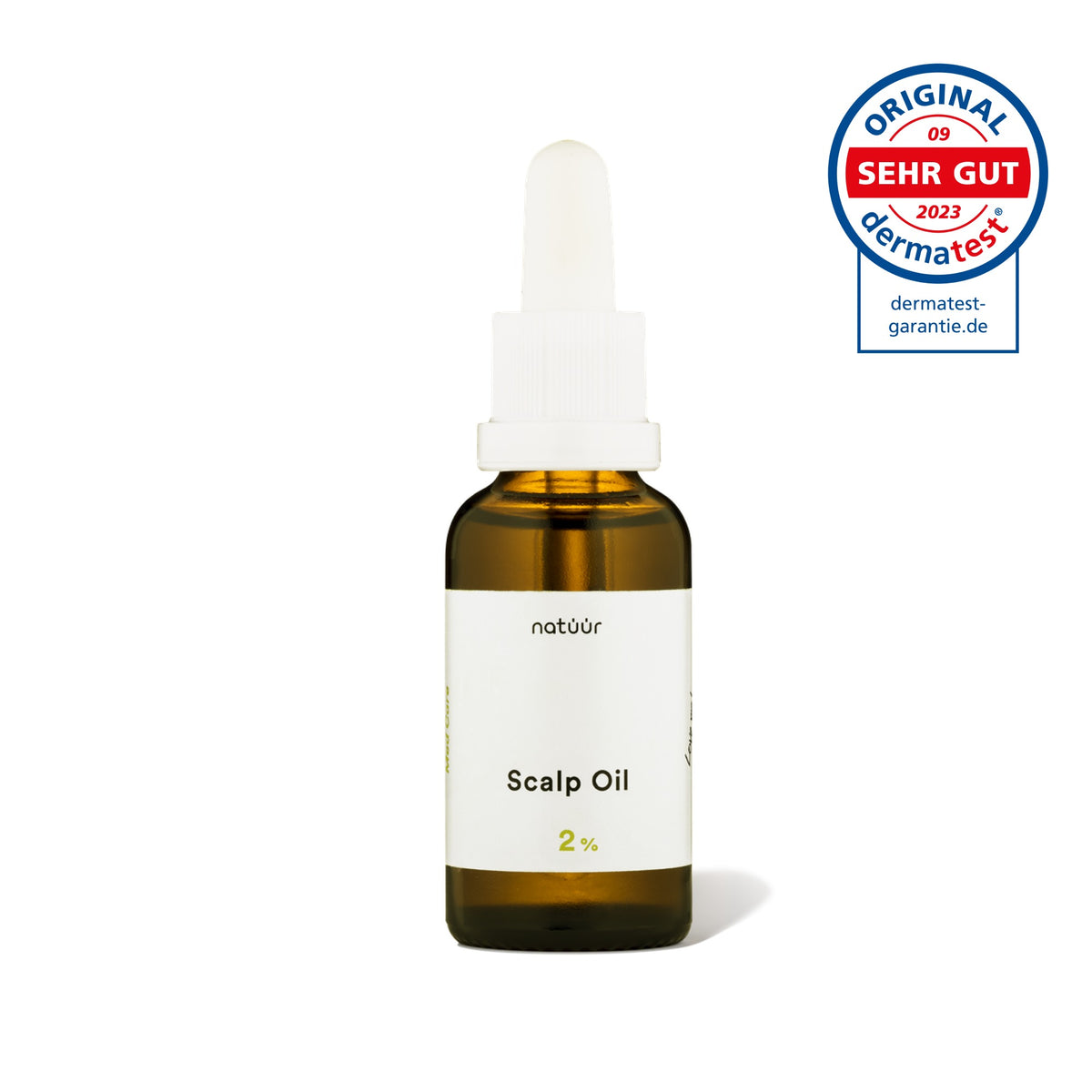
Strictly speaking, jojoba oil is not an oil at all. It consists of wax esters and therefore resembles human sebum, the skin's own oil. That explains the effect described as sebum mimicry: the skin reads the wax as its own and throttles back its own overproduction. It feels light, is considered barely comedogenic and is therefore the safest first choice for a sensitive barrier. At natüür, jojoba oil is found in the Cream, the Skin Balm and the Scalp Oil, among others.
Almond oil: gentle care when your skin is quickly irritated
Almond oil brings oleic acid and linoleic acid in a ratio that absorbs deep into the horny layer and supports the barrier function there. Low in irritants, barely any scent of its own, well tolerated even around the eyes. It is too heavy for very oily skin. In natüür skincare it is part of the Body Lotion for large areas of the body and the Cream for the face, among others.
Argan oil for skin: antioxidant care for dry and mature skin
This is where the hardest evidence lies. Daily use of argan oil over 60 days significantly reduced transepidermal water loss and measurably increased skin elasticity (Clinical Interventions in Aging, 2015/2023). On top of that come tocopherols, polyphenols and ferulic acid, which counteract oxidative stress.
Avocado oil: a rich oil for dry skin and rough patches
Avocado oil has an unusually high proportion of unsaponifiables: phytosterols, squalene, fat-soluble vitamins. The sterolins it contains have an anti-inflammatory effect and smooth keratinisation disorders, for example on the elbows or rough cheeks. Heavy, slow-spreading, better in the evening. At natüür you will find avocado oil in the Cream and the Scalp Oil, among others.
Coconut oil: rich care for dry skin on the body
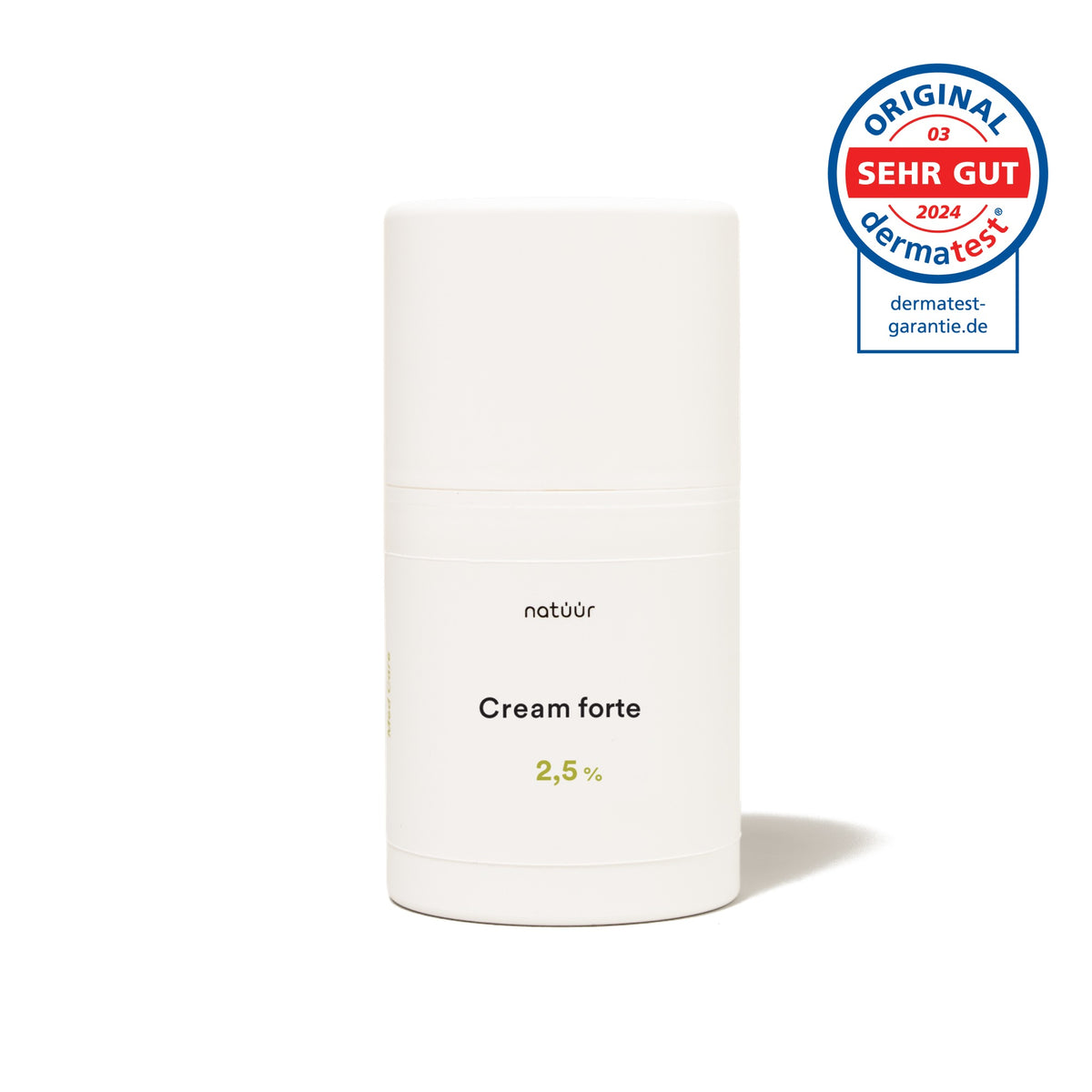
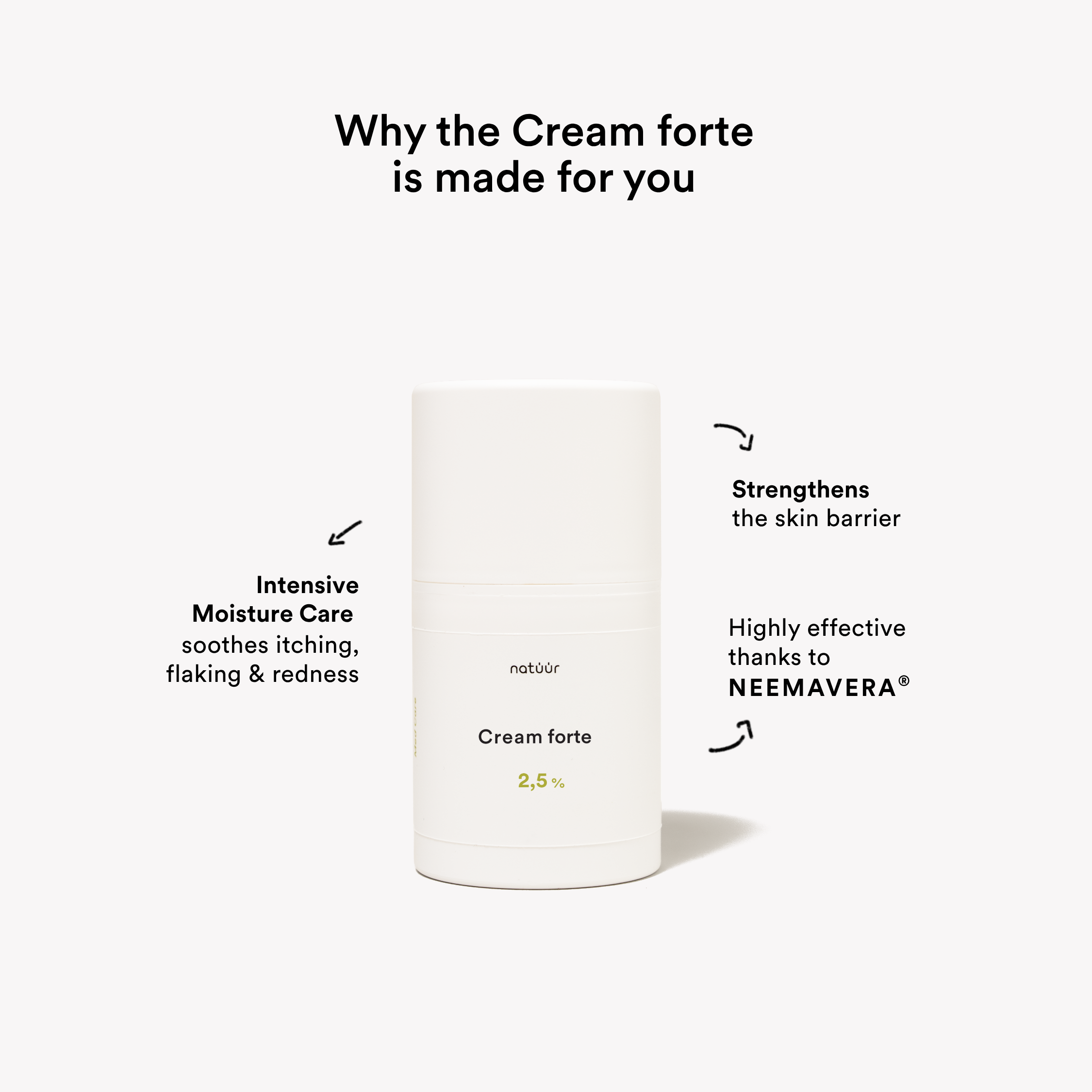
Coconut oil is solid below about 24 °C and only melts on the skin. Almost half of its fatty acids are lauric acid, and overall it consists mainly of saturated fatty acids. That makes it stable and rich, but also heavy. In a small double-blind study, virgin coconut oil improved moisture and skin lipids in dry skin on the legs about as well as mineral oil (Dermatitis, 2004). A study in children with mild to moderate atopic eczema even found better skin scores after eight weeks than with mineral oil (International Journal of Dermatology, 2014). The catch: coconut oil is considered highly comedogenic. For the body, hands and feet it is a good choice, for the face and for blemish-prone skin less so. At natüür, coconut oil is found in the rich Cream forte and in the Skin Balm.
Squalane: a feather-light bio-lipid for the face and sensitive skin
Squalane is the hydrogenated, stable form of squalene, a lipid in your own sebum. It acts as a carrier: it transports other active ingredients deeper, without a greasy film and without burdening the microbiome. Because it is saturated, it practically does not oxidise. A candidate for the best facial oil if you hate shine. In the natüür Body Lotion, squalane is included as a light carrier lipid.
A quick comparison of which oil belongs where:

Start with a single oil for two weeks. That is the only way to see what works.
Which oil for the skin suits your skin type?
Skin type sounds like a category, but it is more of a state. The same skin can feel tight in January and shine in July. That is why it is not the label that decides, but two properties: the fatty acid profile and the spreading behaviour. Spreading value simply means how quickly an oil spreads over the skin. Fast-spreading oils such as squalane absorb almost invisibly, slow-spreading ones such as avocado oil stay on the surface and replenish lipids. Both are right, just not for the same skin.
A quick guide to which fatty acid focus suits which skin condition:

Which oil for dry skin when it feels tight, flakes or cracks?
Here it is fine for it to be heavy. Dry skin loses lipids, so you need oils that fill this gap and have not disappeared after ten minutes. A skin oil for dry skin works best in layers: first the light one, then the rich one.
- Avocado oil for rough patches on elbows, shins and hands, because it replenishes deeply with phytosterols and palmitoleic acid
- Argan oil for the face and décolleté, when the skin is also mature and reddish: plenty of vitamin E, a pleasantly dry finish
- Coconut oil for dry skin on the legs, hands and feet – it is too comedogenic for the face
- Almond oil as a mild base oil for large areas and for skin that tips over quickly
- Squalane as the final step, if oil otherwise feels too heavy on your skin
And olive oil? Fine on intact skin. On a cracked barrier, its high oleic acid content can tend to increase irritation.
You can find replenishing oils like these ready-matched – combined with NEEMAVERA® – in the Body Lotion for large areas of the body and in the rich Cream forte for the face. The collection for dry & sensitive skin gives an overview of suitable care.
Which skin oil for rosacea?
Skin with rosacea loses more water through the barrier than healthy skin and at the same time reacts to almost anything that warms or is fragranced. That is why squalane makes sense as a carrier oil: oxidation-stable, practically non-comedogenic, no build-up of heat. Jojoba oil also suits, because chemically it is a liquid wax and resembles the skin's own sebum. What goes: essential oils, limonene, linalool, anything with parfum. You can find more low-irritant options in skincare for rosacea.
Which skin oil for atopic eczema?
With atopic eczema, the enzyme delta-6-desaturase is often lacking, so the skin has difficulty processing linoleic acid further. This is exactly why evening primrose and borage oil help: they supply gamma-linolenic acid directly, one step further along the chain. Mix with almond or jojoba oil and apply to damp skin after showering. More on this in skincare for atopic eczema and in the article on vegan skincare for atopic eczema.
How to use plant oils for the skin correctly
Having the right oil on the shelf is only half the job. The rest is decided in the ten seconds after washing, because a skin oil can only lock in what was already there. Oil does not supply water. It holds on to it.
Plant oils have an occlusive effect: they settle on the outermost horny layer and slow down transepidermal water loss, the constant evaporation of water through the skin (Journal of Cosmetic Dermatology, 2023). On towel-dried skin, you mainly seal in dryness. On slightly damp skin, by contrast, a spontaneous micro-emulsion of water and lipids forms, roughly what your acid mantle builds from sweat and sebum anyway.
In practice this means: do not rub your face dry, leave it damp. Or rub two to three drops of oil with a spritz of hydrosol in the palm of your hand and then press it in, rather than massaging it in. The same applies to the body and legs, straight after the shower while the skin is still steaming. How this fits into a whole natural body care routine is simpler than most people think.
The order follows a single rule: from water-based to oil-based. A toner can no longer get through a layer of oil, but the other way round works. That is why the oil comes at the end of your routine.
- Cleanse, leave skin damp
- Spritz on toner or hydrosol
- Moisturising serum, for example with hyaluronic acid
- Light cream, if your skin needs it
- Gently press in 2–3 drops of oil
Two more things that often go wrong. First, sun protection: oil goes before it, never on top, because fatty substances dissolve the even UV filter film. Second, the time of day. Stable oils such as squalane, jojoba oil and argan oil work morning and evening. Oils with lots of polyunsaturated fatty acids, rosehip oil for example, oxidise faster under UV and are candidates for the evening.
Try it this evening: apply your cream as usual, then press three drops of oil into your still-damp skin. Tomorrow morning you will feel the difference in tightness, or you won’t.

Buying guide: how to recognise high-quality plant oils for the skin
An oil can be advertised as luxuriously as you like: what matters is how it was obtained, bottled and stored. And how long it has been standing open in your bathroom. Two questions clarify almost everything: how was it pressed? And what protects the oil from light and oxygen?
Cold-pressed means: purely mechanical, without any heat being added from outside. Heat-sensitive accompanying substances such as tocopherols, polyphenols and carotenoids remain in the oil. Refined means the opposite: degumming, deacidification, bleaching, deodorisation. Afterwards the oil is odourless, colourless and low in allergenic accompanying substances, but also low in antioxidants.
Now comes the point most guides skip over. Virgin is not automatically better tolerated. With highly reactive skin, rosacea or perioral dermatitis, it is precisely these plant compounds (traces of protein, natural fragrances) that can be the trigger. In that case a refined oil or pure squalane supplies the lipids without the allergenic extras.
| Variant | Strength | Suits |
|---|---|---|
| Virgin, cold-pressed | Antioxidants, vitamins preserved | dry, tolerant skin |
| Refined | low in irritants, odourless | highly reactive skin, atopic eczema |
| Squalane | purified, very stable | sensitive barrier, face |
Seals such as COSMOS or NATRUE show you that there are no paraffins, silicones or synthetic preservatives inside.
Rancid is not just unappetising, it is counterproductive. Oxidised oils contain lipid peroxides and free radicals that can damage the barrier, fuel inflammation and clog pores. Care that does the opposite of caring.
Oils with lots of polyunsaturated fatty acids are especially delicate: rosehip, evening primrose, hemp. Jojoba, on the other hand, is chemically a liquid wax and stays stable for considerably longer.
- Buy dark glass, ideally violet glass, which completely blocks visible light.
- Store cool and dark, not on the windowsill next to the washbasin.
- Wipe the bottle thread after each use: sticky rims oxidise and carry rancidity products back into the fresh oil.
- Choose small bottles so that you actually use them up once opened.
You can find more on this in the 5 tips for extending the shelf life of natural cosmetics. Write the opening date on the label in pencil today, it takes ten seconds.
DIY care with plant oils for the skin
Three little bottles, a pipette, done. Skincare can be this simple when you know which oil takes on which task. And that is exactly the catch with most home-made blends: too much of the expensive stuff ends up in the bottle and too little of the stable stuff.
The logic is simple. Around 80 per cent of your blend consists of stable base oils, such as jojoba oil, almond oil or squalane. The remaining 20 per cent are active oils such as rosehip, evening primrose or pomegranate seed oil. Why not more? Because active oils are rich in polyunsaturated fatty acids, and these are sensitive to light, heat and oxygen. A blend of pure rosehip oil smells of old chip fat after eight weeks.
The base oil is the foundation, the active oil is the dose. Then there is the spreading behaviour: high-spreading oils such as squalane distribute in a flash and absorb, low-spreading ones such as avocado oil stay on the surface as a protective film. Combine the two and the blend feels light yet still seals well. You can find a compact overview of which oil brings which fatty acids in the natural ingredients in detail.
Three recipes of 30 ml each, calculated according to the 80/20 principle. The column on the right tells you what the blend does.
| Skin condition | Base (24 ml) | Active (6 ml) | Effect |
|---|---|---|---|
| Dry, flaky | 18 ml almond oil, 6 ml avocado oil | 6 ml evening primrose oil | Phytosterols make rough patches supple |
| Sensitive, reactive | 16 ml jojoba oil, 8 ml squalane | 6 ml meadowfoam seed oil | Light texture, no essential oils |
| Mature, sallow | 16 ml argan oil, 8 ml jojoba oil | 6 ml pomegranate seed oil | Tocopherols plus antioxidant active ingredients |
Mix cold, in an amber glass bottle with a pipette, and keep it off the bathroom windowsill. Label it with the date you mixed it and use it up within three months.
Your next step: take just two oils, 20 ml base and 5 ml active, and test the blend for a week in the evening on damp skin. If nothing feels tight, scale up.
Your way to the best facial oil for dry and sensitive skin
That leaves one question at the end: which oil for the skin actually ends up in your bathroom now? The answer does not depend on trends but on two things: what state your barrier is in right now and whether you are prone to blemishes. Simply work your way through in order.
- Determine your skin condition: Does it feel tight after washing and does it flake? Then lipids are missing. Does your skin feel oily and yet tired? Then water is missing, and an oil alone will not solve that.
- Check comedogenicity: Squalane is at grade 0, jojoba oil at 1 to 2, avocado oil at 2 to 3. If you are prone to spots, stay at the bottom.
- Test one oil, not four: Two weeks of the same product, only then judge. Otherwise you will never know what worked.
- Always on damp skin: An oil locks water in, it does not bring any with it. Without moisture underneath, you are sealing an empty shell.
So you don’t have to scroll back, here is the short version of the profiles from this article:
| Oil | Character | Suits |
|---|---|---|
| Squalane | feather-light, oxidation-stable | sensitive skin, rosacea, combination skin |
| Jojoba oil | liquid wax, sebum-like | dry skin with blemishes |
| Almond oil | soft, rich in oleic acid | irritated skin that reddens quickly |
| Argan oil | antioxidant, balanced | dry and mature skin |
| Avocado oil | rich, contains sterols | rough patches, very dry skin |
No oil in this table is objectively the best facial oil. There is only the oil that suits your skin condition in January and that may be too heavy in July. That is exactly why it is worth having two bottles in the cupboard instead of one.
If an oil alone is too thin for you because the skin on your elbows or shins stays cracked, a firmer texture such as the natüür Skin Balm is the obvious addition. And for an overview of suitable products, the selection of care for dry and sensitive skin helps.
Your next step takes less than ten minutes: this evening, take your toner, don’t pat dry, and spread three drops of oil on your still-damp skin. Tomorrow morning you will feel the difference, or you won’t. Either way, that is an answer.
Frequently asked questions (FAQ)
What is the best oil for the skin?
There is no single best oil. Dry, flaky skin needs rich lipids such as argan or avocado oil, while sensitive skin that clogs easily gets on better with light oils such as jojoba oil or squalane. What matters is the condition of your skin today, not the skin type you had five years ago.
Which natural oils are good for the skin?
Cold-pressed jojoba oil, almond oil, argan oil, rosehip oil and plant-based squalane are low in irritants and widely tolerated. They supply unsaturated fatty acids, tocopherols and antioxidants. Important: natural, in organic quality, without synthetic fragrances. The shorter the ingredient list, the less can go wrong.
Which skin oil helps with rosacea?
Mild, non-irritating oils without fragrance components. Squalane is particularly interesting here because, as a saturated derivative of the skin’s own squalene, it hardly oxidises and therefore rarely causes irritation. Jojoba oil and meadowfoam seed oil work in a similarly gentle way. Leave out essential oils, as they are considered a common flare-up trigger. How else to care for sensitive, reactive skin is covered in the article on perioral dermatitis.
Which skin oil is suitable for atopic eczema?
Oils with gamma-linolenic acid, i.e. evening primrose oil and above all borage oil. With atopic eczema, the enzyme delta-6-desaturase is often lacking, which the skin needs to form its own anti-inflammatory fatty acids. Almond and jojoba oil are additionally soothing. More on this in the article on natural cosmetics for eczema.
Do plant oils clog the pores on your face?
It depends on the oil. The comedogenicity scale runs from 0 to 5: jojoba oil, squalane and argan oil are at the bottom, coconut oil and wheat germ oil at the top. So for the face, the zeros are the better choice.
Can I use a plant-based skin oil instead of a moisturiser?
No. Oil does not bring any water with it, it only holds on to what is already there. First serum or damp skin, then two to three drops of oil on top as a seal.
Are plant oils also suitable for oily or blemish-prone skin?
Yes, if you choose oils rich in linoleic acid: grapeseed oil, jojoba oil, nemophila oil. They liquefy thick sebum. Oils rich in oleic acid such as olive or almond oil tend to have the opposite effect here.
How should I store plant-based skin oils, and how long do they keep?
Cool, dark, tightly closed, ideally in amber or violet glass. Clear plastic speeds up rancidity. Unopened, the oils usually keep for 6 to 12 months; once opened, use them up within 3 to 6 months.