





Perioral Dermatitis: Causes, Zero Therapy and the Right Skincare
In brief: Perioral dermatitis is an inflammation around the mouth, nose or eyes, recognisable by small red bumps and a narrow, clear border right at the edge of the lips. It is usually triggered by too much skincare or by cortisone on the face, not by a pathogen. The most effective approach is zero therapy: leave out all facial products and cleanse the skin with lukewarm water only. In the first one to two weeks it usually gets worse before it gets better; complete healing takes four to twelve weeks. Severe or recurring symptoms should be checked by a dermatologist.
What is perioral dermatitis and why is it called "Mundrose"?
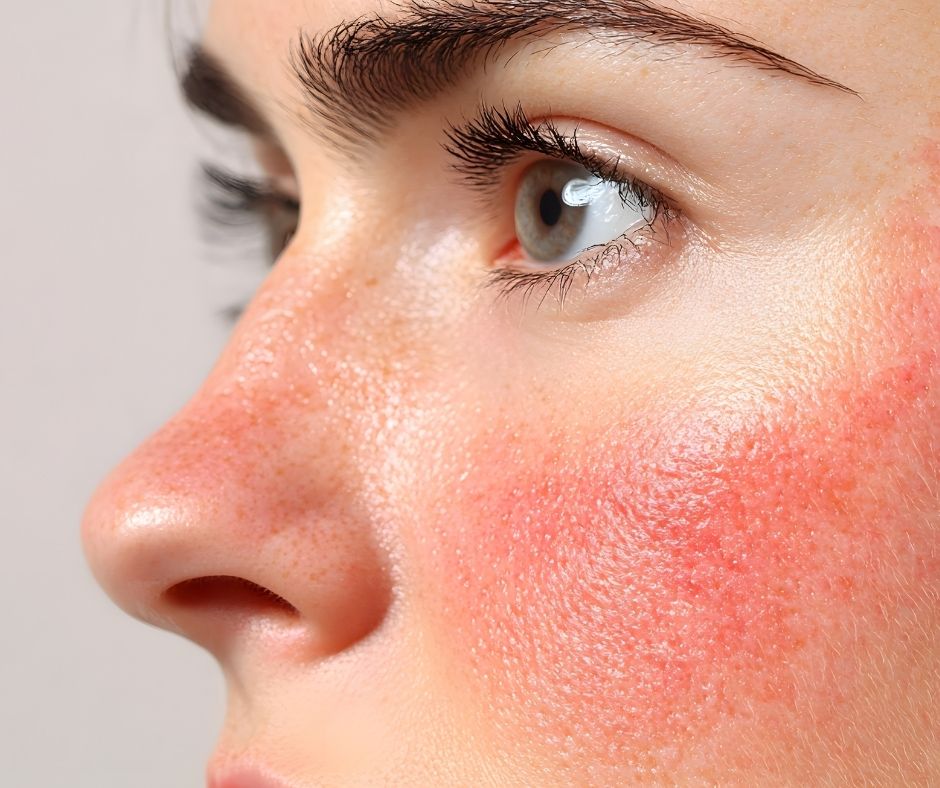
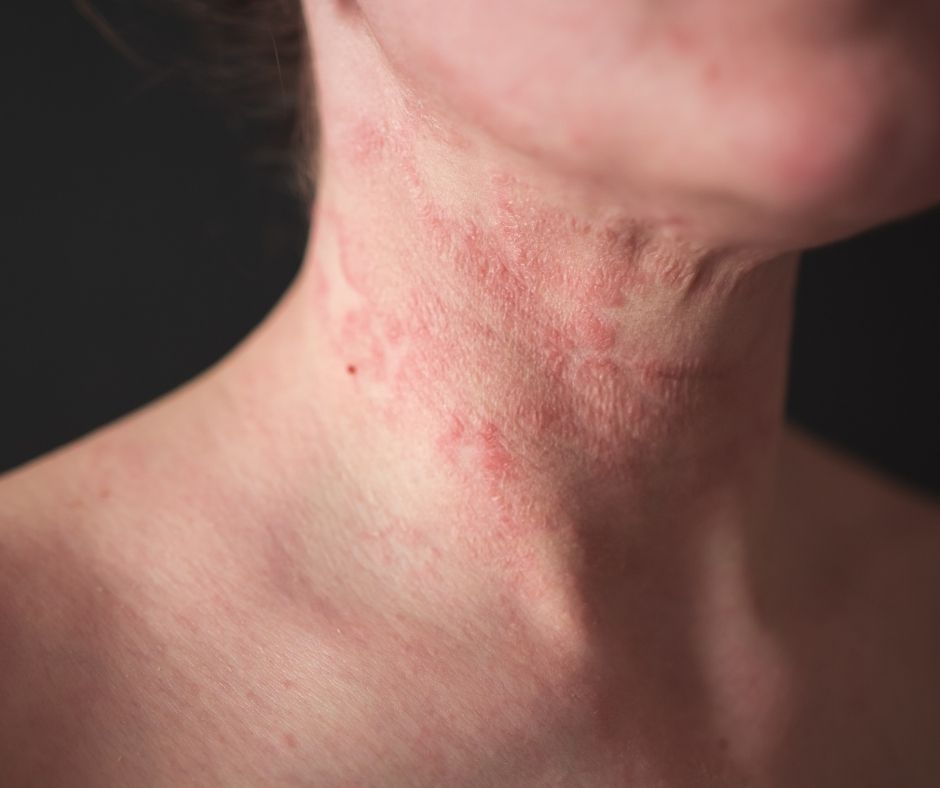
Red, rough, burning. And exactly where it is hardest to hide: around the mouth and nose. Perioral dermatitis is a chronic inflammatory skin condition of the face, not contagious, not dangerous, but remarkably stubborn. The German name "Mundrose" ("mouth rose") sounds harmless and yet hits on something: the skin looks flushed, as with rosacea, only with rules of its own.
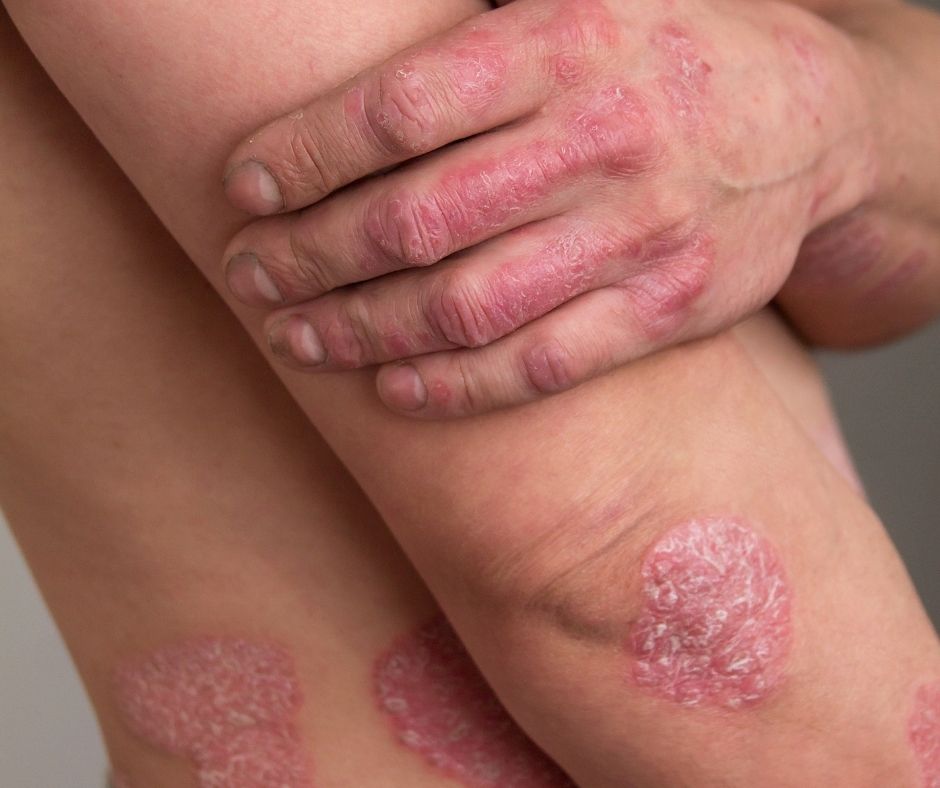
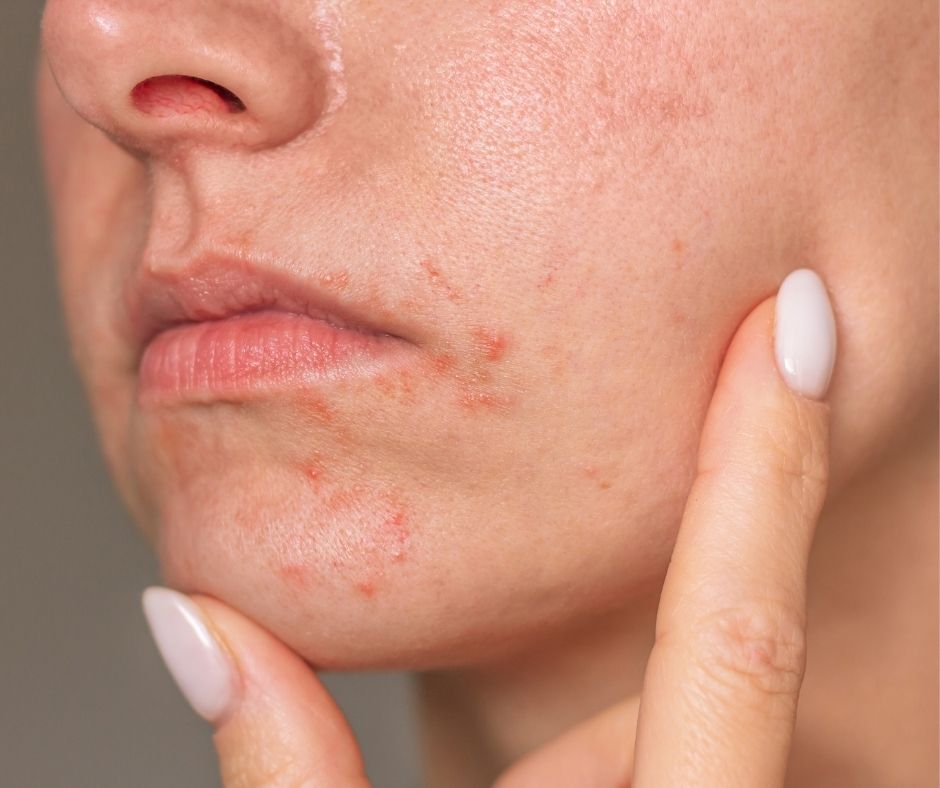
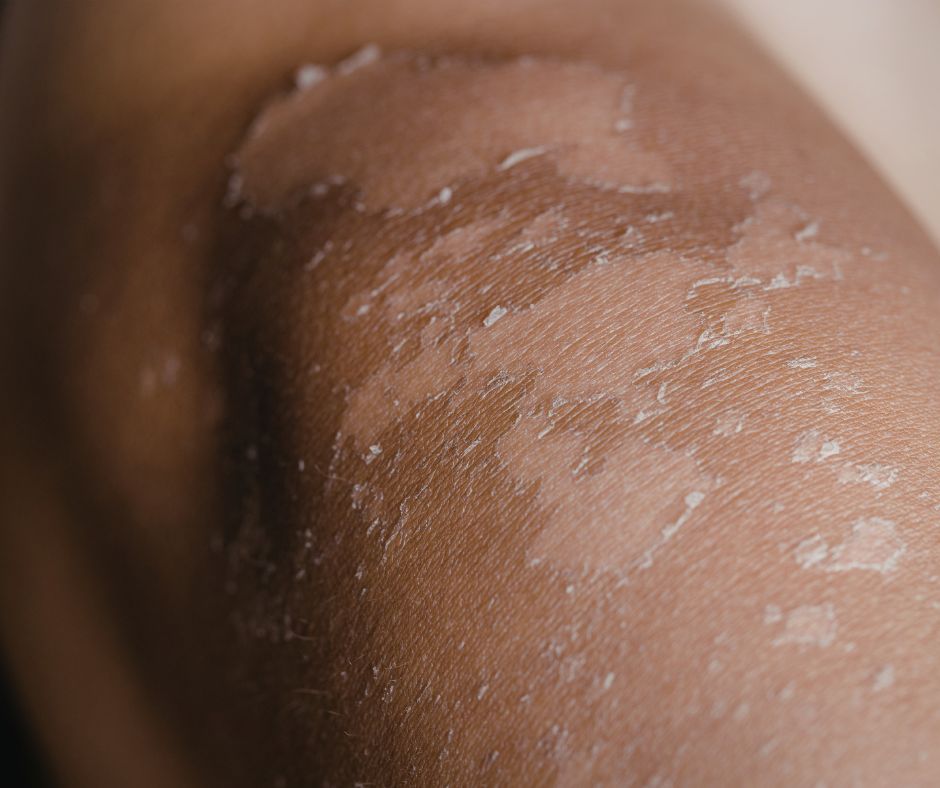
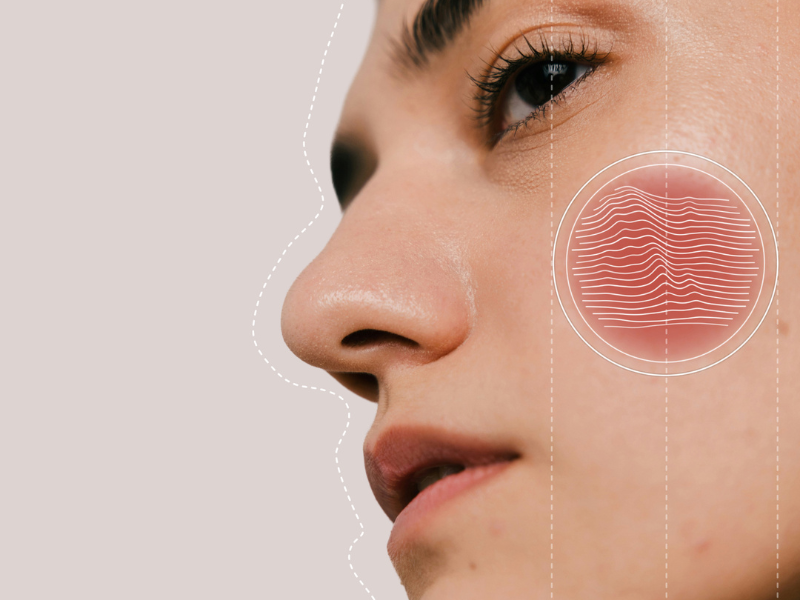
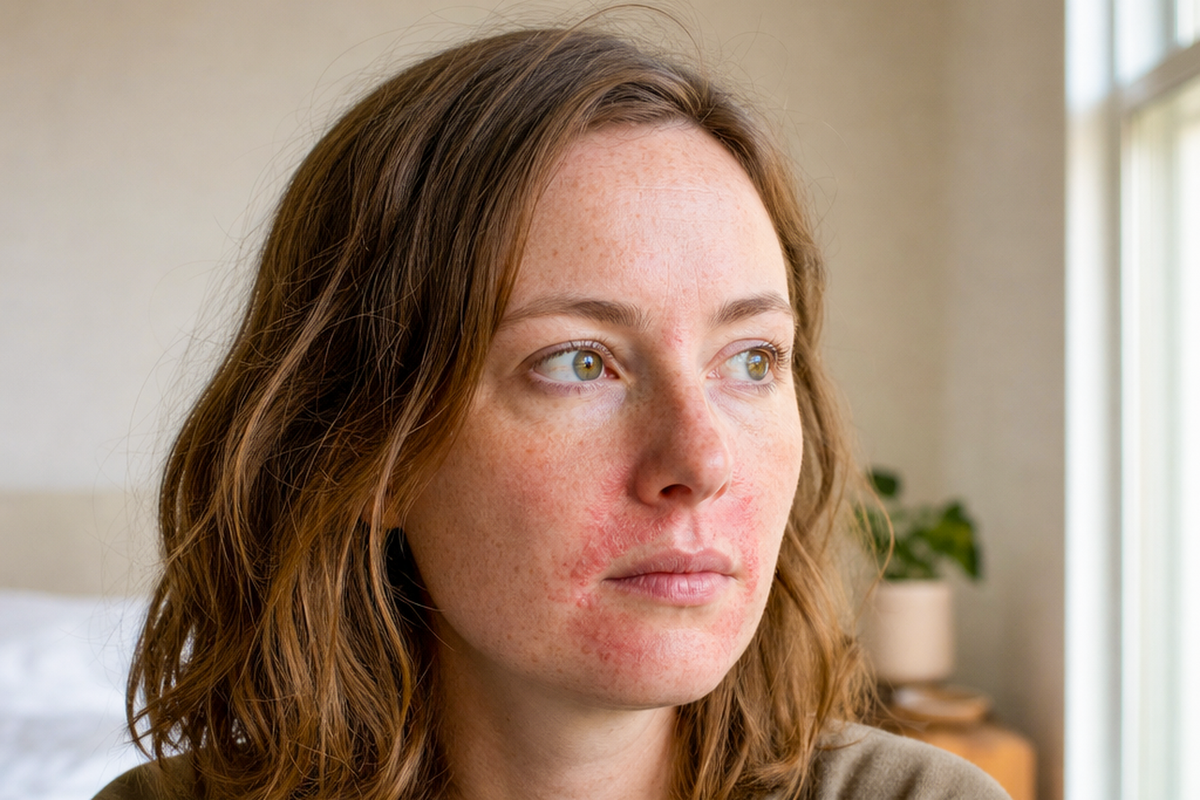
Typical signs are small red bumps, known as papules, along with tiny blisters, fine scaling and a feeling of tightness that feels like overly dry skin. That is exactly the trap. Because the cause usually lies not in a lack but in an excess: too much cosmetics makes the horny layer swell, the stratum corneum loses its barrier function, and skin germs have an easier time. The mouth area is affected most often, but not exclusively. The sides of the nose (perinasal) or the eye area (periocular) can join in too, which is why the correct medical term is periorificial dermatitis. One detail helps with recognition: a narrow border of about 1 to 2 millimetres right at the edge of the lips stays clear. The inflammation keeps its distance, of all places at the lip.
The nickname "stewardess disease" dates back to the 1960s and 1970s. Flight attendants sat for hours in extremely dry cabin air and kept applying cream against the tight feeling: moisturisers, concealers, several times per flight. The result was non-stop over-care, later described medically as over-care syndrome.
To this day, those affected are mainly women aged roughly 15 to 45, the group with the most extensive skincare routines. And the mechanism repeats itself: your skin feels tight, you read that as dryness, reach for a richer cream, and the barrier swells further. The vicious circle runs on while everything feels like sensible skincare.
If you are right in the middle of it, a sober first step is worthwhile: put all your current facial products on the table and count them. Anything under five is rarely the problem. Which products are suitable at all for irritated skin is shown in the collection for perioral dermatitis.


Recognising perioral dermatitis: typical symptoms and risk of confusion
At first glance, perioral dermatitis looks like many things. Like acne, like an allergy, like dry skin. That is exactly why it is so often treated wrongly.
The picture is remarkably uniform: red papules and papulopustules 1 to 2 mm in size on a reddish, slightly scaly base (Altmeyers Enzyklopädie Dermatologie, 2024). Dermatologists call this monomorphic. Everything the same size, everything the same age, no colourful mix as with acne.
And how does it feel? It is tight, it burns, it is hot. Itching, on the other hand, is usually absent. The reason lies in the lipid layer of the horny layer: it has become permeable, water evaporates from the skin more quickly, and this deficit makes itself felt as pulling and burning. Not as an urge to scratch.
Look in the mirror and gently pull your lower lip down. With perioral dermatitis, a narrow strip right at the edge of the lips typically stays completely calm, while the papules only start a few millimetres further out. This transition zone has no sebaceous follicles that could react to the barrier disruption. This clear border is the best feature for self-assessment before seeing a doctor.
Acne, rosacea or atopic dermatitis: what perioral dermatitis is confused with
Telling them apart decides what you put on your skin. Here are the key features at a glance:
| Condition | Key feature | Typically absent |
|---|---|---|
| Perioral dermatitis | Clear lip border, burning | Blackheads, itching |
| Acne vulgaris | Comedones, different stages | Clear border |
| Rosacea | Visible dilated blood vessels, cheeks and nose | Clear border |
| Atopic dermatitis | Lip edge itself affected, thickened skin, severe itching | Monomorphic pustules |
The absence of blackheads is the decisive criterion against acne (AMBOSS Fachwissen Dermatologie, 2024). This matters because salicylic acid and benzoyl peroxide tear the barrier open further. If rosacea or atopic dermatitis is suspected, a different skincare plan applies.


What triggers perioral dermatitis?
Not a pathogen. Not an allergy. In most cases, it is what you voluntarily apply twice a day. Perioral dermatitis develops as an irritant reaction of a swollen, over-supplied skin barrier, and that is exactly why more skincare does not help.
The technical term for this is hyperhydration. Moisturisers, oils and masks in series make the uppermost horny layer (stratum corneum) swell like a sponge left soaking too long. In the process, the lipid layers between the horny cells lose their order, transepidermal water loss rises, and the skin demands replenishment faster and faster. Sounds paradoxical: the more you moisturise, the thirstier your skin seems. How this cycle works is explained in detail in the article understanding a damaged skin barrier. And if you want to know whether your routine is already too much: the 5 signs of overly aggressive skincare make a good self-test.
Topical glucocorticoids constrict the blood vessels and slow down the local immune response. The redness disappears, often within days. But the cream only suppresses the inflammation, it does not resolve it. When you stop, the vessels dilate reactively, and papules and pustules come back stronger than before. Dermatologically, this is called steroid dermatitis or steroid rosacea. The usual reflex: apply cream again. And the spiral starts all over.
These factors rarely act alone; instead, they tip an already weakened barrier over the edge:
- Fluoride and halogenated substances from toothpaste as a chemical contact irritant right around the mouth
- Occlusive make-up and powder, which trap heat and moisture
- Masks: a microclimate of heat, trapped moisture and friction that shifts the skin microbiome
- Progesterone fluctuations in the second half of the cycle, the pill, pregnancy
- UV radiation and stress as amplifiers of the inflammation
You can find more on such irritants under sensitive skin: 10 typical triggers. Keep a note for a week of what you apply. This list will later be your diagnostic aid.

How is perioral dermatitis diagnosed?
No blood test, no biopsy, no swab. In most cases, the diagnosis is made by eye and by asking questions. The dermatologist looks at where the papules sit, whether a narrow border right at the edge of the lips stays clear, and whether blackheads are absent. Then comes the medical history, and that is actually the more important part: which creams, which serums, and for how long? Fluoride toothpaste? And above all: cortisone on the face, as an ointment or as an asthma spray? This very cortisone history changes the appearance of the skin and is therefore asked about actively. Incidentally, perioral dermatitis is coded in the rosacea chapter of the ICD-10, which shows how close the two pictures are.
When you should see a dermatologist about perioral dermatitis
A lot settles down without a doctor's appointment. These points, however, belong in specialist hands:
- The rash spreads to the eyelids or eye area, because the conjunctiva may be involved
- Severe burning or real pain instead of just tightness
- Yellowish crusts as a sign of a secondary bacterial infection
- No improvement at all after three weeks of consistent zero therapy
- You have used cortisone on your face and do not know how to taper it off
If you are unsure whether your symptoms fit at all, an initial assessment via the online AI skin analysis can help. For the appointment itself, you will find the right address among our dermatologists and partners.
The following overview shows the features dermatologists use to tell the conditions apart:
| Condition | Distinguishing feature |
|---|---|
| Acne vulgaris | Comedones present; with perioral dermatitis they are absent |
| Rosacea | Telangiectasia, mainly affects cheeks and nose |
| Seborrhoeic eczema | Greasy scaling, often the scalp is affected too |
| Contact allergy | Confirmed by patch test |
| Demodex folliculitis | Mites detected, zero therapy does not work |
The last two rows only become relevant if leaving things out on its own does not help. Then the search continues in a targeted way, instead of more trial and error.

Treating perioral dermatitis: how do you get rid of it?
The answer is uncomfortable: leave things out. Don't apply cream on top. Up to 80 percent of mild to moderate cases of perioral dermatitis heal through consistent zero therapy alone, without any medication (Springer Medizin / Der Hautarzt, 2023). Sounds too simple for skin that has been burning for weeks. But it isn't, because the trigger usually sits on exactly the shelf you are about to take the solution from.
Zero therapy for perioral dermatitis: what exactly you leave out
Zero therapy means: zero products on your face. No compromise, no exception for that one light serum. In concrete terms, the following disappears from your routine:
- Moisturisers, oils, serums, masks, eye cream
- Make-up, concealer, powder, including mineral powder
- Cleansing foams, gels, micellar water, scrubs
- Cortisone cream on the face (only stop after consulting your doctor)
- Toothpaste containing fluoride and SLS, at least as a test, as both substances are suspected of intensifying flare-ups around the mouth (Journal of Clinical and Aesthetic Dermatology, 2023)
The time frame: 4 to 12 weeks until complete healing (Deutsche Dermatologische Gesellschaft (DDG), 2024). Why so long? The epidermis renews itself in about 28 days, so improvement often only becomes visible after three to four weeks (DAZ Online, 2024).
Day three is the moment when most people give up. In the first 7 to 14 days, a rebound effect often occurs: the skin feels tighter, scales and reddens more, because the familiar moisture film from outside is suddenly missing (Pharmazeutische Zeitung, 2023). That is not a step backwards but withdrawal. Your skin is ramping its self-regulation back up.
What helps without adding fat: compresses with cooled black tea, steeped for at least 10 minutes. The tannins have an anti-inflammatory and astringent effect (Deutsche Apotheker Zeitung (DAZ), 2023). A ritual for the hands that would otherwise reach for the tube.
Lukewarm water. That's all. Microfibre and rough flannels stay in the drawer, because they mechanically irritate the damaged barrier further (Gelbe Liste Online, 2024). Pat your face dry with a fresh cotton towel, don't rub. Why less really is more here, you can read in the article on natural skincare.
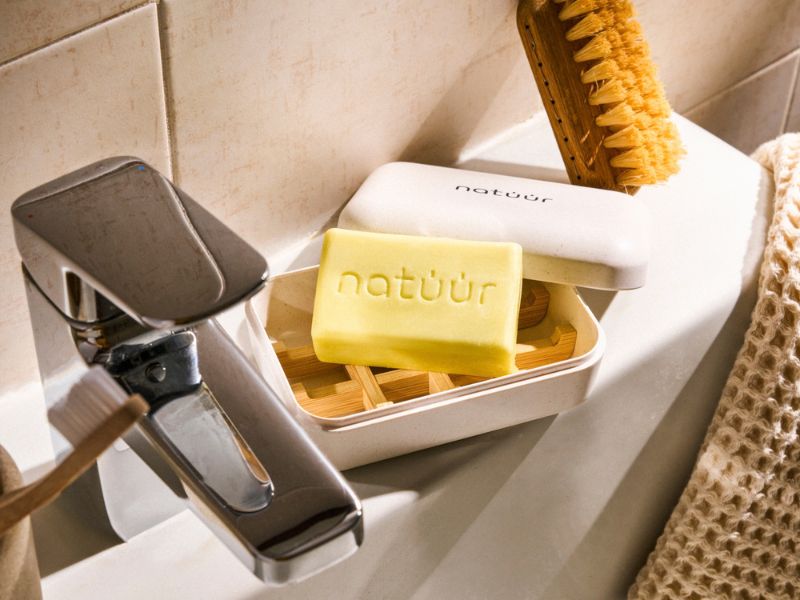
And the rest of your body? You can wash it, just not with strongly foaming surfactants in the face area. Which option cleanses more gently is shown in the comparison of bar soap and liquid soap. Start today: put all your facial products in a box and store it in the cellar. Out of sight, out of hand.

Perioral dermatitis cream and medication: what can help medically?
Sometimes leaving things out is not enough. If the pustules spread across the mouth, sides of the nose and eye area, or the distress becomes too great, there are prescription options. The good news: none of them involve cortisone.
Topical active ingredients: metronidazole, erythromycin, azelaic acid and other options
Topically, dermatology works with anti-inflammatory active ingredients in light bases, i.e. a gel or thin emulsion, not a greasy ointment. Here, the base is almost as important as the active ingredient itself. An overview of the usual candidates:
- Metronidazole: the classic perioral dermatitis cream, dampens the inflammatory response in the skin.
- Erythromycin: an alternative if metronidazole is not tolerated.
- Azelaic acid: anti-inflammatory and works against clogged pores, may tingle at first.
- Pimecrolimus: an off-label option without cortisone, when things need to calm down quickly.
- Ivermectin: actually approved for rosacea, considered for stubborn cases.
Off-label means: approved, but for a different diagnosis. That is for the doctor to decide, not the chemist's shelf.
Tablets are not a turbo boost but the next step up. They make sense if topical treatment achieves nothing over several weeks, if strongly pustular forms are present, or if there is a long history of cortisone use. Doxycycline is used at a low dose here, and not as a germ killer: it slows down enzymes that drive the inflammatory process. Antibiotic on the package leaflet, inflammation brake in its effect. Improvement takes a few weeks, not a few days.
Cortisone on the face works wonderfully at first. Then you stop and everything comes back, more severely than before. It is precisely this rebound that turns a flare-up into a chronic story. Anyone who reaches for the tube again in this phase keeps the spiral turning.
And the well-meant rescue creams? Zinc, barrier and anti-ageing products often contain occlusive fats such as paraffin or beeswax. They trap moisture under the horny layer, germs are delighted, and the barrier forgets how to do its job. Better to read first which 10 ingredients sensitive skin should avoid, rather than improvising blindly in the bathroom.

Home remedies for perioral dermatitis: what can soothe and what does harm
The logic of most home remedies runs in the wrong direction. They want to put something on the skin, and it was precisely putting things on that triggered the perioral dermatitis in the first place. At its core, perioral dermatitis is an over-care reaction. So the same rule applies to home remedies as to creams: almost everything can go. Exactly one candidate remains.
Black tea contains tannins. They have an astringent effect, meaning they slightly tighten the surface tissue, dampen inflammation and relieve itching. Black tea compresses are among the few home remedies that are dermatologically recommended for perioral dermatitis.
Here's how: let the tea steep for 10 to 15 minutes so that the tannins actually pass into the water. Then let it cool to room temperature, soak a clean cotton cloth and place it on your skin for a few minutes. Don't rub, don't apply cream afterwards. The real value lies elsewhere: in the first 10 to 14 days of zero therapy, the burning and tightness are at their worst, and the compress gives you something to do that does no harm. That is why people affected are more likely to get through the critical phase instead of reaching for the tube again.
Be careful with chamomile, tea tree oil, zinc ointment and scrubs
These four appear in almost every forum, and all four can make perioral dermatitis worse. The mechanism behind it, briefly sorted:
| Home remedy | Problem with a damaged barrier |
|---|---|
| Chamomile | Ingredients from the daisy family, high risk of contact allergy |
| Tea tree oil | essential oil, irritating to the skin and cytotoxic, intensifies the inflammation |
| Greasy zinc ointment | occlusive: stops water loss, moist environment, symptoms increase |
| Scrubs, AHA, BHA | further destroy the horny layer, new papules and pustules |
Only light, fat-free zinc lotions are justifiable in individual cases, and that is for the dermatologist to decide, not the chemist's shelf. Plant oils and mild active ingredients only have their place again once the skin is calm: then it is worth looking at natural ingredients for sensitive skin. Until then: tea, water, patience.

Perioral dermatitis skincare after healing: how to rebuild your routine
Your skin is calm. Now what? This is exactly where most relapses happen, because the old routine with seven products comes back out of the cupboard in full. Rebuilding after perioral dermatitis works differently: one product, then wait.
Only once everything has gone. Not "almost gone". No papules, no pustules, no widespread redness, not even the pale remnants at the side of the nose. Then you start with exactly one low-irritant product, usually a mild cleanser. If your skin stays symptom-free for two weeks, a second may be added: a light moisturiser. This way you immediately recognise which product is playing up, because there are never two new ones in play at the same time.
Skinimalism instead of over-care: which ingredients suit you better
The trap is the feeling of dryness. It feels like it needs fat, but it needs water. Dense fats lie on the horny layer like cling film, moisture builds up, the barrier swells and the cycle of perioral dermatitis begins again. So: light fluids and serums instead of richness.
- More suitable: glycerin, panthenol, squalane, ceramides, niacinamide in low concentration
- Better avoided: paraffinum liquidum, petrolatum, heavy silicones, classic emulsifiers
- Leave out completely: fragrances, scrubs, retinol, anything with "anti-ageing complex" on the tube
If you are looking for products designed around this logic, the collection for dry and sensitive skin is a good starting point. Why fewer products are good for your skin flora is explained in the article on the skin microbiome.
Sun protection remains a must, as UV irritates freshly calmed skin. Mineral filters with zinc oxide and titanium dioxide are the gentler choice here, because chemical filters can release heat in the skin. You can find an overview in the comparison of natural sun protection.
With make-up: liquid foundation only later, loose mineral powder first. And take it off in the evening, even if it was only a touch.

How long does it take for perioral dermatitis to go away?
In short: longer than you hope. The calculation runs in weeks, not days, and anyone who gives up after five days without cream only sees the worst phase of the course. That is the real hurdle with perioral dermatitis. Not the treatment itself, but sitting out the time in between.
Typical course: why patience over several weeks matters
The skin rebuilds its barrier, and this rebuilding follows a rough pattern. First it gets more restless, then flatter, then calm. What you can expect in which phase:
| Phase | Skin appearance | What matters now |
|---|---|---|
| First few days | More redness, tightness, new pustules | Don't intervene, water only |
| Second to fourth week | Scaling eases, fewer pustules | Stay consistent, no test cream |
| After that | Residual redness, smoother texture | Careful rebuilding of skincare |
These time frames are guidelines, not a guarantee. Anyone treating perioral dermatitis after months of cortisone cream usually needs considerably longer than someone whose trigger was just an overly rich night cream. And if you interrupt zero therapy for two days in between, the clock partly starts again from the beginning.
A lot is claimed here. Little is proven. A direct nutrient deficiency as the cause has not been scientifically demonstrated; zinc can, however, support barrier healing because of its anti-inflammatory effect (European Journal of Dermatology / PubMed, 2023). Meaning: zinc is a tailwind, not a therapy.
Around 90 percent of those affected are women between 20 and 45 (DermNet NZ / JDDG, 2024), which is why hormonal fluctuations can shape the course. Gut flora and immune status are also being discussed; you can find more on the connection in the article on gut and skin.
Your next step: note the start date of your zero therapy in your calendar today and set yourself a reminder for week four. Don't judge anything before then.

Preventing relapses of perioral dermatitis
Healed does not mean immune. Skin that has reacted with perioral dermatitis once reacts more quickly again: its lipid layer has become thinner, and it stays thin for a while. A relapse rarely comes out of nowhere. It comes out of the bathroom cabinet.
Recognising early warning signs: what you can do at the first red dots
Watch for three signals before the pustules appear. A slight tightness around the sides of the nose. A faint burning after brushing your teeth. Tiny red dots that leave a narrow border right at the edge of the lips clear: exactly this clear lip edge is the pattern of perioral dermatitis, not that of acne.
And then? Go straight back to lukewarm water. Nothing on top. No serum, no mask, no "soothing" cream, because applying cream to fight it is exactly the mechanism that turns three dots into a flare-up. Cortisone is the worst possible choice in this phase: it smooths things out in two days and takes its revenge afterwards.
- Stop skincare products consistently as soon as the first dots appear
- Change your toothpaste if the burning around your mouth appears (try fluoride- and SLS-free)
- Make a note: what have you used for the first time in the last seven days?
This note is your most important tool. Triggers can only be recognised in hindsight.
Back to a ten-step routine after zero therapy? That is how "stewardess disease" starts all over again. Skinimalism specifically means: one or two well-tolerated basic products, no occlusives, no oil-silicone layers that artificially put a lid on water loss. What natural care for sensitive skin can look like is a topic of its own, as is the question of why the skin's pH value matters.
Stress belongs on the same list. Via neuropeptides and cortisol, facial skin becomes more reactive and more permeable to irritants, so sleep is not a wellness tip but prevention.
Your next step: tonight, put all your products on the table and keep two. The rest goes into a box.

Frequently asked questions (FAQ)
Short answers to the questions that come up most often in everyday life with perioral dermatitis. You can also find more answers in our frequently asked questions.
What is the fastest way to get rid of perioral dermatitis?
By leaving things out. Zero therapy is the first-choice basic treatment: no cream, no serum, no make-up, cleansing with lukewarm water only. Sounds like nothing. Is the most effective measure.
What triggers perioral dermatitis?
Usually over-care: too many, too rich products that over-moisturise the horny layer. The second major trigger is cortisone ointment on the face. On top of that come stress, hormones, masks and toothpaste.
How long does it take for perioral dermatitis to go away?
Think in weeks, not days. The horny layer renews itself in a fixed cycle, and only after that does the result show. Stubborn cases take longer.
Which deficiency plays a role in perioral dermatitis?
A deficiency is not the cause. Zinc is, however, involved in cell division and wound healing of the epidermis, and a deficit can slow down repair. This can be clarified with a blood test.
Is perioral dermatitis contagious?
No. The condition is abacterial and not contagious, so there is no germ behind it that you could pass on. Kissing, sharing a towel, carrying a child: all unproblematic.
Can I wear make-up with perioral dermatitis?
Not in the acute phase. Liquid foundations based on silicone or mineral oil have an occlusive effect and additionally increase the skin's water loss. Only after several symptom-free weeks should you carefully ease your way back in.
What role does toothpaste play in perioral dermatitis?
Fluoride and sodium lauryl sulphate act as irritants and can keep inflammation around the mouth going. Rinse off the foam instead of leaving it on. A look at the ingredients is worthwhile here, as is the comparison of organic and conventional skincare.
Why does the skin often get worse at the start of zero therapy?
Because the over-moisturised horny layer goes into withdrawal. Tightness, scaling, redness: a physiological withdrawal process, not a failure. After cortisone, this rebound is particularly severe. This is exactly where most people give up.