






Soothing Ingredients: What Really Helps Irritated Skin and Itching
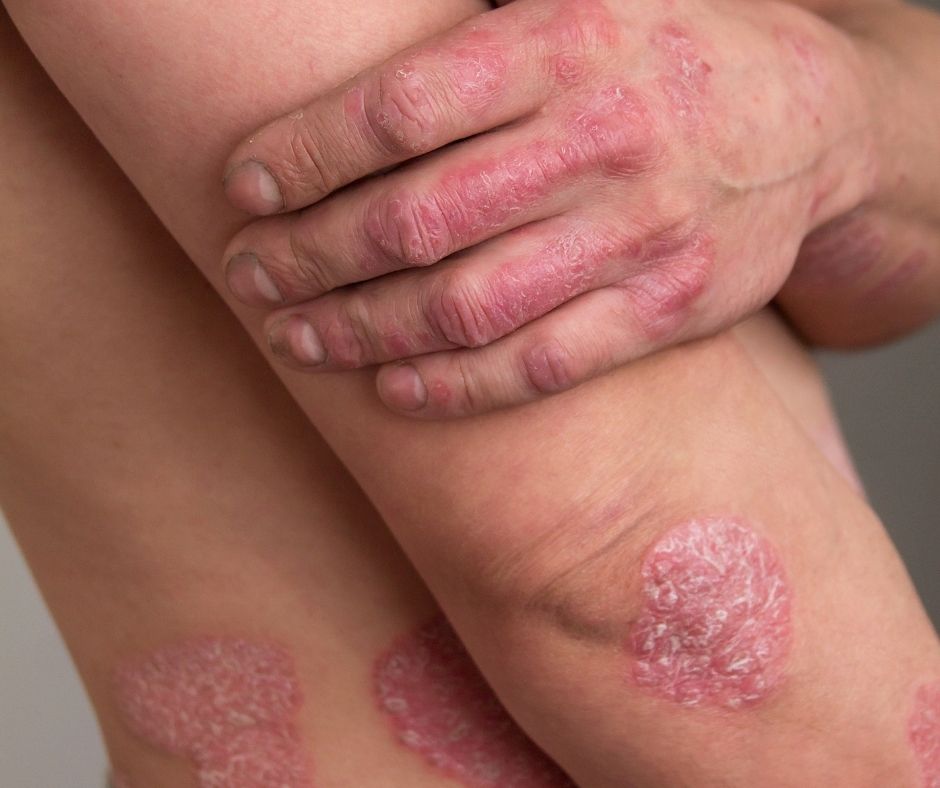
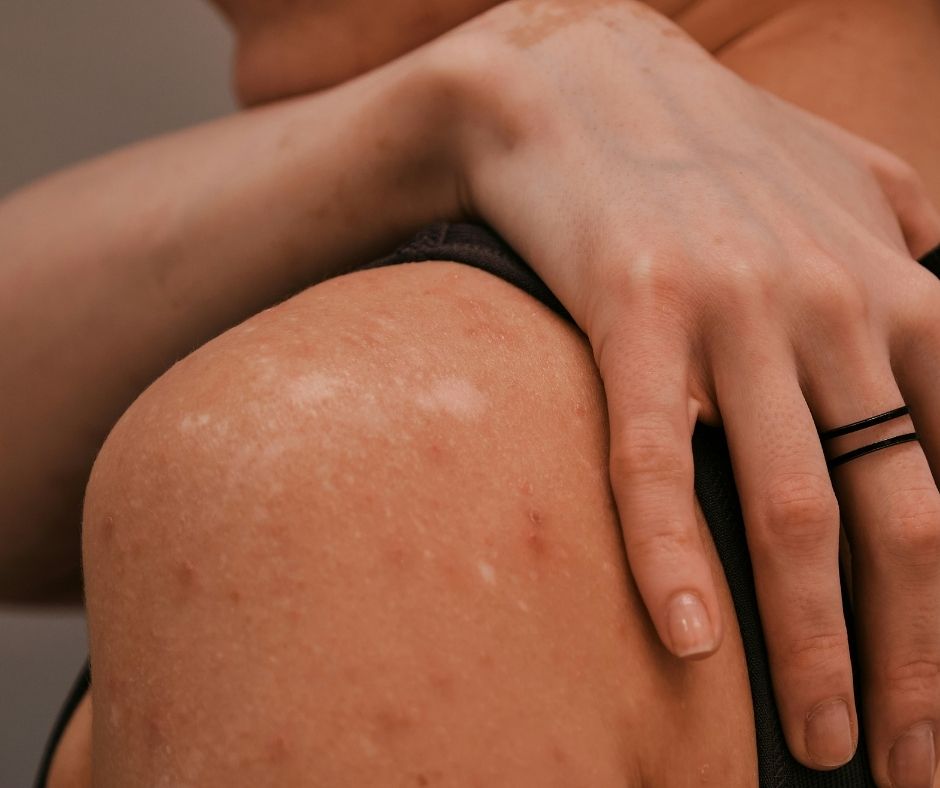
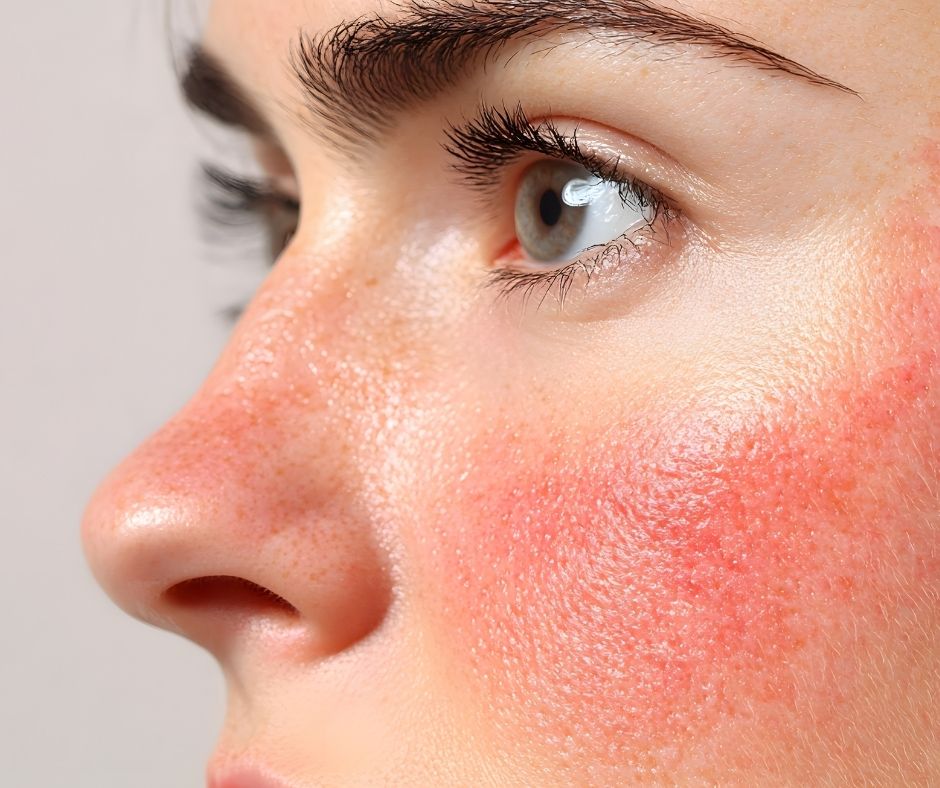
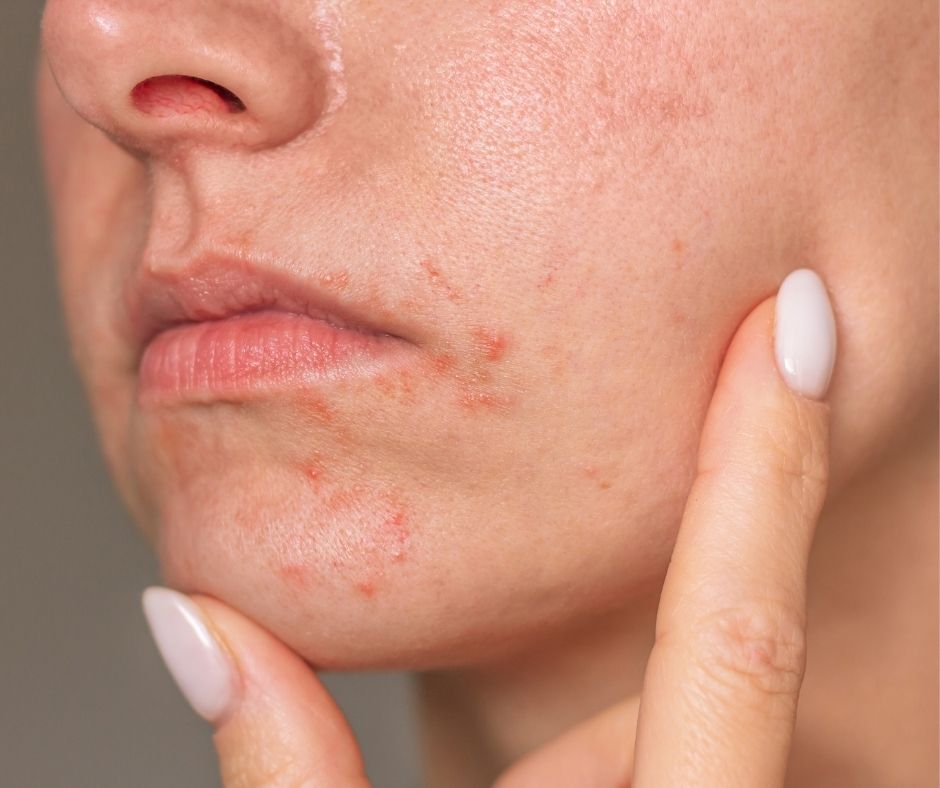
It itches, feels tight, burns, and your skin just won’t settle. Whether you have atopic dermatitis, psoriasis or simply very sensitive skin: the right skincare can absorb a lot. But not every product with “sensitive” on the pack actually soothes. What matters are the ingredients, and what’s left out is just as important. Here you’ll find out which ingredients soothe irritated skin, what can help with itching, why “natural” doesn’t automatically mean well tolerated, and whether there is such a thing as natural cortisone.
In short: which ingredients soothe the skin?
The most soothing ingredients are those that strengthen the skin barrier (glycerin, ceramides, plant fats), calm irritation (panthenol, bisabolol, allantoin, niacinamide) and can relieve itching (for example colloidal oatmeal). What’s left out matters just as much: fragrances, essential oils and harsh surfactants.
The key points at a glance:
- Irritated skin needs four things: an intact barrier, bound moisture, calmed irritation and no new triggers.
- Proven soothers are panthenol, bisabolol, allantoin, niacinamide (in low doses), colloidal oatmeal and aloe vera.
- Moisture alone isn’t enough: glycerin works best together with fats such as ceramides, shea butter or plant oils.
- Natural doesn’t mean non-irritating: essential oils such as lavender or tea tree and plants of the daisy family such as chamomile can trigger allergies.
- There is no such thing as natural cortisone. Cortisone is an effective medicine; skincare can accompany treatment, but not replace it.
What happens in irritated skin
The outermost layer of the skin works like a wall: the horny cells are the bricks, and fats such as ceramides, cholesterol and free fatty acids are the mortar. If mortar is missing, the wall starts to leak.
Weakened barrier, inflammation, itching
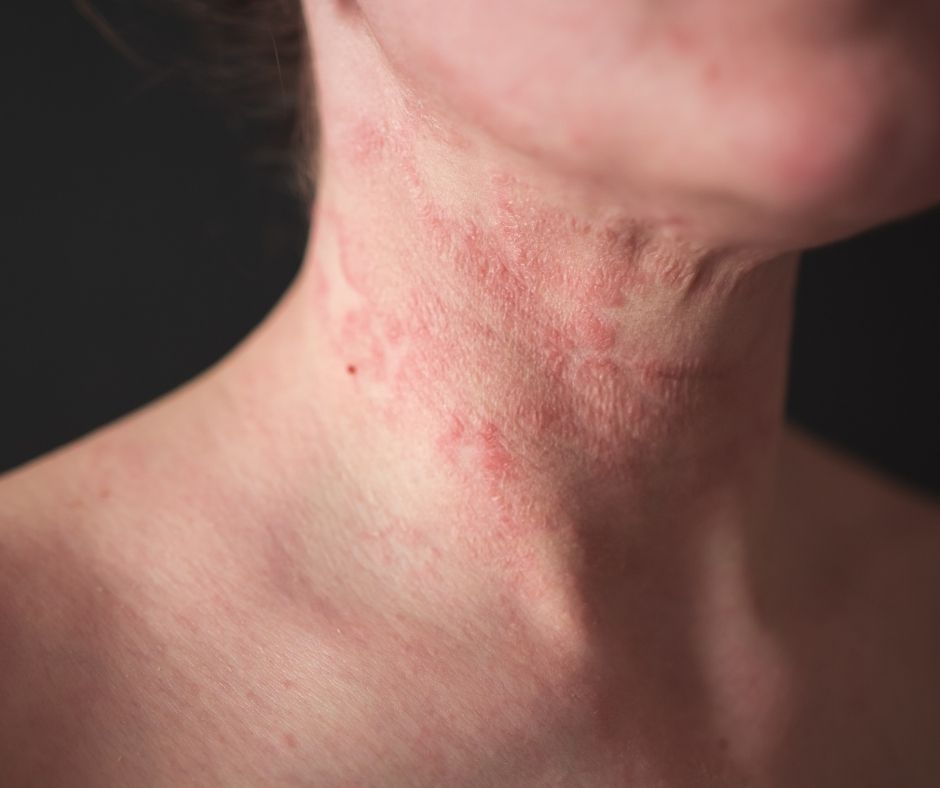
Leaking means two things: water evaporates outwards (experts call this transepidermal water loss, or TEWL for short), and irritants, germs and allergens get in more easily. The skin reacts with inflammatory messengers: it turns red, feels tight and feels warm. At the same time, fine nerve fibres in the epidermis signal itching. That’s why dry skin often itches before you can see anything at all. You can read more about this in the article Understanding a damaged skin barrier and in our guide to sensitive skin.
The itch-scratch cycle
Scratching brings brief relief. Afterwards, though, the horny layer is even more damaged, new inflammatory substances are released, and the itching often comes back stronger. This cycle is the reason why irritated or eczematous skin often doesn’t recover on its own.
This gives soothing skincare four jobs:
- Close the barrier: supply fats so the mortar sits properly again.
- Bind moisture: hold water in the horny layer instead of just applying it.
- Calm irritation: ingredients that can soothe redness and itching.
- Leave out triggers: perfume, essential oils, harsh surfactants.
Skincare can do a lot to support this. During severe flare-ups, though, your skin still belongs in a doctor’s hands.
These ingredients soothe irritated skin
Which ingredients actually soothe irritated skin? Not the ones with the loudest advertising promise, but the ones that take on one of these jobs. Here are the most important ones at a glance:
| Ingredient | What for | Good to know |
|---|---|---|
| Panthenol | Barrier, moisture, regeneration | Provitamin B5, very well tolerated |
| Bisabolol | Calming irritation | A component of chamomile, also available in isolated form |
| Allantoin | Smoothing, regeneration | Usually produced in nature-identical form |
| Niacinamide | Barrier, redness | Prefer low doses |
| Colloidal oatmeal | Itching, dryness | Contains soothing avenanthramides |
| Aloe vera | Moisture, cooling | Watch out for fragrance and alcohol in the product |
| Beta-glucan | Moisture, protection | From oats or yeast |
| Centella asiatica | Soothing | Often referred to as “cica” |
Panthenol, bisabolol and allantoin
The classic trio. Panthenol is converted into pantothenic acid in the skin. Studies show that it moisturises, strengthens the barrier and can help prevent skin irritation (Proksch et al., 2017). Bisabolol calms irritation signals, and allantoin helps smooth the skin’s surface. Together and in moderate doses, they are often better tolerated than a single, high-percentage active ingredient.
Niacinamide
Niacinamide (vitamin B3) stimulates the skin to produce more of its own ceramides and other barrier lipids, and can therefore improve the skin barrier (Tanno et al., 2000). It can also reduce redness. But: very high concentrations sometimes irritate sensitive skin themselves. So it’s better to start with a low dose.
Oats, aloe vera and chamomile
Colloidal oatmeal, meaning very finely ground oats, forms a protective film on the skin. In laboratory tests, oat extracts calmed inflammatory messengers, and in a small study a lotion with colloidal oatmeal clearly improved dryness, scaling and itching (Reynertson et al., 2015). Aloe vera binds water and has a pleasant cooling effect. Whether natural skincare is better than conventional, we compare in the article Organic skincare vs. conventional. Chamomile soothes, but is off-limits if you are allergic to plants of the daisy family.
Neem leaf extract

Extracts from neem leaves contain flavonoids and other plant compounds that have proven to be antioxidant and anti-inflammatory in laboratory studies. You can read how neem is used for sensitive skin in the article NEEMAVERA®: what the neem extract does for your skin.
Ingredients for itching
Itching travels along its own slow-conducting nerve fibres. That’s exactly where most itch-relieving skincare ingredients come in: they dampen the signal or override it. They can’t heal anything. But they can help you scratch less, and with irritated skin that’s already a lot.
What’s in anti-itch skincare
- Colloidal oatmeal (INCI: Avena Sativa Kernel Flour): contains avenanthramides, plant compounds that can calm irritation and support the barrier.
- Polidocanol (INCI: Laureth-9): reduces the transmission of the itch signal. In skincare products it is used in low doses; higher concentrations are reserved for medicines.
- Palmitoylethanolamide (PEA): a lipid the body produces itself. In a large observational study, people with atopic dermatitis reported less itching when using a cream containing PEA (Eberlein et al., 2008). However, there was no comparison group.
- Menthol and cooling substances: the cold sensation briefly overrides the itching. On severely damaged skin, however, menthol can sting itself.
The simplest trick costs nothing: put your cream in the fridge. Coolness relieves itching, without any additional active ingredient.
Zinc and micro-silver for scratched skin
Once the skin has been scratched open, protection is what matters most. Zinc oxide forms a protective film over the skin and can dry out weeping areas. Micro-silver, for example in textiles or skincare, is meant to reduce germs on the skin’s surface, which like to colonise scratched areas.
What remains important: with severe, persistent itching, your skin belongs in a doctor’s hands. Skincare accompanies treatment, it doesn’t replace it. You’ll find suitable products in our collection for eczema.
Ceramides, fats and oils: what closes the barrier
Soothing ingredients only work halfway if the roof keeps leaking. That’s why irritated skin needs fats that fill the gaps between the horny cells, and humectants that keep the water inside.
Ceramides, squalane and plant fats
In eczematous skin, mortar is missing from the wall: water evaporates, and irritants get in more easily. Skincare with ceramides replenishes these lipids that the skin produces itself. Squalane is the stable form of a lipid that the skin itself produces in sebum. Then there are shea butter and plant oils, which replenish lipids and are usually well tolerated.
Glycerin and urea: binding moisture
Glycerin draws water into the horny layer. Urea is one of the skin’s natural moisturising factors and also binds water. On acutely inflamed or scratched skin, however, urea can sting, especially in children. In calm phases it’s an option; during a flare-up it’s better to leave it out.
The combination is what matters: humectant plus fat. Glycerin on its own is like a bucket without a lid.
Which oils are good for irritated skin
Ideally unperfumed and rich in fatty acids. Evening primrose oil provides gamma-linolenic acid, jojoba and almond oil are mild, and shea butter makes creams richer. Essential oils such as lavender or tea tree, on the other hand, are better left out, as they are among the most common contact allergens. Our article on the 6 best plant oils for healthy skin gives an overview.
Natural ingredients: gentle, but not automatically non-irritating
Plant-based sounds harmless, but it isn’t automatically. Plant extracts are mixtures of many individual substances, and the more complex the mixture, the more points of attack there are for a weakened barrier. That doesn’t mean you have to avoid natural ingredients. It just means you check them as carefully as everything else.
Proven natural ingredients at a glance

| Natural ingredient | Can support with | Caution |
|---|---|---|
| Shea butter, cocoa butter | Replenishing lipids, holding moisture | Rich, not for acutely weeping areas |
| Jojoba oil, almond oil | Light care, suppleness | Check almond oil if you have a nut allergy |
| Argan oil, avocado oil, wheat germ oil | Dry skin, vitamin E | Avoid wheat germ oil if you have a wheat allergy |
| Hemp seed oil, evening primrose oil, rosehip oil | Unsaturated fatty acids for the barrier | Go rancid quickly, store somewhere cool |
| Aloe vera | Cooling, moisture | Often combined with fragrance and alcohol |
| Chamomile, calendula | Soothing | Daisy family allergy possible |
| Devil’s claw | Rarely used in skincare | Hardly researched for the skin |
Two common misconceptions: hyaluronic acid is not a plant substance; today it is mostly produced biotechnologically through fermentation. And zinc is a mineral. Both can still be useful: hyaluronic acid binds water, zinc protects.
Why natural cosmetics can irritate too
Plants of the daisy family such as chamomile, calendula and arnica contain substances that can trigger contact allergies. Essential oils such as lavender or tea tree bring fragrance compounds with them that oxidise in the air and can then become particularly allergenic. That’s why fragrances are high up on allergen lists. And “chemical-free” doesn’t exist, because water and plant oils are chemistry too. In creams that contain water, a preservative is not a flaw; it protects against germs. How organic and conventional skincare differ is shown in the comparison of organic skincare vs. conventional products.
Is there natural cortisone?
The short answer: no. Plants don’t produce cortisone, so there is neither natural nor plant-based cortisone. Cortisone is a hormone the body produces itself and, as a medicine, a strongly anti-inflammatory active ingredient that is prescribed by a doctor. What is sold as “plant-based cortisone” is chemically something completely different.
What’s behind “plant-based cortisone”
Usually three plants are behind the term:
- Balloon vine (Cardiospermum halicacabum) contains plant compounds that slightly influenced inflammatory processes in laboratory tests.
- Liquorice root provides glycyrrhetinic acid. It can inhibit an enzyme that breaks down the body’s own cortisol. So it isn’t cortisone; at most it slows down the breakdown of what the body produces itself.
- Frankincense (Boswellia serrata) contains boswellic acids, which can lower certain inflammatory messengers.
That sounds like a lot, but it’s on a completely different scale. These extracts can soothe and care for the skin. They don’t work like cortisone and don’t replace it. We take a similar view in the article on natural remedies for psoriasis.
When cortisone is the right choice
Above all during an acute flare-up. Correctly dosed, for a limited time and under medical supervision, cortisone creams are effective and safe. Even so, many people are afraid of side effects. This so-called cortisone phobia is widespread and often leads to creams being used too sparingly or not at all (Li et al., 2017). Then the inflammation lasts longer.
Skincare plays a different role: it accompanies treatment and strengthens the barrier in calm phases. Never stop cortisone on your own; discuss your skincare plan with your dermatologist.
Soothing eczematous skin: during flare-ups and in calm phases
The same cream, two very different situations. During a flare-up, the skin is open and easily irritated. In calm phases it looks healthy, but if you are prone to eczema, the barrier often remains permeable. What the skincare needs to do changes accordingly.
During an acute flare-up
Now the rule is: fewer products, not more.
- pause retinol, fruit acids, vitamin C, exfoliants, perfume and essential oils
- simple basic care with panthenol and glycerin, better applied thinly and more often than thickly once
- cool: cream from the fridge, cool damp compresses
- keep nails short, possibly wear cotton gloves at night so scratching does less damage
- with severe inflammation, medical treatment; skincare accompanies it
It’s better not to try new products during a flare-up. Otherwise you can’t tell whether your skin is reacting to the cream or to the flare-up.
In calm phases
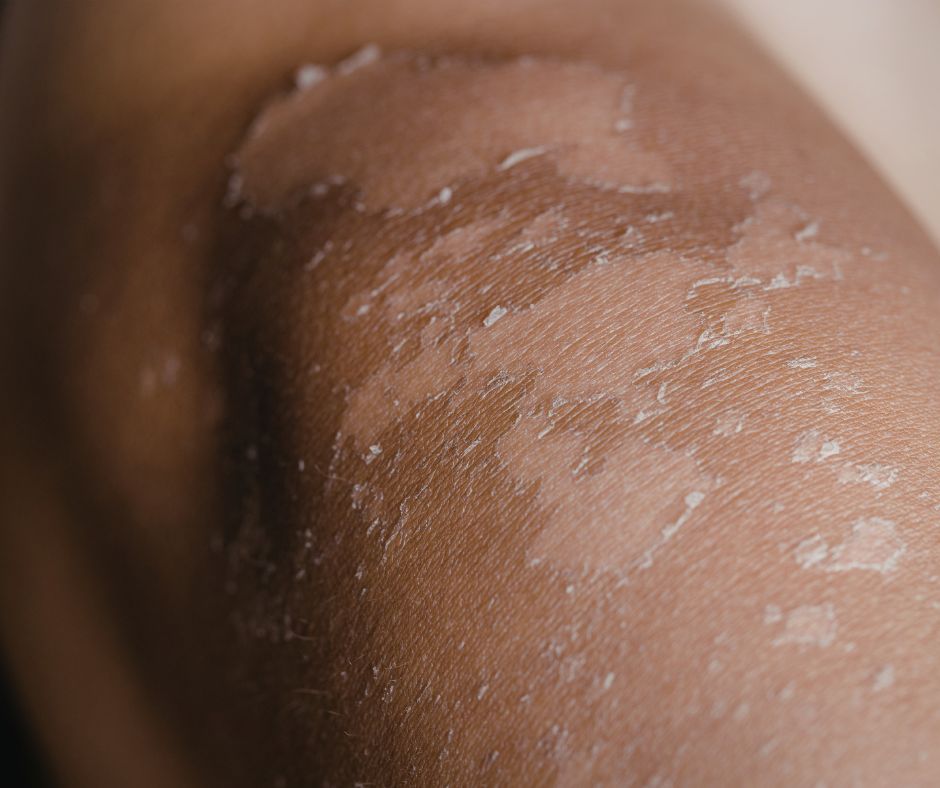
This is the phase in which skincare does the most: replenish lipids every day, even when nothing feels tight. Fats such as ceramides and plant butters keep moisture in the horny layer, and glycerin binds it there. A skin diary also helps you find triggers such as wool, heat, stress or cleaning products. With psoriasis, you loosen scales gently with fat or oil, softened rather than scrubbed off. How to use natural cosmetics for this is explained in the article Natural cosmetics for eczema.
What you should avoid and how to recognise soothing creams
Often the shortest route to calmer skin isn’t a new active ingredient, but leaving things out. If your skin is irritated, itchy or eczematous, it’s better to take these substances off your bathroom shelf:
- perfume and essential oils, including lavender and tea tree
- alcohol (Alcohol denat.) among the first positions on the ingredients list
- harsh surfactants such as sodium lauryl sulfate in shower gel and cleansing lotion
- exfoliating acids, retinol and high-dose vitamin C, as long as your skin is burning
- lots of new products at the same time, because then you won’t know which one caused the irritation
You recognise a soothing cream by its back, not its front. The ingredients list (INCI) is sorted by quantity: what’s at the top is present in large amounts. So soothing substances such as panthenol, glycerin or nourishing fats should be near the top. Short list, fragrance-free, clear information: the less that’s in it, the less can irritate. Test a new cream first with a pea-sized amount in the crook of your arm and watch the spot for 24 to 48 hours.
Which substances you should remove for good is explained in our articles on the 10 ingredients to avoid with sensitive skin and on how to recognise harmful ingredients. Not sure whether your routine is too harsh? Then the 5 signs of a damaged skin barrier will help.
Fewer irritants, more calm
Irritated skin calms down best when you bring two things together: the barrier gets what it’s missing, that is fat, moisture and soothing active ingredients. And everything that adds irritation stays out. Test new things carefully, give your skin time and have severe or persistent symptoms checked by a doctor.
Ready-made skincare makes it easier
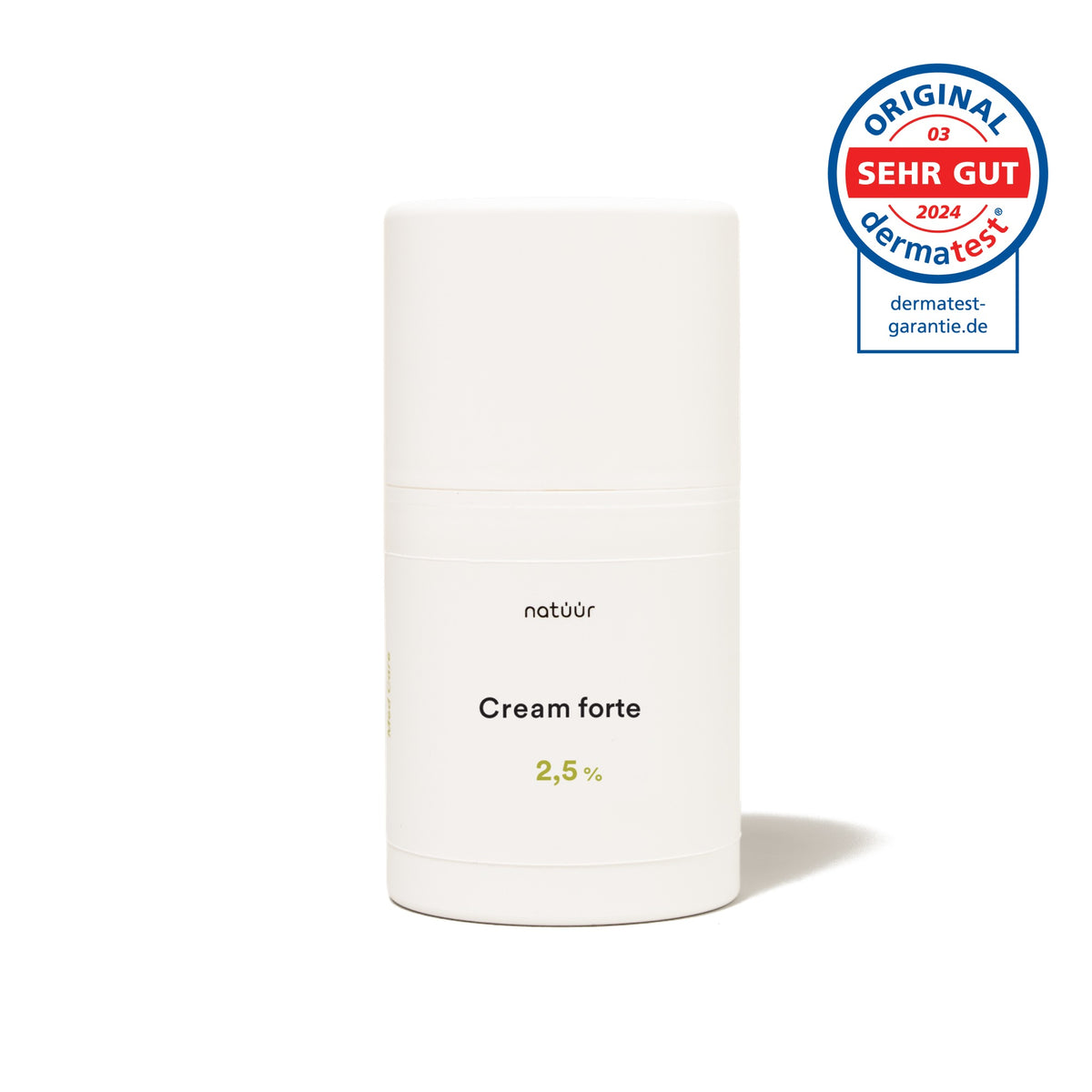
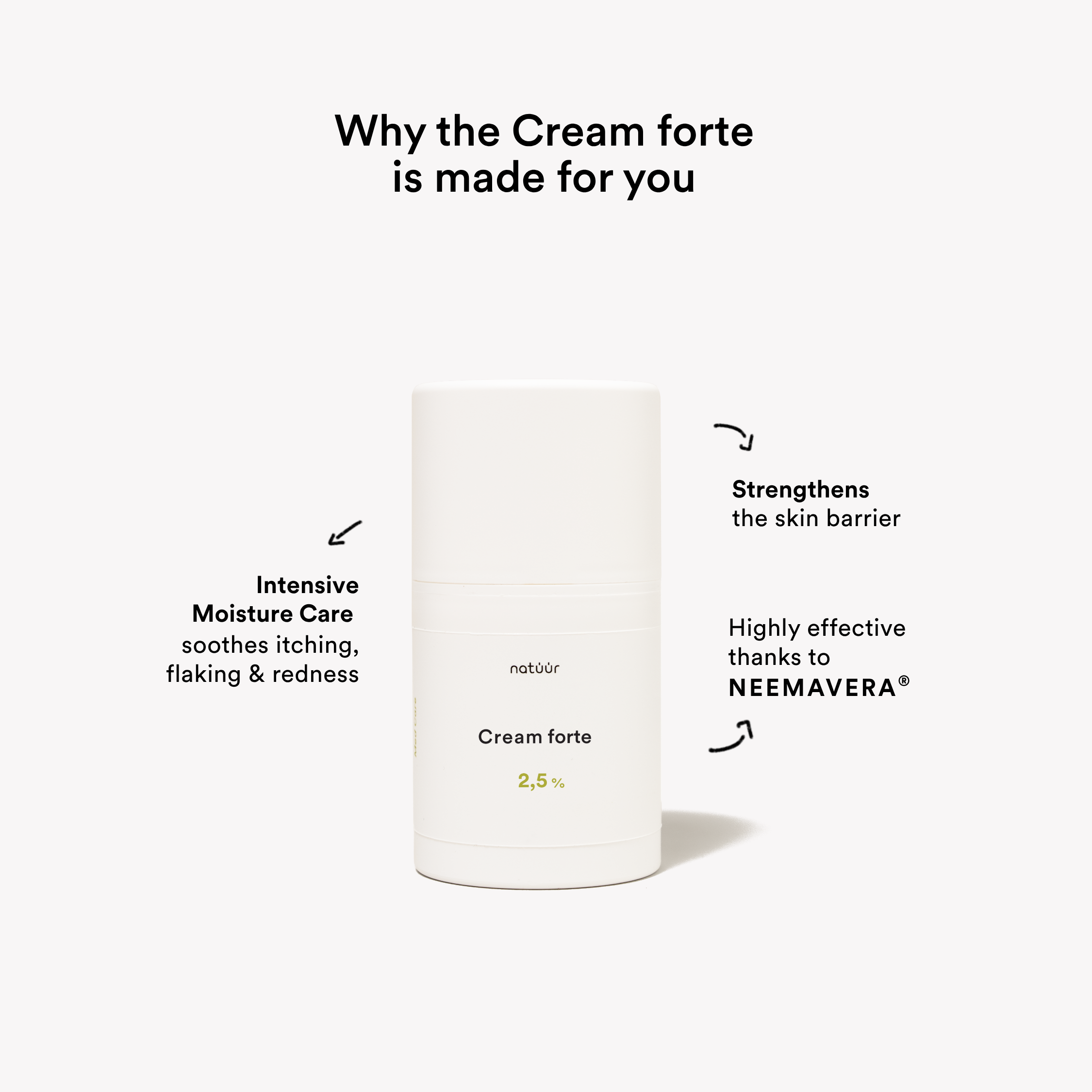
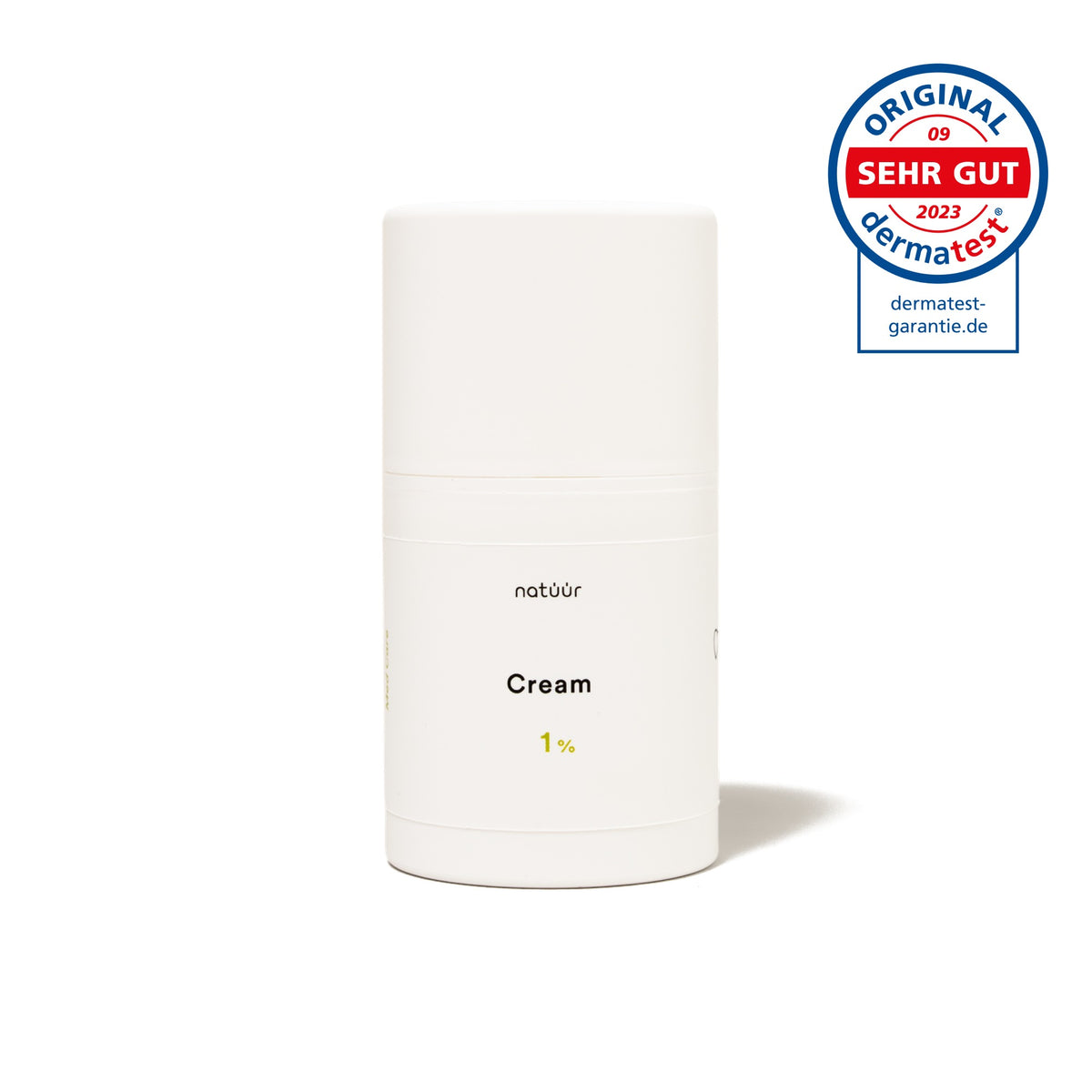
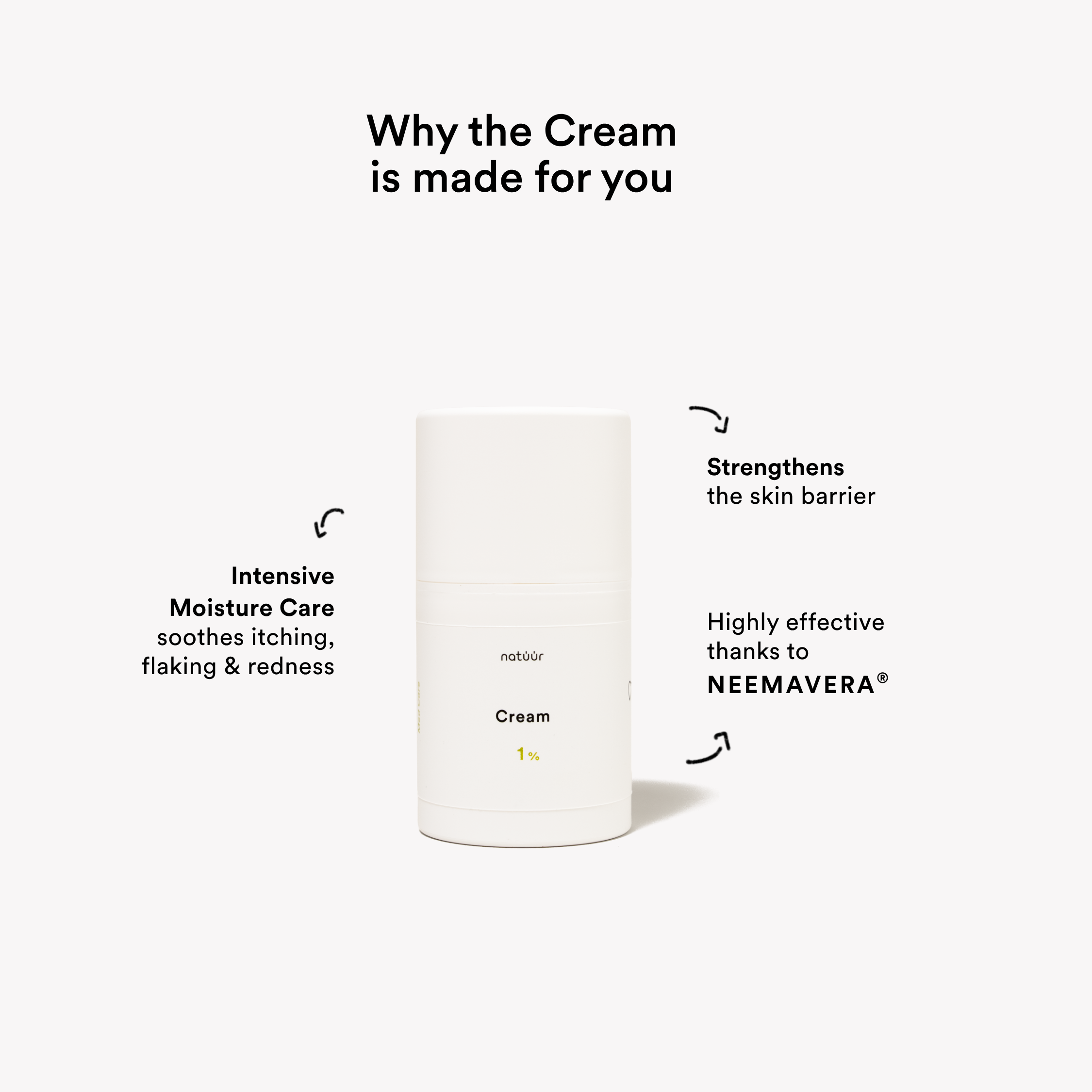
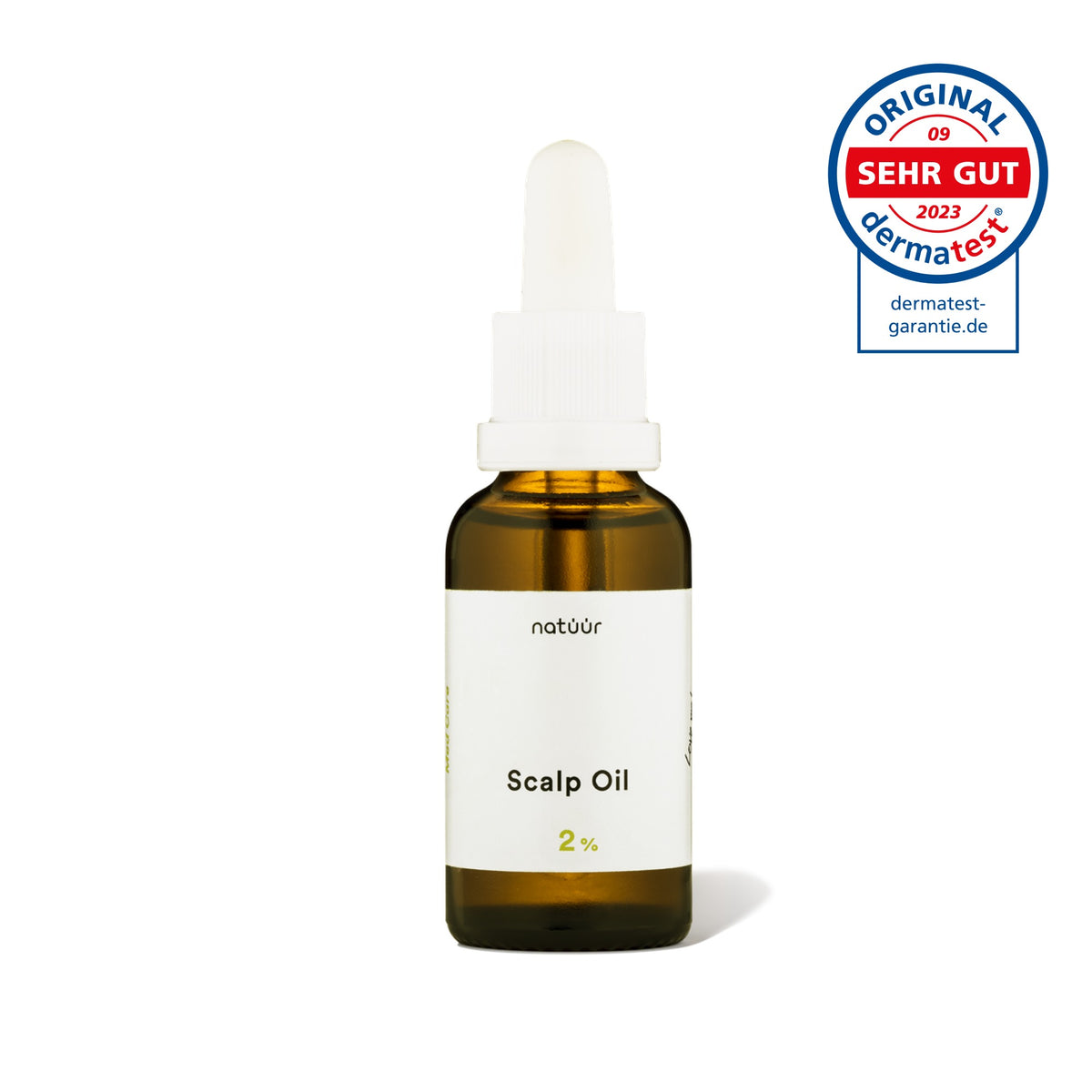
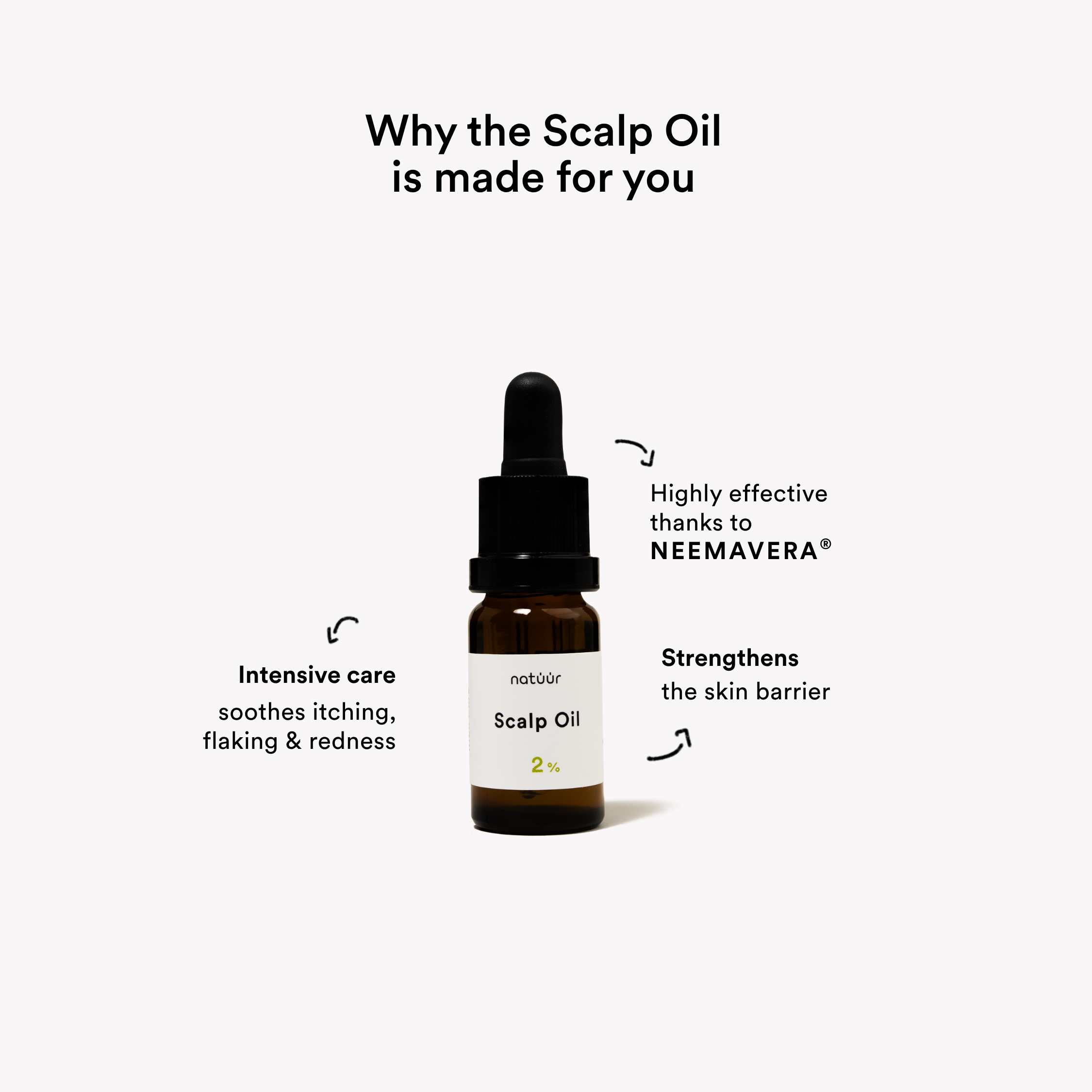
Our skincare for irritated skin relies on exactly this combination and is fragrance-free, vegan and made in Germany. At its heart is NEEMAVERA®, an extract from the leaves of our own neem plantation in Paraguay. The light Cream also contains panthenol, bisabolol and aloe vera, the Cream forte panthenol, shea butter and olive oil for very dry areas. The water-free Skin Balm cares for rough, cracked skin with shea butter, jojoba, macadamia and olive oil. All three are available together in the Calm Skin Trio.
Frequently asked questions (FAQ)
Which ingredients are best at soothing irritated skin?
The most reliable approach is the combination: panthenol and glycerin for moisture and regeneration, bisabolol or allantoin against irritation, and fats such as ceramides, squalane or shea butter that close the barrier. It’s just as important that irritating substances such as perfume are left out.
Which ingredients relieve itching?
In skincare products, above all colloidal oatmeal, low-dose polidocanol and PEA. Coolness helps too, for example a cream from the fridge. If the itching is severe or persistent, you should seek medical advice.
Is there natural cortisone?
No. Natural or plant-based cortisone doesn’t exist, even if balloon vine, liquorice root or frankincense are marketed that way. These extracts can soothe and care for the skin, but they don’t work like cortisone. Cortisone creams are prescription medicines with a firm place in treatment.
Are natural cosmetics always better for sensitive skin?
Not automatically. Essential oils and plant fragrances are among the most common contact allergens, and plants of the daisy family such as chamomile or calendula can cause problems if you have an allergy. What matters is the formulation, not the label.
Can I combine niacinamide and panthenol?
Yes, they go well together. Niacinamide supports the barrier lipids, panthenol moisturises and supports regeneration. If your skin is very sensitive, it’s better to choose low-dose niacinamide.
What helps quickly if my skin burns after using a new cream?
Rinse the product off with lukewarm water, cool the area and afterwards use only a fragrance-free basic care product with panthenol or glycerin. If the burning doesn’t ease or blisters form, have it looked at by a doctor.
Sources
- Proksch E et al.: Topical use of dexpanthenol: a 70th anniversary article. Journal of Dermatological Treatment, 2017 (PubMed)
- Tanno O et al.: Nicotinamide increases biosynthesis of ceramides as well as other stratum corneum lipids to improve the epidermal permeability barrier. British Journal of Dermatology, 2000 (PubMed)
- Reynertson KA et al.: Anti-inflammatory activities of colloidal oatmeal (Avena sativa) contribute to the effectiveness of oats in treatment of itch. Journal of Drugs in Dermatology, 2015 (PubMed)
- Eberlein B et al.: Adjuvant treatment of atopic eczema: assessment of an emollient containing N-palmitoylethanolamine (ATOPA study). JEADV, 2008 (PubMed)
- Li AW et al.: Topical Corticosteroid Phobia in Atopic Dermatitis: A Systematic Review. JAMA Dermatology, 2017 (PubMed)